Mind-blowing new scans reveal possible Egyptian megastructure hidden beneath sphinx


New scans beneath the Giza Plateau may have uncovered a second Sphinx hidden under the sand for thousands of years.
From hidden chambers inside the Great Pyramid to the ongoing mysteries surrounding the construction of Giza's iconic monuments, every new Egyptian discovery seems to raise as many questions as it answers. And now, researchers believe they may be on the verge of another extraordinary archaeological find.
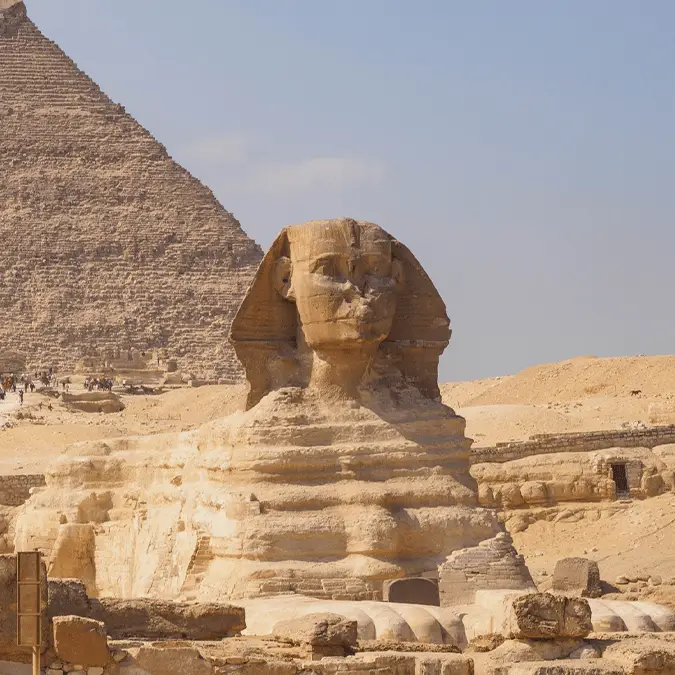
Sat directly between the paws of the Great Sphinx sits the Dream Stele, which is an ancient inscription dating back to the New Kingdom. The stele depicts not one but two sphinx figures side by side.
For years, experts assumed the imagery was purely symbolic, but now scientist Filippo Biondi and his team are no longer so sure.
Advert
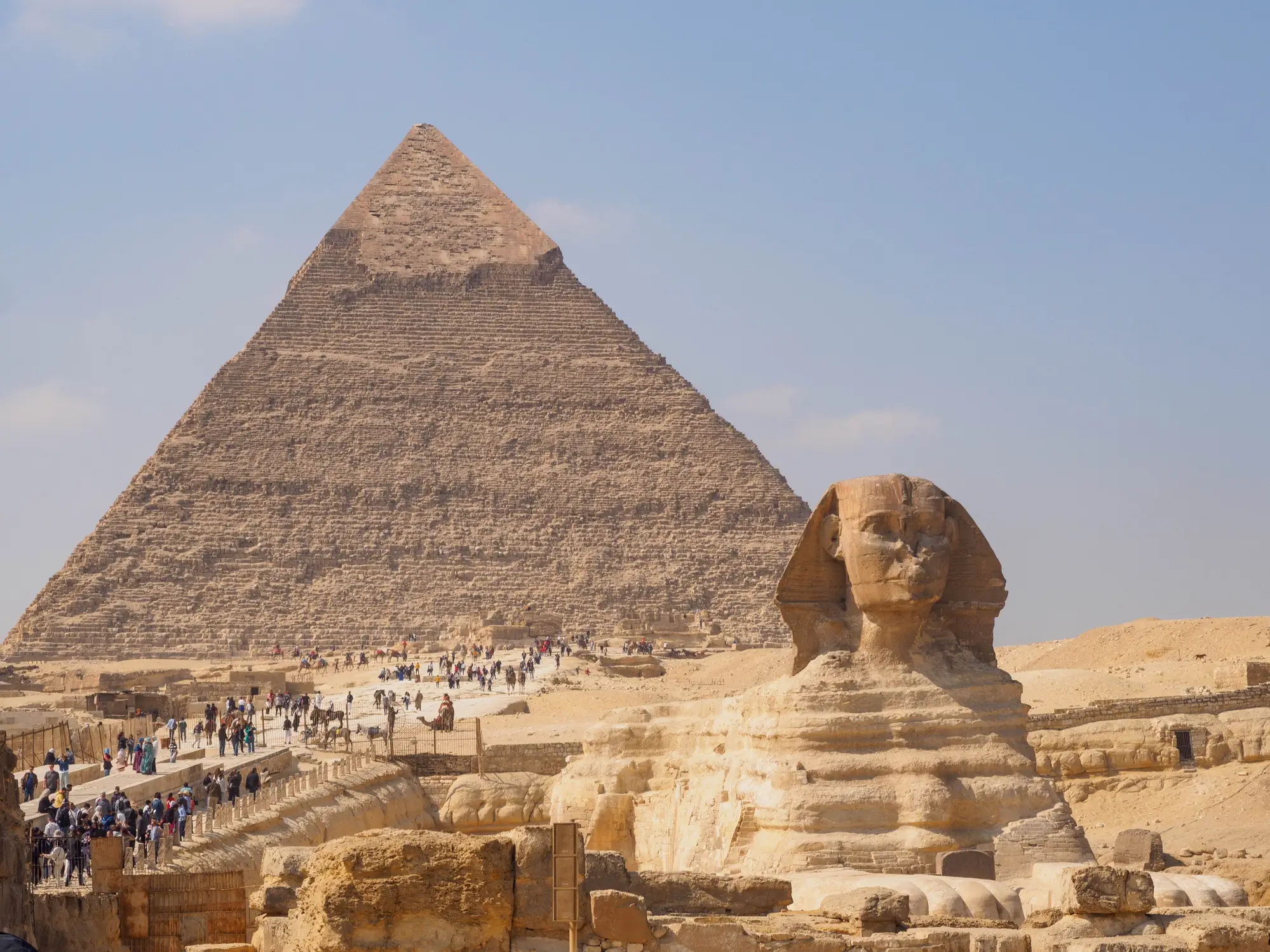
Speaking on the Matt Beall Limitless podcast, Biondi revealed that lines drawn from the three pyramids of the Giza Plateau to the known Sphinx point suggest exactly where the second structure is buried.
"We are finding precise geometrical correlation, 100 percent of correlation, in this symmetry," he said. "We are very confident to announce this… we have a confidence about 80 percent."
Using satellite radar technology, Biondi's team identified a massive structure concealed beneath a mound of hardened sand approximately 108 feet high.
"That small mountain has a height of approximately 108 feet," he explained. "The first Sphinx sits slightly below the surrounding surface, in a shallow depression, so it is possible the second Sphinx could be hidden beneath this higher mound."
Unlike the natural bedrock surrounding it, the mound appears to be composed of solidified sand. The preliminary scans have revealed vertical shafts and passageways beneath the mound that bear a striking resemblance to those already identified beneath the original Sphinx.
The dense vertical lines appearing in the data are believed to represent the solid outer walls of underground shafts rather than empty voids, Biondi reported.
"Down underneath the Giza Plateau, there is something very huge that we are measuring," he said. "There is an underground megastructure."
Further scans have also identified horizontal passages branching outward from the deeper sections of the site, mirroring similar tunnel networks previously mapped beneath the first Sphinx.
"There is an incredible symmetry between the first and the second," Biondi added.
The team is still working to compare the elevations of the known Sphinx and the mound to determine how each sits relative to the surrounding plateau surface.
"We have to study this more carefully," he said. "It makes sense to compare the elevations, but we are still analysing the data."
Despite the scale of the potential discovery, Biondi is careful in how he presents the findings, adding that the research is still ongoing and that it's too early to draw any conclusions.