
Mind-blowing amount of time it would take to notice if the sun suddenly vanished from sky


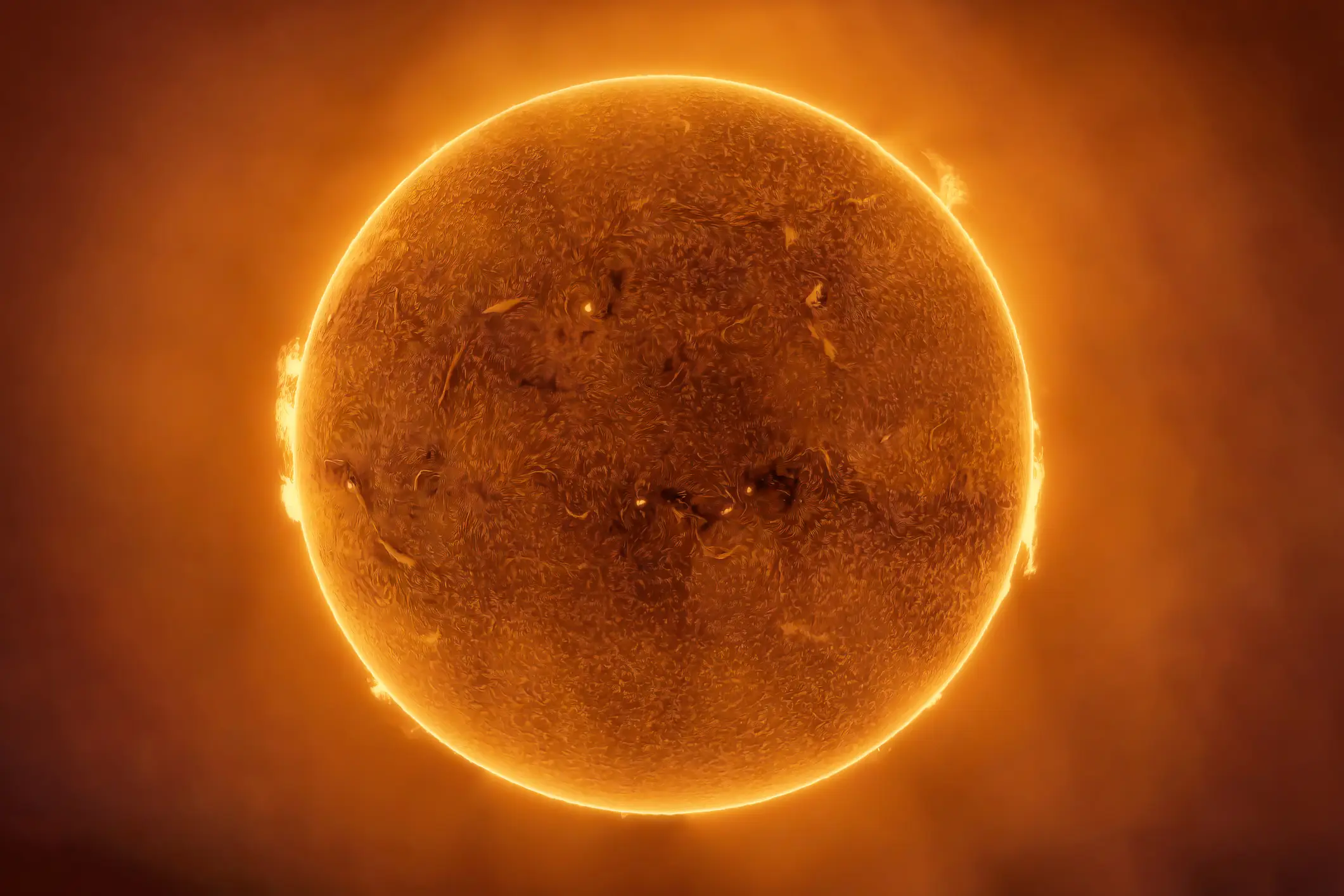
The Sun rising in the morning is one of life's few guarantees, yet scientists have revealed that it would actually take a surprising amount of time for people on Earth to notice if our solar system's central star suddenly disappeared.
So many of our daily functions rely on the regularity of the Sun, as that consistently not only drives routines for almost everyone around the globe but also allows us to continue living by providing heat and light.
Something as vital as photosynthesis would be rendered ineffective without light from the giant star, causing an immediate shortage in available food for both humanity and most animals that roam Earth.
It would, however, actually take longer than you might expect for people to notice the disappearance of something so important to our lives, as scientists have revealed the exact time and the impact afterwards.
How long would it take to notice the Sun's disappearing?
As reported by IFLScience, it would take exactly 8 minutes and 20 seconds for the Sun's sudden disappearance to be noticed on Earth, as this is the length of time it would take for light to travel from the center of our solar system to our planet.
Advert

The Sun is situated roughly 93 million miles (150 million kilometers) away from Earth, and with light traveling at 'only' 186,000 miles per second (300,000 kilometers per second), it would take nearly 10 minutes for there to be any visible difference.
The same would apply to the Sun's gravitational force too, as gravity moves at the same speed as light, giving Earth and other planets in space a similar time frame before being released from the star's orbit.
What would happen after the Sun disappeared?
As you can imagine, the impact of the Sun disappearing would be catastrophic for life on Earth, giving humans and animals a pretty low chance of survival in the days following the incident.
We'd all be fine for that brief eight-day period, but once the Sun actually 'went out' then Earth would be faced with freezing temperatures in under a week, and the lack of sunlight would cause most plants and animals to be wiped out.
Humans might have a very small chance of survival, as existing geothermal energy sources in places like Iceland could provide a reprieve, but extending that to an entire planet's population in such a short period of time could prove incredibly challenging.
Organisms living in deep oceanic vents would also have a pretty good chance of survival as they would still receive enough heat from the planet's core, but they might just be the only thing left living.
Thankfully there wouldn't necessarily be a risk of collision with other planets despite every single one being untethered from the Sun's orbit, as all would simply be sent in a straight line and therefore wouldn't interact with anything else.