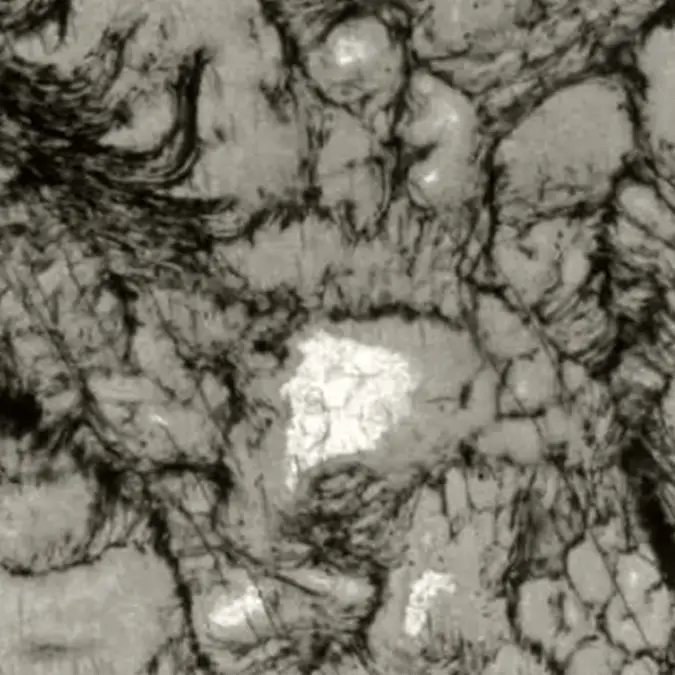
Scientists discover life 'wriggling' inside 3,300,000,000 year-old-rock


Scientists have made a remarkable discovery buried deep within a 3.3-billion-year-old rock.
Billions of years ago, Earth's earliest inhabitants were remarkably simple. At the time, they consisted of single-celled organisms and what scientists rather plainly call microbial mats.
However, these ancient creatures may have been thriving on our planet a lot earlier than we thought, according to a new study.
Researchers have discovered traces of carbon in a deep rock layer in Mpumalanga, a small province in the east of South Africa.
Advert
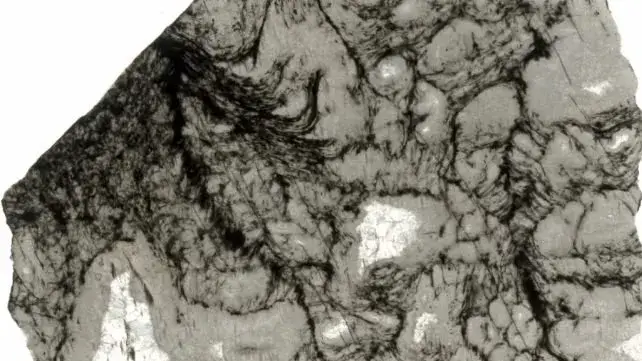
The organisms that produced these delicate markers lived mere hundreds of millions of years after Earth itself emerged 4.5 billion years ago, showing that our planet became life-friendly surprisingly quickly.
"Three billion years ago, the Earth was very different," said Solomon Hirsch, an astrobiologist at Imperial College London, who wasn't part of the research team. "The globe was almost entirely covered by ocean, with the very first continents just starting to form."
He added: "Life was much simpler than it is today, in the form of single-celled microbes that survived in places like hydrothermal vents where they harnessed energy from the chemical reactions that take place there."
The search for evidence of such early life forms isn't an easy feat. Over billions of years, Earth has effectively destroyed most traces through burial, compression and intense heat, and so scientists at the Carnegie Institution for Science in the US decided to get creative.
Instead of searching for fossilised cells, they used artificial intelligence to examine 406 samples, ranging from fungi to meteorites, for chemical traces. The algorithm successfully identified signs of life in the Josefsdal Chert, a 3.33-billion-year-old rock layer fractured by Earth's ancient crust.
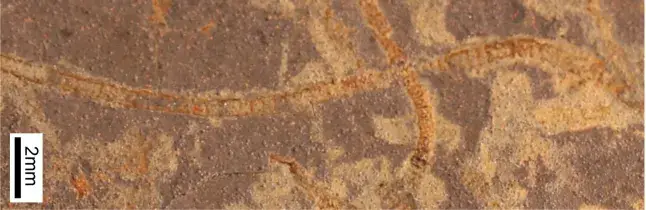
The rock formation predates the oldest confirmed fossils showing evidence of life by hundreds of millions of years.
Meanwhile, the team also discovered that organisms were performing oxygen-producing photosynthesis at least 2.5 billion years ago. Before this study, the earliest biomolecular evidence of photosynthetic life was dated 800 million years later than that.
Hirsch noted that this technique could detect biosignatures in rocks too degraded for human observation.
"This could be especially useful to apply to some of the oldest fossils on Earth which have had been degraded over billions of years, making it much harder to tell if they are really signs of ancient life," he explained.
And for those UFO and extraterrestrial enthusiasts out there, Hirsch also hopes to extend the research to other planets.
"The technique could also potentially be used to identify signs of life beyond Earth in places like Mars, where any remains of past life there may have been fossilised," he continued.
That said, this kind of research would require trusting AI and the data it gives us.
"Computers don’t have a way to explain to us why it thinks a sample may be biological or not," Hirsch said. "This could be a difficult for the search for alien life, where the burden of evidence is so high, and the chemistry of life could be completely different to what we know on Earth."