
Massive 'blob' in the middle of the Pacific Ocean could be bad news for America


A massive 'blob' spotted in the middle of the Pacific Ocean could spell trouble for the US.
While space scientists have come across unusual 'blobs' before, either on the ISS or the centre of galaxies, this one is right here on Earth. And it could affect millions of people.
A huge patch of abnormally hot water is currently sitting in the North Pacific Ocean, and weather experts say it's already causing strange weather patterns along the West Coast, with potentially bigger disruptions to come.
Climate scientists have dubbed this phenomenon 'the blob' because of how it appears on weather maps.
Advert

According to Daniel Swain, a climate scientist at the University of California, Los Angeles, the blob has been pumping more humid air towards the West Coast for weeks now.
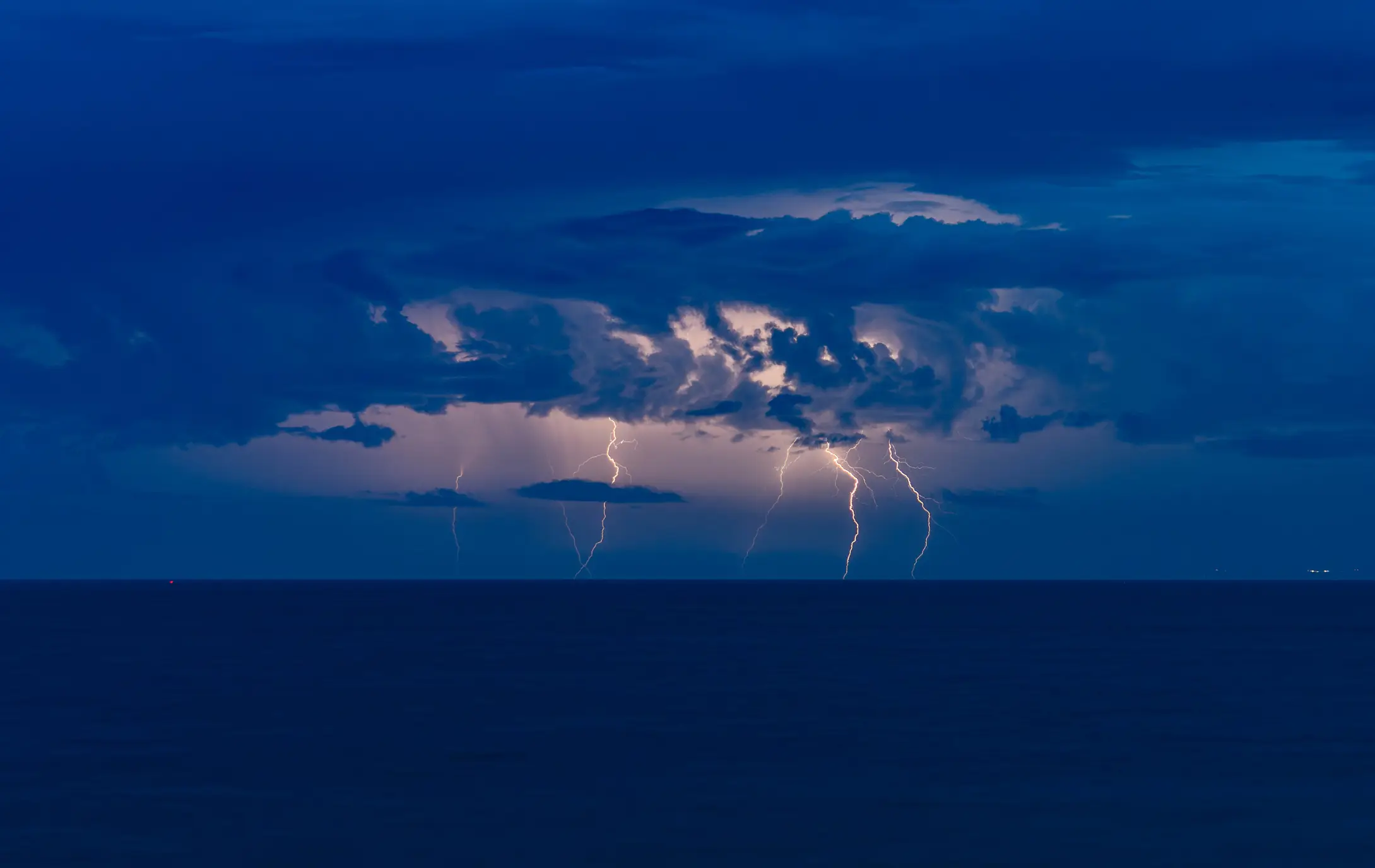
As a result, strange weather patterns have occurred, including thunderstorms popping up along the California coast where they don't normally happen.
Meteorologists note that the water temperatures in parts of the Pacific are running up to 9 degrees Fahrenheit hotter than they should be at this time of year. This has raised major questions about what this temperature increase will do to the jet stream come winter.
“I think it clearly already is affecting the weather,” Swain told reporters. He described the heat wave's intensity as 'phenomenal, really remarkable,' noting that it was already responsible for record warm temperatures in South Korea, Japan, and other parts of Asia.
“It is probably going to result in some shifts in the Pacific storm track late this fall and winter,” Swain added.
The jet stream is a band of strong winds high in the atmosphere that steers and energises storms as they move from west to east across the Pacific and North America. Its strength comes from the extreme temperature difference between the tropics and the Arctic.
But, as Swain reported, the warm blob reduces that temperature difference and weakens the jet stream. This could lead to heavier rain and snow during storms, potentially resulting in slower-moving storms, Swain described.
Between the hot Pacific and Atlantic Ocean that's also running warmer than normal, Swain thinks the Lower 48 states might see a relatively mild start to winter.
“The global oceans are super, super warm right now, so that’s just going to favour… some of that warmth,” Swain explained, adding that colder weather may arrive later in the winter months.
Meanwhile, atmospheric scientist Elizabeth Maroon of the University of Wisconsin-Madison told CNN about the underlying uncertainties.
“It’s really hard without running some sort of weather model that has this exact sea surface temperature pattern in it to know how it’s going to impact weather over North America this winter,” Maroon said.
Trying to forecast what this kind of extreme ocean behaviour means for winter, Maroon added, is at the 'cutting edge of the science we have.'
In other words, even the experts are working with a lot of unknowns.