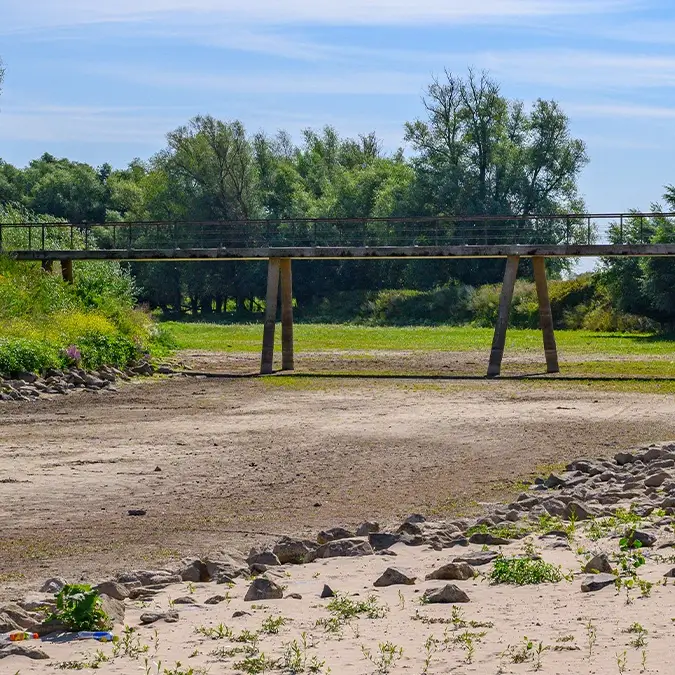
WMO warns planet is draining its freshwater 'savings account' as rivers record one of driest years in decades


A warning has been issued by the World Meteorological Organization (WMO) which reported that rivers are drying up at an alarming rate.
According to the WMO State of Global Water Resources Report, our planet is rapidly draining its ‘savings account’ of freshwater supply, with rivers hitting an all-time driest patch on record last year.
In fact, the report details how there has been a notable decline in freshwater in rivers for the past seven years, with Asia and Africa accounting for at least half of it.
This has sparked concerns over what the future could look like for Earth if this trend continues in the coming years.
Advert
WMO Secretary-General Celeste Saulo described slow reserves of the rivers as the planet’s ‘savings account’, as it acts like a buffer during droughts and dry seasons.
She continued: “We are depleting that savings account. Global terrestrial water storage has shown a declining trend since 2014–2016 - a persistent, decade-long signal. For the fourth consecutive year, every major glaciated region on Earth lost ice mass.
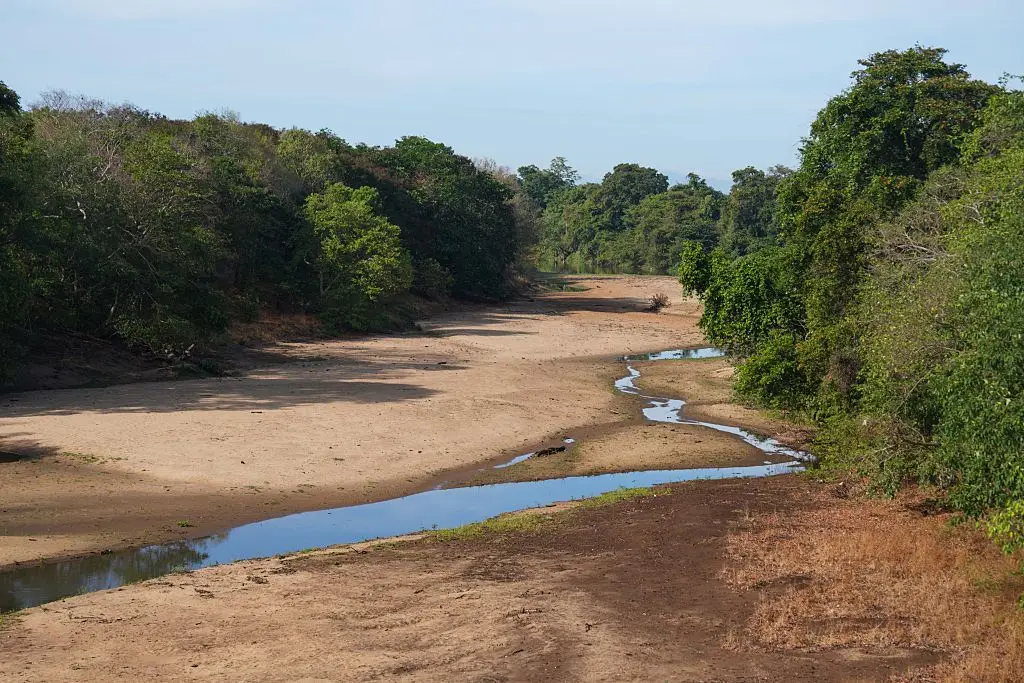
“Groundwater tells a similar story: nearly two-thirds of monitored wells worldwide showed conditions outside the historical norm in 2025, and the balance shifted further toward deficit compared with 2024, not toward recovery.”
Saulo added: “At the same time, we are seeing more water-related disasters. The strengthening El Niño will increase the risk of drought in some areas, and flooding in others.”
Extreme floods and droughts are becoming harder to manage
With this change in the river reserves, more extreme and unpredictable weather including the likes of floods and droughts are becoming more common.
From 2021 to 2025, below-normal river discharge was recorded across parts of the Amazon and La Plata basins as well as in North America, Central Africa, East Africa, Asia, and in the Middle East.
As for the climate, last year was reported as one of the warmest years the Earth has had on record as a weak La Niña emerged towards the end of 2025.
Severe droughts across East Europe, the Mediterranean, the Middle East and the Greater Horn of Africa were linked to the La Niña and a negative Indian Ocean Dipole.
Saulo commented: “Water respects no borders. A river basin's water balance depends on what happens in another country. A glacier's retreat in one country reshapes water availability for populations hundreds of kilometers downstream. This is precisely why we need shared data, shared standards, and shared early warning - the exact function WMO exists to perform.”