Strange 'clicking sound' heard thousands of feet beneath the ocean leaves scientists amazed


Scientists have been left amazed, as an incredible discovery has been unearthed through strange 'clicking sounds' heard thousands of feet below the ocean surface near San Francisco.
With over 80% of the Earth's ocean still left unexplored, it's only natural that new discoveries are unearthed every year.
With an average depth of around 12,000 feet, stretching to beyond 35,000 feet in its deepest areas, it's understandable that there's countless things that we don't know about on the ocean and its depths.
This makes it quite the terrifying place to be, and certain angles on Google Maps have only confirmed that thalassophobia is a real thing for many.
Advert
News that scientists have discovered strange 'clicking noises' at the depths of the ocean will certainly be of no comfort to many though, as this initial revelation left scientists stunned and amazed.
What actually entailed though was a miraculous discovery, as the Monterey Bay Aquarium Research Institute (MBARI) in Moss Landing uncovered that these bizarre and otherwise creepy sounds were in fact the echolocation sounds of several endangered sperm whales, thousands of feet below sea level.
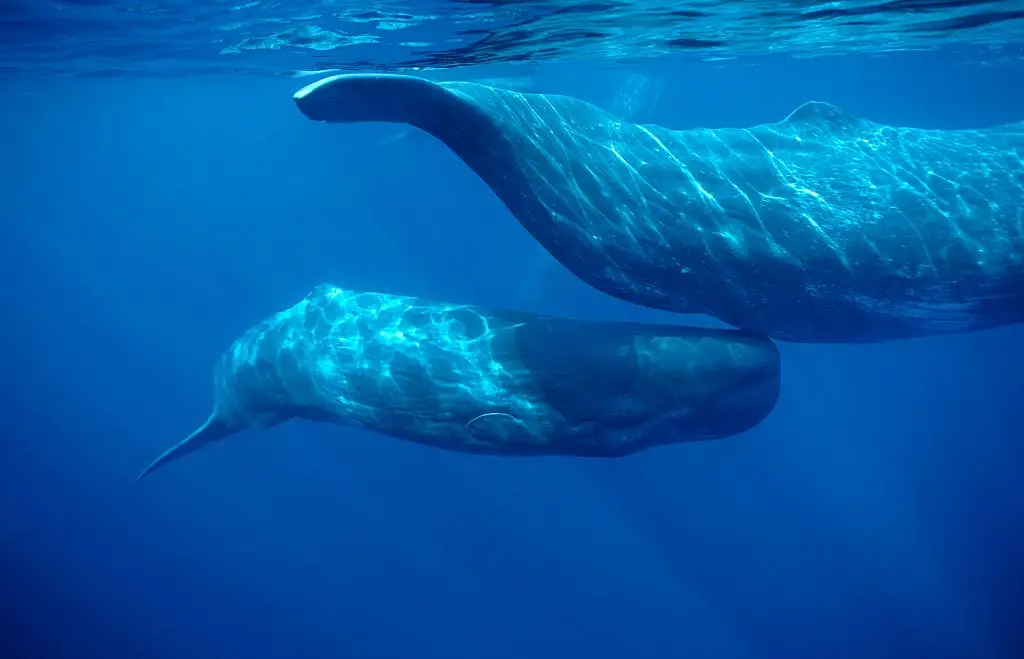
In an interview with SFGATE, Will Oestreich, researcher at the Monterey Bay Aquarium, detailed that the noise made by the sperm whales "almost sounded like a human machine."
These sounds were picked up through hydrophones that are able to capture around 256,000 snippets of audio per second, from as far as 100 miles away.
This allowed Oestreich and the team at MBARI to receive the echolocations outputted by the sperm whales, who were likely on the hunt their next meal.
What makes this such a breakthrough is how challenging these beasts are to track.
Oestreich explains that the sperm whales are "a top apex predator - tigers of the deep sea - and their behavior reflects a food web that's difficult for us to study."
Despite being the loudest known biological sound on Earth, reaching over 200dB with every click, the sound itself only spans a fraction of a second making it challenging to track.
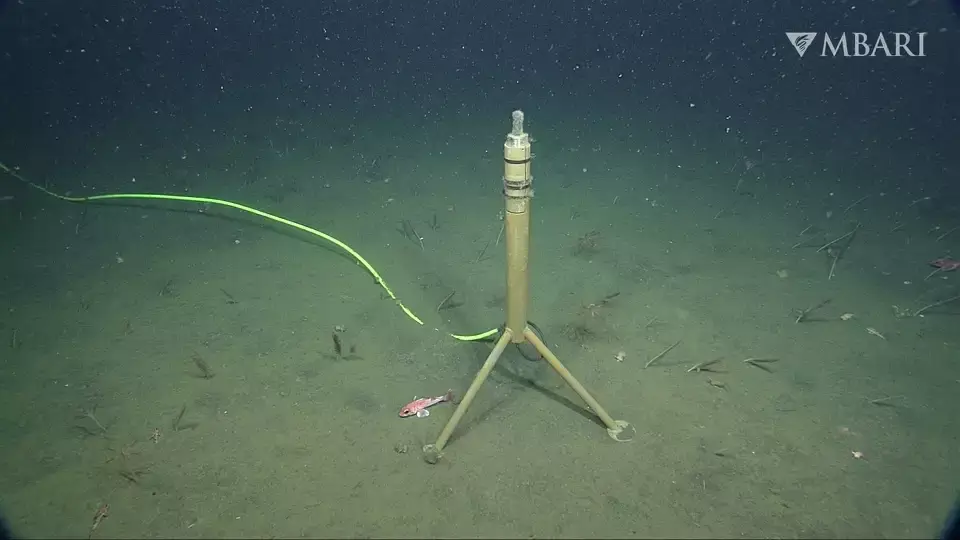
When looking back at the last seven years of data, it was understood that these clicks - now recognized as the calls of sperm whales - occurred on 1,242 separate days, which is around half of the data recorded.
This revelation signals a breakthrough in the understanding of this species, which were previously understood to inhabit deeper parts of the ocean and in further away areas.
It also raises the continued question of how much more do we not know or understand about the ocean, which is ripe for simultaneous horror and wonder depending on where you stand.
As dangerous and predatory these sperm whales are in their natural habitat, it's at least better than what some might have feared a 'strange clicking noise' deep in the ocean to be.