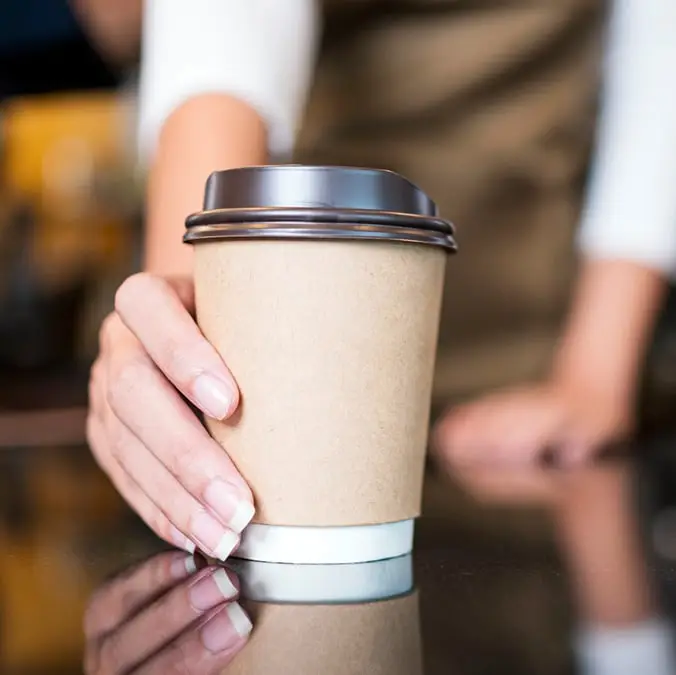
Scientists reveal horrifying truth about disposable coffee cups that might make you never want use one again


Scientists have revealed the horrifying truth about disposable coffee cups that might make you never want to use one again.
This comes after a recent study claimed that microplastics are found everywhere, including coffee cups.
The research, which was published by the Journal of Hazardous Materials: Plastics, details how cups could be releasing microplastics as they heat up.
In the study, it explained: “This study presents compelling evidence on the influence of temperature and material type on microplastic (MP) release from disposable beverage cups. Both the meta-analysis and case study demonstrate that elevated temperature accelerates polymer surface degradation, particularly in pure PE materials, leading to higher MP release, whereas structural protection and smoother surfaces in PE-coated paper cups mitigate this effect.
Advert

“This study highlights the importance of selecting appropriate materials for disposable beverage containers. PE-coated paper cups, while not entirely free of plastic, may offer reduced exposure through lower microplastic release compared to pure PE cups, though overall safety depends on unexamined factors such as particle size, morphology, and surface chemistry, which influence toxicity more decisively.
“However, broader efforts are needed to address the pervasive presence of microplastics in consumer products and to develop comprehensive risk assessments and mitigation strategies for human exposure; explore additive leaching, as leachates from aged MPs may disrupt phosphorus cycles and heighten health risks beyond physical particles.”
Griffith University research fellow Xiangyu Liu went on to explain how, ‘as the temperature of the liquid inside a container increases, the release of microplastics generally increases too’.
He continued: “It’s good to be aware of potential microplastic sources in our daily lives.”
In the study, the experts used 400 coffee cups with liquids at varying temperatures from 41 degrees Fahrenheit to 140 degrees Fahrenheit.

Liu went on to say: “For hot drinks, the best option is to use a reusable cup made of stainless steel, ceramic, or glass, as these materials do not shed microplastics.
“If we must use a disposable cup, our research suggests that plastic-lined paper cups generally shed fewer particles than pure plastic cups, though neither is microplastic free.”
The experts explained that ‘since heat is the factor that triggers plastic release, avoid putting boiling liquids directly into plastic-lined containers’.
Instead, the study found that leaving the drink to cool down first lessened the amount of microplastics being released.
Liu added: “By understanding how heat and material choice interact, we can design better products and make better choices for our daily caffeine fix.”