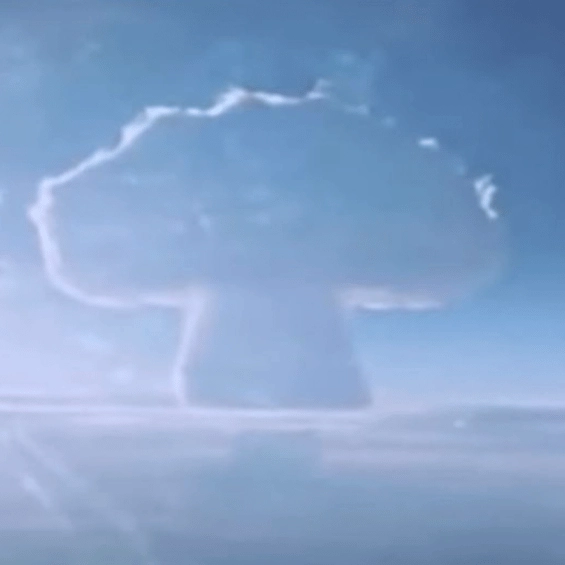
Declassified footage of most powerful nuclear bomb ever detonated was top secret for decades


Footage of the biggest nuclear explosion ever seen was kept top secret for decades, until it was finally released by Russia three years ago.
The footage depicts the horrifying devastation that a nuclear bomb can cause.
Check it out here:
Advert
The full 40-minute video, that was previously classified, was released in August 2020 by the country's state-run nuclear division ROSATOM.
The huge device was detonated on 30 October 1961 at Mityushikha Bay on the deserted Novaya Zemlya island.
It was called the Tsar Bomba, or Tsar Bomb, in the West - the king of bombs. It's a hydrogen bomb with 50 megatons - or 50 million tons - of explosive.
To put that into context, it was 3,800 times more powerful than the bomb that killed 140,000 when it was dropped on Hiroshima, Japan in 1945.
It was also far more destructive than the largest hydrogen bomb the United States had ever set off back in 1954, a 15 megaton device.
The shocking footage was released three years ago on 20 August 2020 to coincide with the 75th anniversary of Russia's nuclear industry, with a large portion of the video depicting the country's journey to the top of the nuclear tree.
The weapon itself was huge, weighing a massive 27 tons and about eight meters in length. In order for it to be dropped, some of the fuel tanks had to be removed from the Tu-95V Soviet bomber.
It was detonated at around 4,000 metres above ground.
The explosion was so powerful the blast was visible from an incredible 997km (620 miles).
The mushroom cloud stretched 67km (42 miles) into the air, making it about seven times higher than Mount Everest, and reports claim it destroyed buildings within 55km (35 miles) of it.
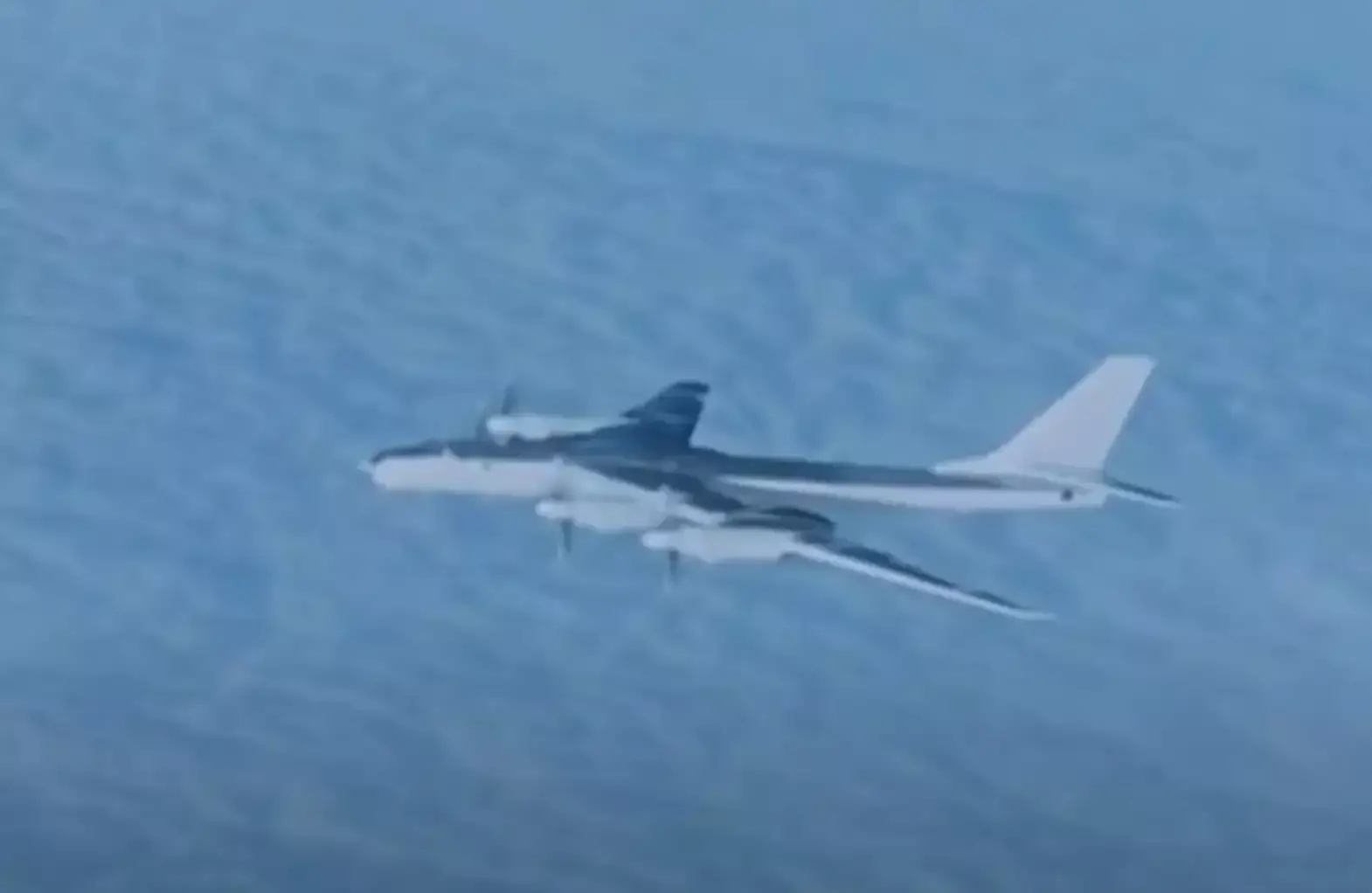
It was also later found that the Tsar Bomb could, potentially, have been even more powerful than it was. It was originally designed to deliver a colossal 100-megaton blast, but was scaled down in order to protect the wider population from the explosion.
This also wasn't the only powerful detonation Russia carried out during this time. Throughout the early 1960s, the Soviet Union completed several other tests with forces ranging between 20 and 24 megatons.
The Tsar Bomb, however, was one of the last above ground nuclear tests ever carried out as the US, UK, and the Soviet Union signed the Partial Test Ban Treaty in 1963, which stated that all future tests had to be carried out beneath ground.