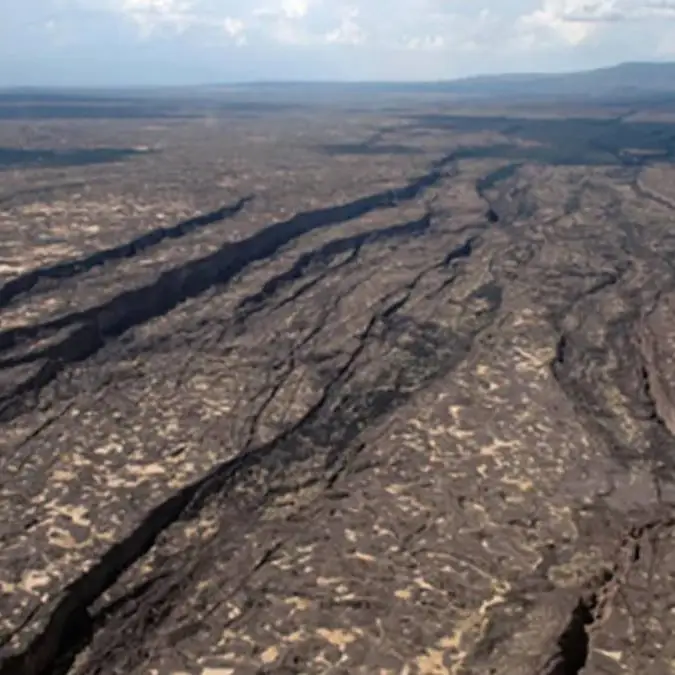
New ocean is forming quicker than scientists expected as Africa breaks apart


Something dramatic is happening beneath the African continent, and it's unfolding faster than scientists predicted.
It turns out, a massive geological split is tearing through East Africa, and if it continues, it could create an entirely new ocean. The force behind the split is the East African Rift System, which stretches from the Red Sea down through Mozambique.
Scientists estimate that within the next 5 to 10 million years, a body of water could fill the widening gap, ultimately separating eastern Africa from the rest of the continent.
Christopher Scholz, a geophysicist at Syracuse University, previously described the situation perfectly, calling East Africa’s rifting a 'front-row seat to a continental breakup.
Advert
Research teams from the University of Rochester, NASA, and the US Geological Survey have been tracking the process closely.
Their findings reveal that the Earth's crust across this region is steadily thinning and fracturing in numerous spots. Using GPS technology precise enough to measure shifts down to the millimetre, scientists can monitor the gradual but relentless movement of the ground beneath East Africa.
Satellite photos taken over time show valleys and cracks visibly widening, The Daily Galaxy reported.
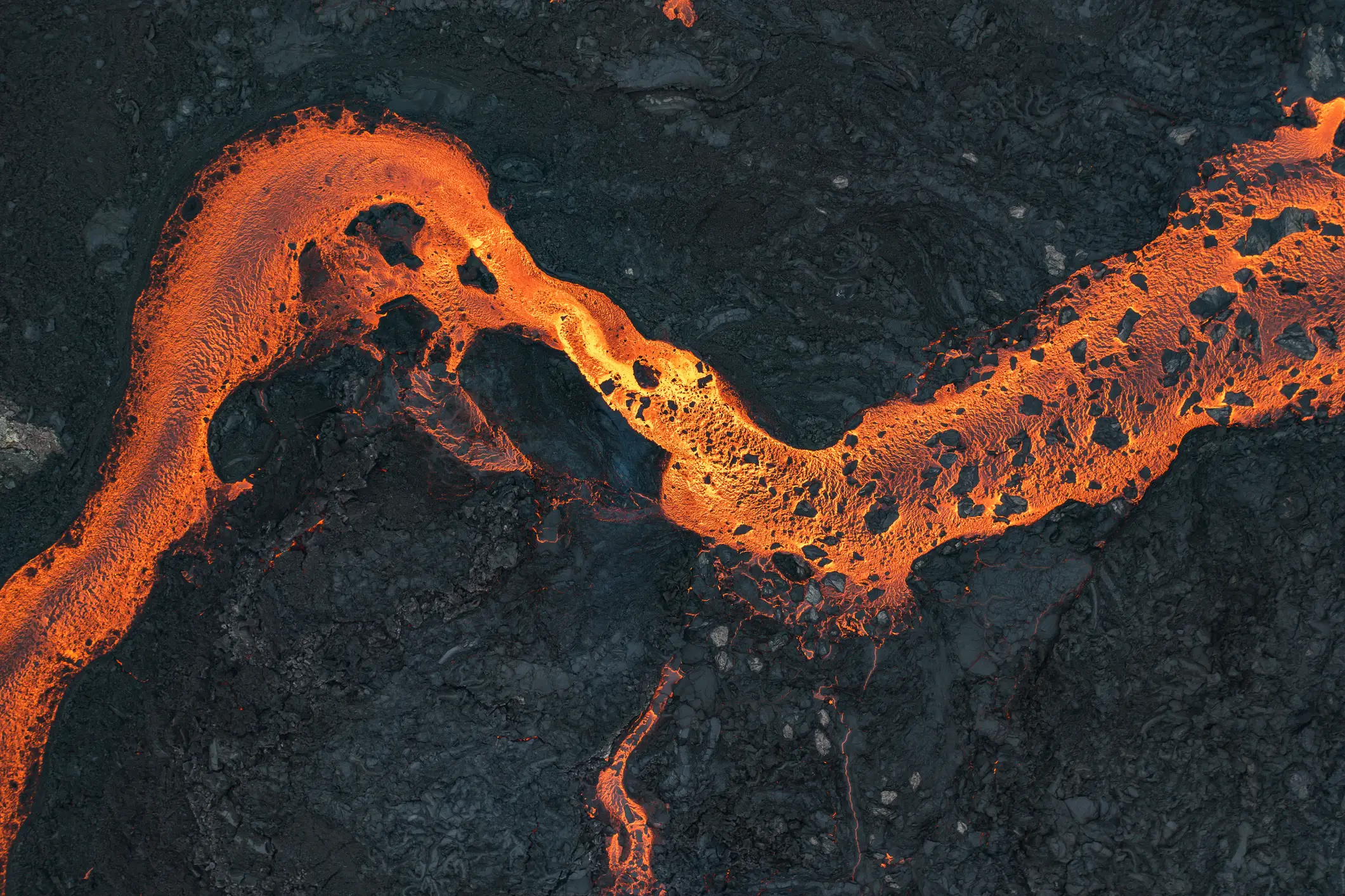
In certain areas, early-stage oceanic crust has already formed.
The interaction of the Nubian, Somali, and Arabian tectonic plates forms a 'triple junction,' a rare scenario in which three plates pull apart simultaneously.
Despite being one of the hottest inhabited places on Earth, the Afar region has become a vital research site for studying surface cracks, earthquakes, and volcanic eruptions.
Magnetic data analysis, published in 2025 in the Journal of African Earth Sciences, showed that rifting began with the formation of the Gulf of Aden and the Red Sea splits, with the East African Rift following and continuing to expand today.
The problem now is that the rift poses risks for the millions of people living in the rift zone, given the likelihood of earthquakes and volcanic eruptions.
Back in 2018, a fissure several kilometres long suddenly opened in Kenya. Reports initially blamed the crack on heavy seasonal rainfall, but scientists later confirmed it was linked to ongoing tectonic movement below.
Over time, the Somalian Plate will likely break away completely. When that happens, seawater from the Red Sea and Gulf of Aden will rush in to flood the widening gap. Interestingly, topographic maps already show that significant portions of the Afar region sit below sea level, and two arms of the rift system are already submerged.
Christopher Moore of the University of Leeds fittingly classed the Afar region as 'the only place on Earth where you can study how a continental rift becomes an oceanic rift.'