Experts address theory we have 3 days left to live following prediction world would end on November 13th


A scientific paper published more than 60 years ago predicted that humanity would reach a mathematical doomsday on Friday, November 13, 2026, and while Friday the 13th has long been considered to be an unlucky day, this week, we might face the unluckiest one yet.
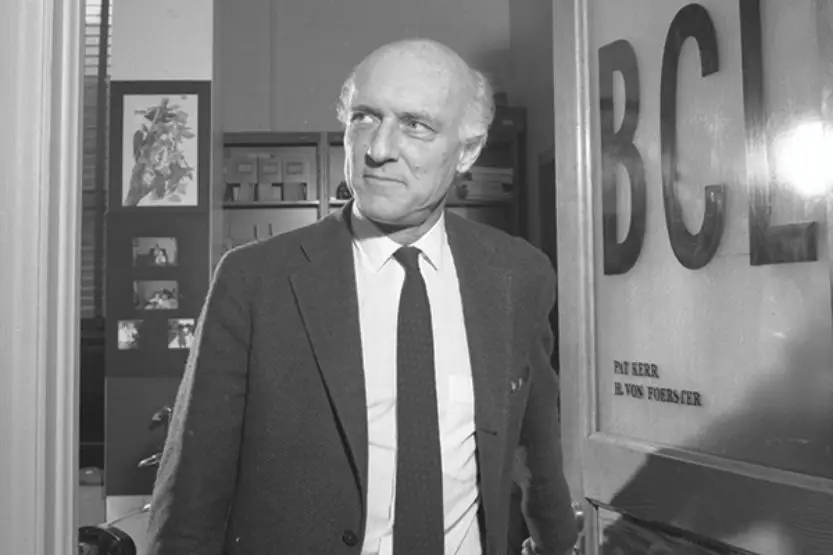
The prediction came from physicist Heinz von Foerster and his colleagues Patricia M. Mora and Lawrence W. Amiot, who published a paper titled Doomsday: Friday, 13 November, A.D. 2026 in the journal Science on November 4, 1960.
The team used three concepts to try to work out when the human race would become too much to handle, with these concepts being focused on accelerating growth loops, power laws, and mathematical singularities.
Now, with the date approaching, it is worth looking at why the scientists came up with such an extraordinary prediction, and what population experts have since discovered.
Advert

While there is no logic behind the superstition, historians suggest that the belief leads back to Christianity, with Fridays long being viewed as days of penance and bad fortune, meanwhile, the widespread distrust of the number 13 dates back to the Last Supper, when Jesus and his 12 disciples sat down at the table. Judas, the disciple who betrayed Jesus, was the 13th person to arrive.
Combining Fridays with the 13th makes some people very wary, with the date now being so infamous that some avoid making big decisions, traveling or even leaving the house altogether when it rolls around.
Why scientists predicted doomsday on Friday the 13th
Nearly 70 years ago, on November 4th 1960, The New York Times wrote: “A physicist has put a definite date on Doomsday. He calculates that it will come on Friday the Thirteenth in November, 2026 A. D.
On that date, or thereabouts, the human population will have expanded so far as to approach infinity and thus will automatically annihilate itself.”
To reach their conclusion, von Foerster and his colleagues gathered 24 estimates of the world’s population dating back approximately 2,000 years, using these figures to develop an equation that attempted to explain how humanity had grown over time.
A key part of their argument was that humans were fundamentally different from other animals because of our ability to cooperate, innovate and develop technology, believing that the more people there were, the more opportunities humanity would have to develop new ways of supporting an even larger population.
This created what they viewed as an accelerating cycle of growth, with their mathematical model eventually reaching a point of infinity. In his paper, von Foerster included a striking warning that future generations would not starve to death, but would instead be ‘squeezed to death’.
The expert believed that Earth would reach a population of 25 billion by 2020, expecting food, land and energy to eventually run out due to the overwhelming demand from the growing population.
What population experts say now about the 2026 prediction
The idea that humanity is heading towards an ever-expanding population has since been challenged by research from authors Darrell Bricker and John Ibbitson.
In their 2020 book, Empty Planet: The Shock of Global Population Decline, they argued that the world could be heading towards a period of declining population rather than the endless growth predicted by von Foerster.
Their research suggested that the traditional assumption that the global population would continue growing indefinitely was missing a significant shift in how people were choosing to live, with one of the major factors being urbanization.
Women’s access to education, employment and greater reproductive autonomy has also played an important role in changing family sizes.
While changing economic conditions, healthcare, technology and individual choices doesn’t necessarily mean the planet has stopped facing issues with its population size, it does mean that the idea humanity is heading towards mathematical infinity is not supported by modern science.
This means that it is unlikely that the planet will collapse this Friday due to overcrowding. So, don’t let old predictions stop you from stepping out of the front door this Friday the 13th, although maybe avoid breaking any mirrors - just to be safe!