
Doctor breaks down long-term effects as identical twins share results after one used Botox and the other didn’t


It's often difficult to know exactly what a treatment like botox is doing to your body and skin over a long period of time, yet one fascinating study on identical twins showcased a direct comparison between people who used and abstained from the injections.
Cosmetic surgery and treatments have become increasingly popular over the years among those who can afford it, especially as the results are increasingly difficult to distinguish compared to natural aging.
It remains a controversial topic for some, but those who do opt for it typically relish the changes it brings to their face and body, and it's understood to have an even greater effect when done from an early age.
Among the most popular of these treatments is botox, as it paralyzes the muscles within your face to reduce contraction, which consequently smoothes over wrinkles particularly in high tension areas.
Advert

People typically get botox around the edges of their mouths, to the sides of their eyes, and on their forehead, as that's where wrinkles are most likely to show up in aggressive forms as you age.
However, some still might be left wondering what the long-term effects of a treatment like this are, and whether the reduction holds up over time or not.
This exact question was answered in a study published in 2006 by William J. Binder, who followed a pair of identical twins who had contrasting relationships with cosmetic treatments.
One of the twins had received just two botox injections across a 13-year period, whereas the other received the injections in both the forehead and the glabellar region around two to three times per year within the same time frame.
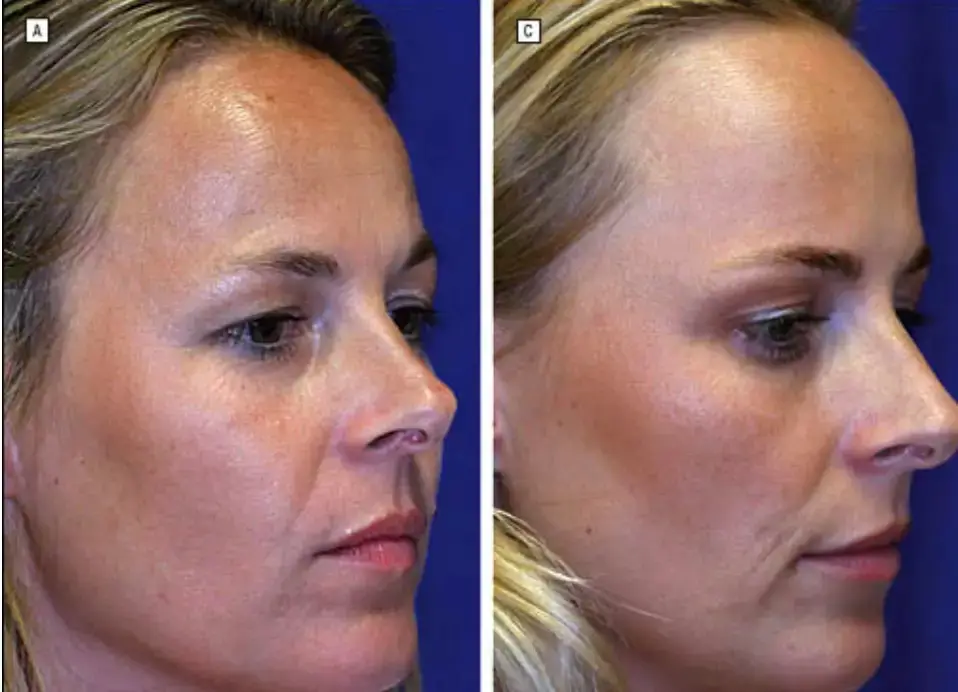
Upon analysis of the twins, Binder concluded that there are significant long-term benefits to using botox if injections are regular within high activity areas of the face, noting:
"It is well known that a single injection of botox into a target muscle can inhibit a patient's ability to contract that muscle for several months and so reduce the appearance of facial lines that would have been apparent during active muscle contraction.
"The results presented herein suggest that long-term treatment can also result in additional benefits and prevent the formation of permanent lines – so-called imprinted lines – that slowly manifest over time as part of normal aging."
That's why botox isn't necessarily a 'cure' for wrinkles but instead a preventative method, as injections won't make the lines go away but stop them from ever appearing in the first place, emphazing early action.
Responding to the comparison images between the twins, Binder added that it "demonstrates that long-term treatment with botox can prevent the development of these imprinted facial lines."