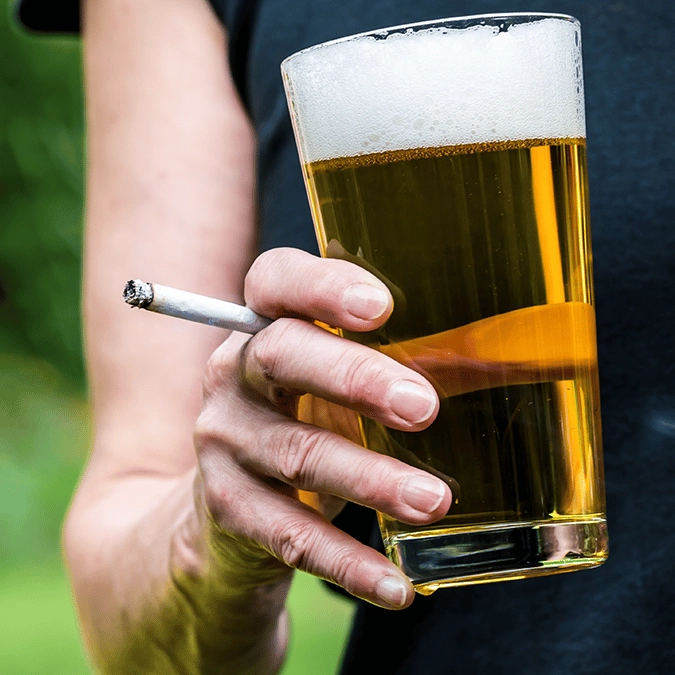
Drastic way your body changes when you quit drinking and smoking at the same time


January is already tough enough as it is. You're feeling a little bloated after a festive season of excess, you've got no money left, and to top it off, the weather is miserable. We're not sure why you'd want to make the month any worse than it already is, but it was someone's bright idea to then lump New Year's resolutions on top of it.
Whether it's kickstarting a new fitness regime, putting down the bottle for Dry January, or ditching meat for Veganuary, some of us are sticklers for making this grim month even more unbearable.
Still, we've got to applaud those who commit to sticking to a New Year's resolution, and even more admiration for those who continue it beyond the month of January.
We've previously covered what happens to your body when you quit smoking, while quitting alcohol can also have similarly drastic effects on the body. So, just imagine taking both barrels and quitting them at the same time.
Advert
Given that a 1997 study confirmed that caffeine levels tend to double when you quit smoking, the idea of quitting smoking and drinking alcohol at once is sure to have some adverse effects on the body as we look for something else to replace these vices.

Both alcohol and nicotine affect our mesolimbic dopamine system, while the latter can increase the intoxicating effects of alcohol, and the former is known to increase nicotine cravings. As you can imagine, quitting one is known to increase cravings for the other.
Notably, smoking and drinking are typically linked behaviourally in social situations or times of particular stress. By removing them at once, you can increase your stress levels and increase the risk of relapsing into relying on either one or the pair.
If you're determined to kick the bottle and stub out your cigarettes at once, you'll likely face the acute withdrawal phase for the first week. Those who have a history of heavy drinking are warned to undergo medical supervision when withdrawing, although general symptoms include headaches, anxiety, and insomnia within the first six to 12 hours after their last drink.
Symptoms peak within 24 to 72 hours, and these can include life-threatening seizures and Delirium Tremens (DTs).
Nicotine withdrawal is characterized by increased irritability and restlessness, with a peak around the third day.
Combining them can put serious strain on the central nervous system, meaning you should seek professional help with a particular focus on the alcohol withdrawal.
Once you get over this hurdle, you should start to feel the benefits of quitting.
It's said that within just hours of turning your back on nicotine, you'll experience a slower heart rate, stabilized blood pressure, and carbon monoxide levels in your blood returning to normal. A lack of alcohol should allow your liver to kickstart its healing process, with reduced inflammation and fat accumulation.
In general, quitting both at the same time is a boost for cardiovascular benefits and your liver. Importantly, taking out these carcinogens is a double whammy in terms of reducing the risk of cancer in areas like the esophagus, mouth, and throat.
More benefits include mental clarity, better sleep, and improved energy levels.
Before embarking on dual cessation, you need to ensure you have a strong support structure in place, especially if undertaking severe alcohol withdrawal. Medical professionals might prescribe medications for alcohol withdrawal or offer Nicotine Replacement Therapy (NRT).
Those trying this kind of mission might have to create new coping mechanisms and rituals, although research suggests that quitting both at once can increase your likelihood of long-term abstinence.
If you've been affected by addiction and want to speak to someone in confidence, you can call American Addiction Centers on (888) 324-0595, available 24/7, or contact them through their website.