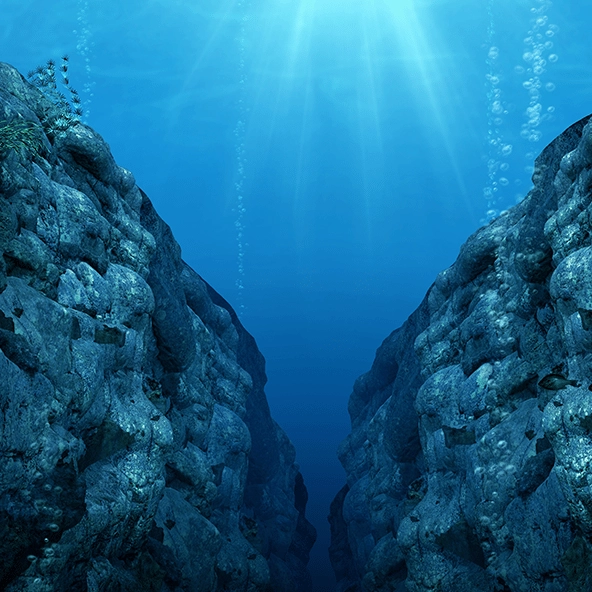
Simulation shows what you would experience if you travelled 35,853 feet to the deepest part of the ocean


Just south of Japan in the west of the Pacific Ocean lies the Mariana trench, the deepest part of the ocean known to many as the ‘Challenger Deep’.
Though its depth varies over its mammoth 1,580-mile length, the deepest point reaches 35,853 feet (10,927 meters).
To this day, no one has walked along the bottom of the Mariana trench, although six people have made the journey in submersibles.
If you’re wondering exactly what it would feel like to be aboard one of those submersibles and what you might see, YouTuber Bright Side provided a simulation so we can all get a feel for it.
Advert
Of course, the journey starts out pretty normally with fish and other marine life we’re used to swimming alongside.
But once we hit 65 feet, Bright Side says a ‘whole new world’ opens up, with coral reefs and scuba divers.
Before you know it, we’ve reached 200 feet and you might start to see Orcas who inhabit these shallower waters in almost every ocean across the world.
When we reach 490 feet, things start to get dark as just 1% of surface light is able to penetrate to us. And things continue to get darker from here, with more sightings of lesser-known creatures like the Giant Oarfish (who can reach 36 feet in length by the way!).
At 2,723 feet, we’ve reached the height of the Burj Khalifa, to put the sheer depth of this trip into context, we’ve got around 33,000 feet to go.
At 4,900 feet, you’ll start to see fishing nets which are dragged along the ocean floor in a ‘catch all’ method of fishing.
Passing around 12,500 feet and Bright Side explain that we’ve passed the general ocean floor and are delving deeper into the ‘abyss’, and 15,000 feet is where we start to see infamous deep sea creatures like the Angerfish.
Reaching 18,900 feet and we’re able to see the deepest shipwreck ever found, the SS Rio Grande which sunk back in 1941 and found 55 years later.
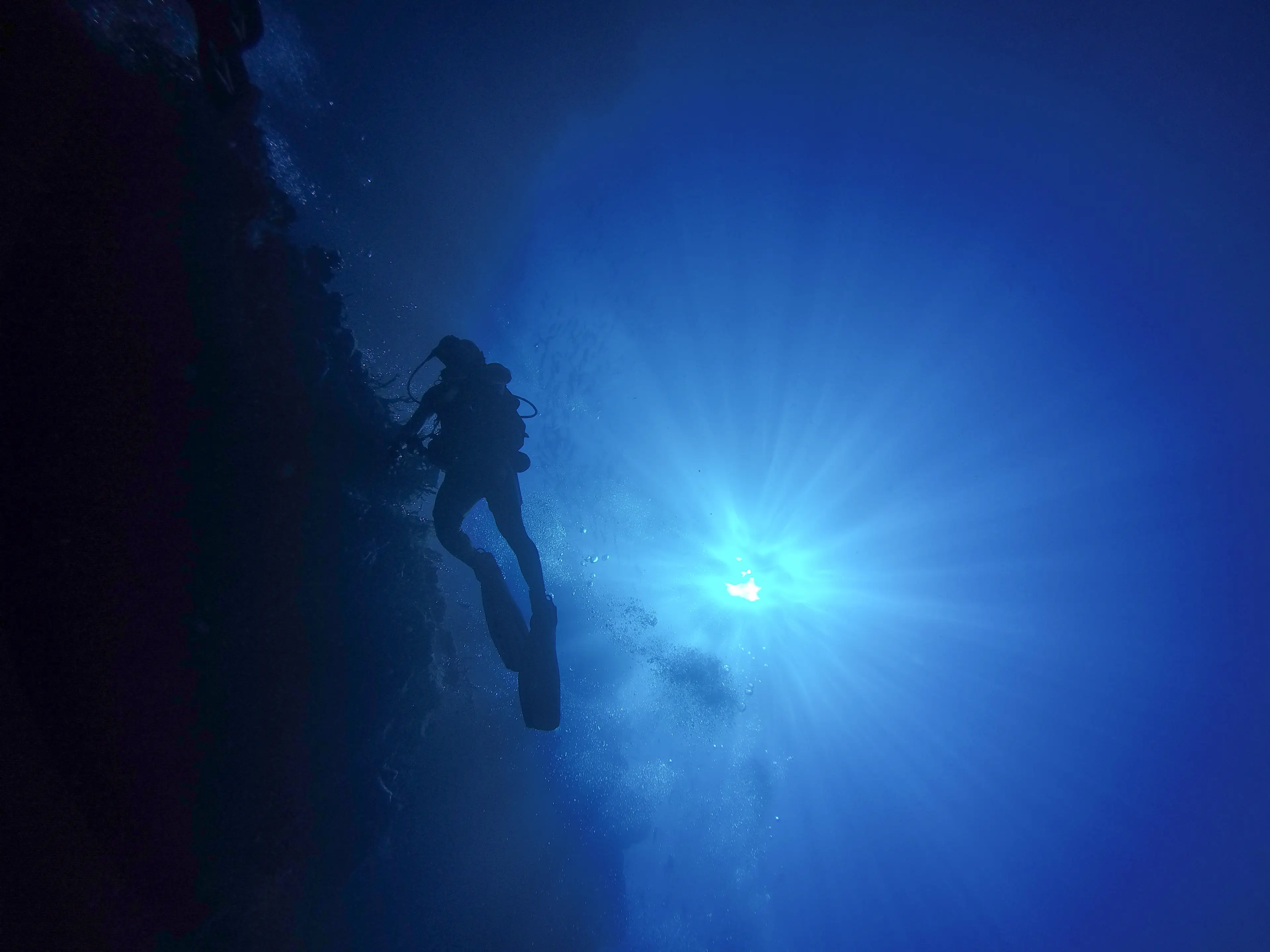
Finally, at 19,700 feet, we officially begin to descend into the deepest part of the ocean, into the Marina trench — one of the least explored areas of the ocean.
Down here you might see the deepest fish ever found, the Snailfish, which typically dwells at around 26,000 feet. This fish is totally translucent so you can actually see straight through its body.
Passing about 3,500 feet and we won’t see any fish or vertebrate animals due to the intense pressure. What you can expect are shrimps and other similar invertebrates and microbes.
Finally, at 35,853 feet, we reach the Challenger Deep, AKA the deepest part of the Marina trench.
There’s been incredibly limited research done into this part of the ocean, but scientists are always working to learn more. Hopefully more discoveries from the Challenger Deep will come to light very soon.