
Scientists finally address eerie simulation conspiracy that universe is the 'ultimate computer'


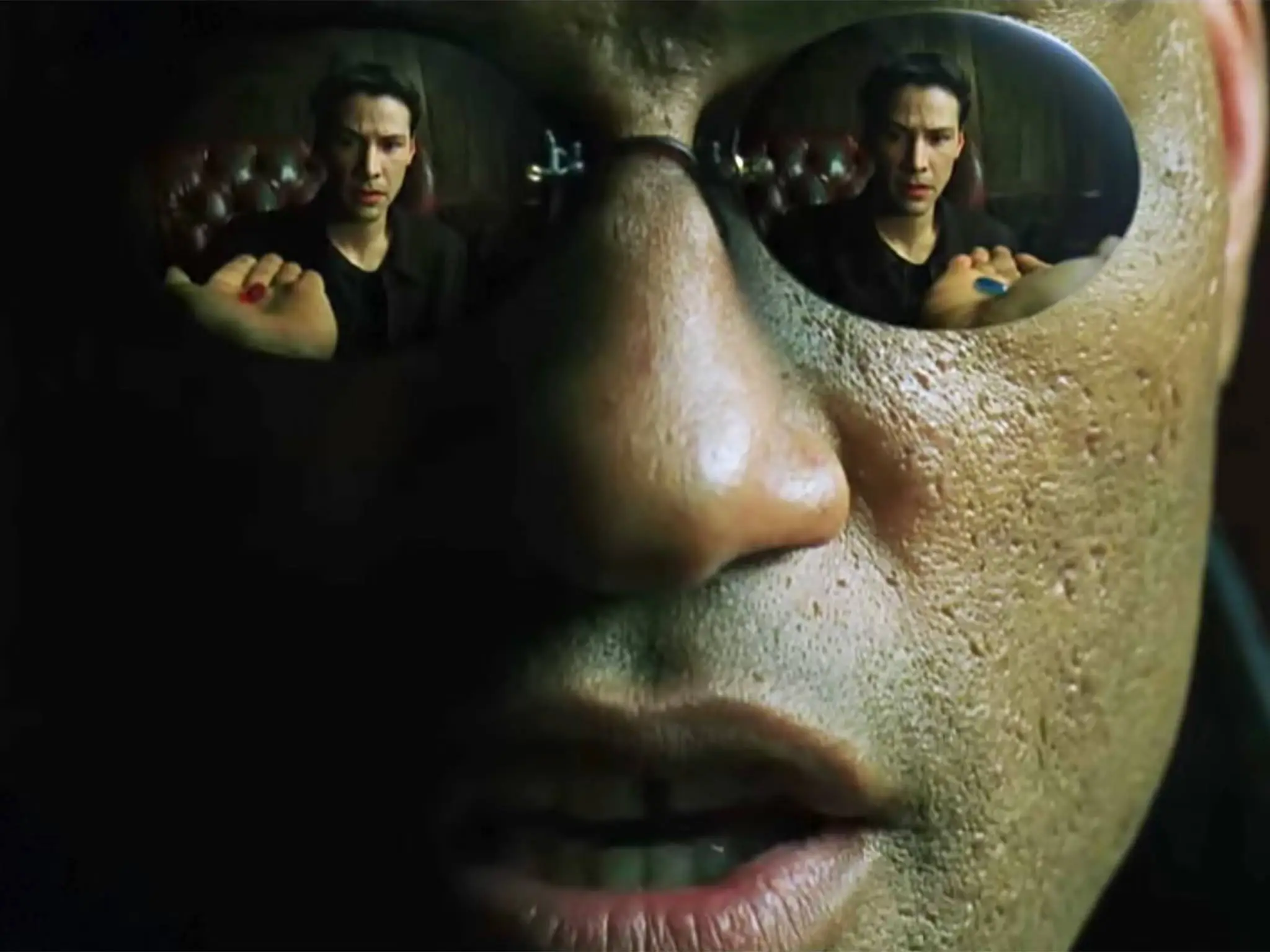
The Matrix 5 could be closer than you think, with scientists given a dystopian response to the idea that we mere humans are little more than pixels in some grand simulations. The question remains: do we really have our own free will, or are we just characters living in what we think is a real-life version of The Sims?
When even Elon Musk wades into the idea that our universe is a simulation, it might be time to start questioning the reality of what we thought we knew. Alongside scientists supposedly finding proof that we're characters living in an AI universe and Minecraft apparently suggesting we're in one, some experts have actually created a simulation of the universe, showing how easy it would be for some high power to do it to us.
Now, a group of mathematicians has spoken out and debunked the idea that we're living in a simulation. At least that should take away some of our existential dread.
More than being unlikely, Dr Francesco Marino from the Italian National Institute of Optics told the Daily Mail that it's mathematically impossible that we're in a simulation.
Advert
According to Marino, the way that reality works means it couldn't be replicated by computers. The scientist explained to the outlet that the strangeness of quantum physics and 'non-algorithmic understanding' is impossible to replicate: "We have shown that a fully algorithmic description of the Universe is impossible.
“Any simulation, by definition, runs on a set of programmed rules or algorithms that determine how things behave step by step.
"A simulated world could only mimic the algorithmic parts of reality, but would always fail to include those deeper, non-algorithmic truths."
Still, there's a strong argument that we're living in some sort of simulation, with the University of British Columbia and co-author Dr Mir Faizal adding: "If such a simulation were possible, the simulated universe could itself give rise to life, which in turn might create its own simulation."
Faizal goes on to say that we might not even be in our OG universe: "This recursive possibility makes it seem highly unlikely that our universe is the original one, rather than a simulation nested within another simulation."
Published in the Journal of Holography Applications in Physics, the study 'proves' that this argument doesn't stand up. Namely, the theory of 'quantum gravity' expands on the idea that everything from particles to fields to spacetime comes from a deeper level of reality that computers simply can't compute.
The 'Platonic realm' is comprised of pure information and is responsible for the mathematical foundation of the universe we currently live in.
In layman's terms, the world of pure information can't be described with computers.
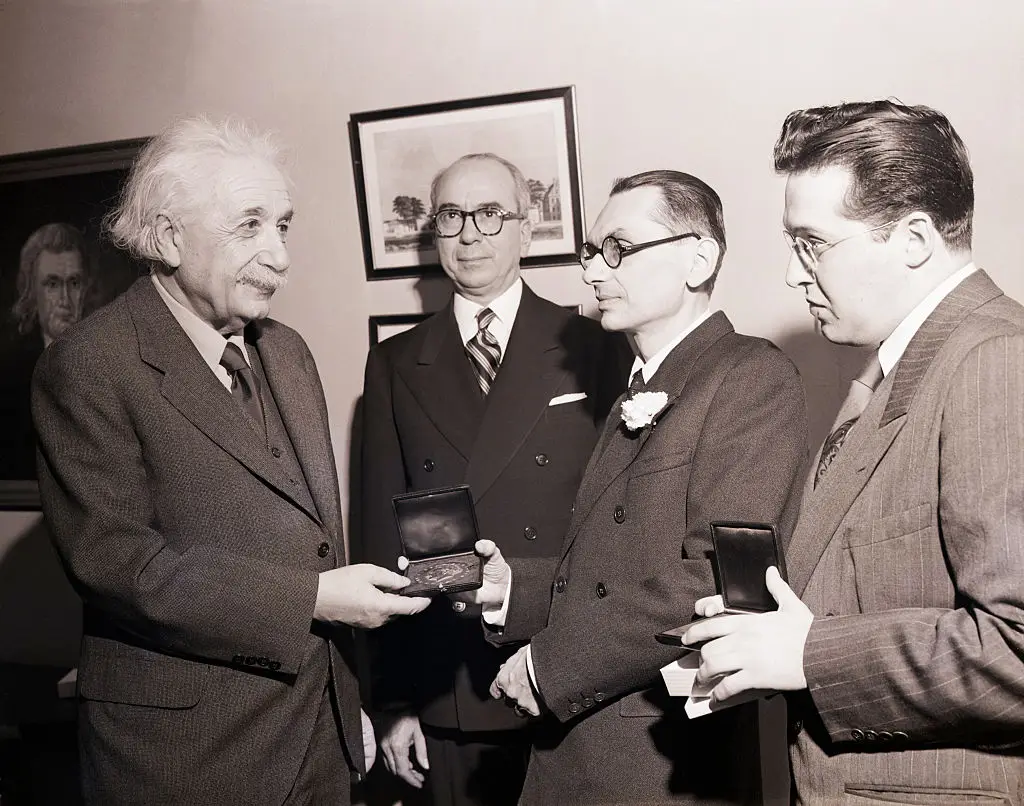
Back in the 1930s, mathematician Kurt Gödel set out to prove that there were some statements about numbers that we know to be accurate but could never prove.
In 2025, Marino and the team assert that these 'Gödelian truths' prove that the universe needs non-algorithmic understanding.
Using the example of "this true statement is not provable," Marino concludes: "If it were provable, it would be false, making logic inconsistent.
“If it's not provable, then it's true, but that makes any system trying to prove it incomplete. Either way, pure computation fails."
Faizal then summed up, saying: "Drawing on mathematical theorems related to incompleteness and indefinability, we demonstrate that a fully consistent and complete description of reality cannot be achieved through computation alone.
“It requires non-algorithmic understanding, which by definition is beyond algorithmic computation and therefore cannot be simulated. Hence, this universe cannot be a simulation."