Everything we know about ‘phase black’ disaster that has 31 countries preparing for emergency


With major tech outages and cyberattacks raging through October and November, the second half of 2026 has led to increased concerns about potential 'doomsday' scenarios in the world of tech.
Things have ramped up in recent weeks with a massive Microsoft outage, issues with Apple as 178 sites faced problems, and warnings from cybersecurity experts that things are only going to ramp up in the next 18 months.
UNILADTech spoke to cybersecurity expert Eugene-Patrice Nkomba, who clarified that as a smaller number of tech companies start to have control over an increasing number of sites, this shared ecosystem opens us up to a whole world of trouble in terms of outages and cyberattacks. If we weren't already bummed out by all this doomsday talk, the Netherlands has given us something else to worry about with all this talk about a 'phase black' disaster scenario. But just what is phase black, and should we really be prepping for the end of days?
What is the 'phase black' disaster scenario?
Originating in the Netherlands as 'fase zwart', the idea of a phase black scenario started in response to a cyberattack that hit Dutch retailer Albert Heijn. Shelves were emptied in a day, and as it cost Albert Heijn's parent company hundreds of millions of euros, Marc Jansen, director of the Dutch Central Bureau for Food Trade (CBL), said it sped up planning for doomsday scenarios.
Advert
Elsewhere, cyberattacks disabling cooling systems in supermarkets across France have further highlighted supply vulnerabilities and led to some prepping for the worst, as others have heightened stockpiling concerns.
A phase black scenario is an extension of the recent Black Sky event fears, focusing on worst-case disruptions that could range from cyberattacks to military conflicts or power grid failures.
Imagining what would happen if food distribution networks, digital payment systems, telecommunications, and even water pumping stations could be out of action, we're told to prepare emergency kits.
In the Netherlands, phase black plans suggest turning designated stores into emergency supply hubs that are equipped with backup generators, offline operating systems, and are within a 15-minute drive or 30-minute cycle for residents.
Because normal supply chains can empty within two to three days of a major disruption, it's important to prepare without panicking nations into stockpiling or spreading unnecessary fear.
What countries need to prepare for phase black?

Although every country might need to worry about a phase black scenario, Newsweek has a map showing the 31 that have currently issued warnings and told their citizens to prepare. Different ones have different advice on what to prep and how long for, although we remind you of what a government account for the French region of Normandy said on social media: "Don't wait for the emergency: prepare now!"
The United Kingdom, France, Canada, Japan, Mexico, and the Netherlands have all told citizens to make sure they've got an emergency kit that can tide them over for at least 72 hours, while Sweden and Norway suggest you should have supplies to last a week, and Germany calls for 10-day supply kits.
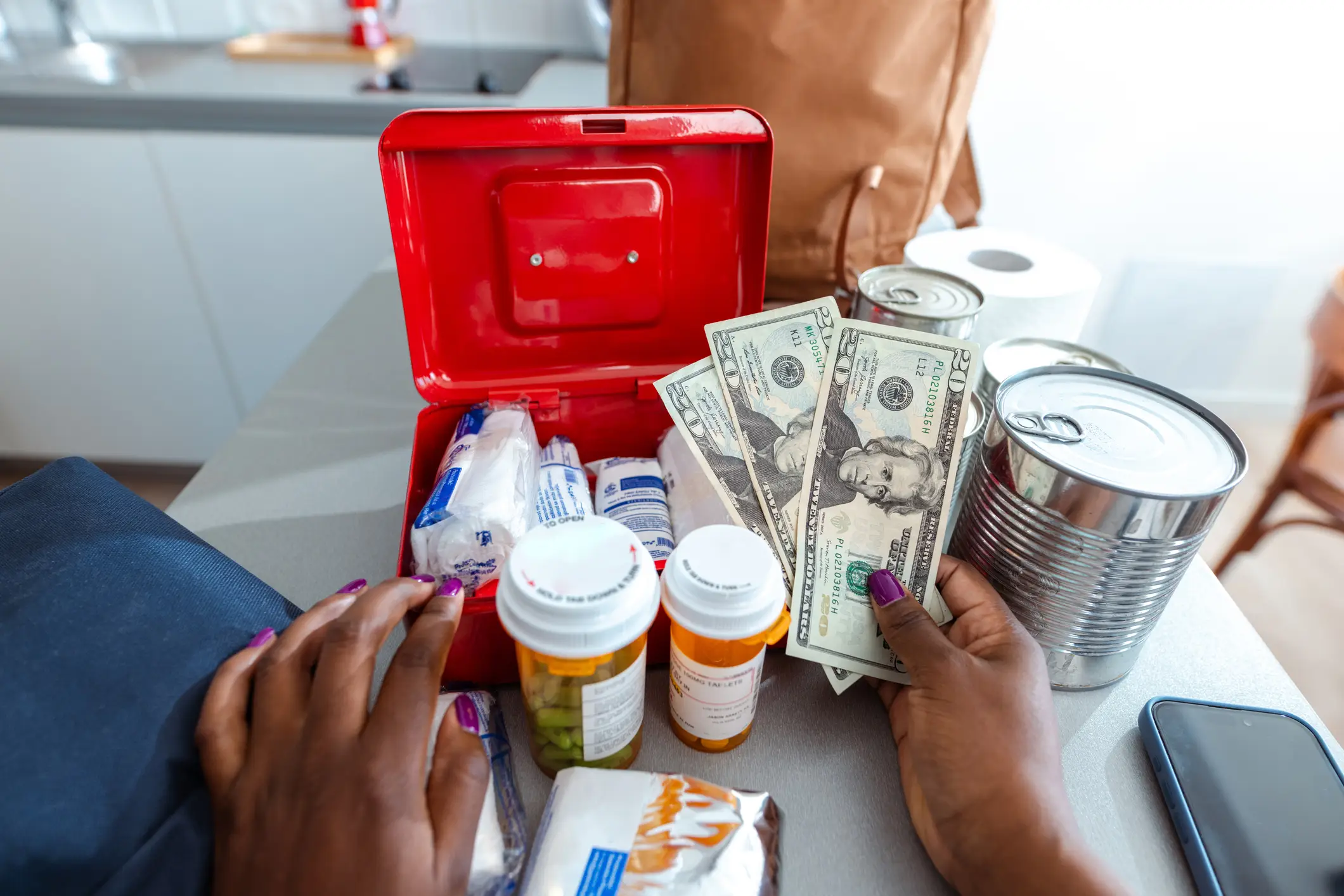
These kits should typically contain the likes of canned food, a battery-powered radio, drinking water, cash, important documents stored in a waterproof bag, and other essentials like a first aid kit.
At the time of writing, the following 31 countries have issued phase black warnings:
- Argentina
- Australia
- Austria
- Brazil
- Canada
- Chile
- Colombia
- Croatia
- Czech Republic
- Denmark
- Estonia
- Finland
- France
- Germany
- India
- Ireland
- Israel
- Japan
- Latvia
- Lithuania
- Netherlands
- New Zealand
- Norway
- Philippines
- Poland
- South Africa
- Spain
- Sweden
- Switzerland
- United Kingdom
- United States of America
Speaking ahead of his meeting with China's President Xi Jinping and Russia's President Vladimir Putin as part of the Asia-Pacific Economic Cooperation (APEC) summit in Shenzhen, President Donald Trump has downplayed the recent uptick in outages and said 'it's fine'. Addressing the issue while in the Philippines, the POTUS maintained: "It’s life. When you’re big and powerful and have all the money, things like that happen."
Still, it comes at a time when JD Vance was reportedly told to stay in Washington, D.C., and Defense Secretary Pete Hegseth has reiterated that US military bases are expected to run independently for around three months if supplies are cut off. Hegseth also unveiled the Federal Operations for Resilience, Troop Resources, Energy, Supply and Survivability (FORTRESS) initiative on September 30, reiterating that it's "the nation’s insurance policy" to ensure it can keep on running in the event that traditional supply chains are cut off.
Even if phase black warnings might seem like some dystopian idea, it's no longer just those on the Doomsday Preppers reality series that are taking note.