We tested what still works during Microsoft’s outage, here’s what we could access


It's a troublesome end to the week for Microsoft, with a massive outage knocking out services for millions of users around the world. On November 12, there was a spike in reports on Downdetector, with it reportedly spreading to 74 countries around the world.
We know that Friday the 13th is supposed to be unlucky, but it's expected to be a quiet one around the world as millions of people start work without access to Microsoft services. As Microsoft is known for everything from Outlook to Teams, it could be a slow workday.
What's the latest with the Microsoft outage?
More than just covering your office, Microsoft is also used by AI companies. The likes of Anthropic and OpenAI have reported issues, while the numbers speak for themselves in terms of how many people use Microsoft services every day.
Advert
It's said that more than 430 million people use Microsoft 365 apps, made even more complicated by 90% of Fortune 500 companies using Microsoft's Copilot AI chatbot.
It's unclear what's causing the outage, but according to Sky's technology correspondent Rowland Manthorpe, it wasn’t a cyberattack. This was backed up by Microsoft executive Charles Lamanna, who took to X and wrote: "We will continue to share more information as soon as we have it, and for now I can confirm that there is no indication this is the result of malicious or cyber activity.”
Speaking to the Sky’s Mornings, Manthorpe reiterated Microsoft "haven't released a great amount of detail" but, debunking our cyberattack fears, added: "That normally means that it's some kind of mistake internally and very often it's a botched software update."
With the problem supposedly being internal to Microsoft, this isn't thought to be a supply chain issue.
In an update in the early hours of November 13, Microsoft admitted that changes to try and fix the outage were "not taking as expected," promising to test other ways that would let users back onto its platforms without overloading the system.
An earlier warning stated that even when services are restarted, an influx of traffic can cause them to become unresponsive.
Things are looking a little more positive at the time of writing, as Microsoft has since given a glimmer of hope that things could soon be back to normal, writing: "We’re seeing positive results for server stability after applying an upstream authentication/routing configuration component patch to a portion of our infrastructure.
“We’ll continue to monitor its progress and are working to expand it to servers supporting active regions coming online."
What is still working during the Microsoft outage?
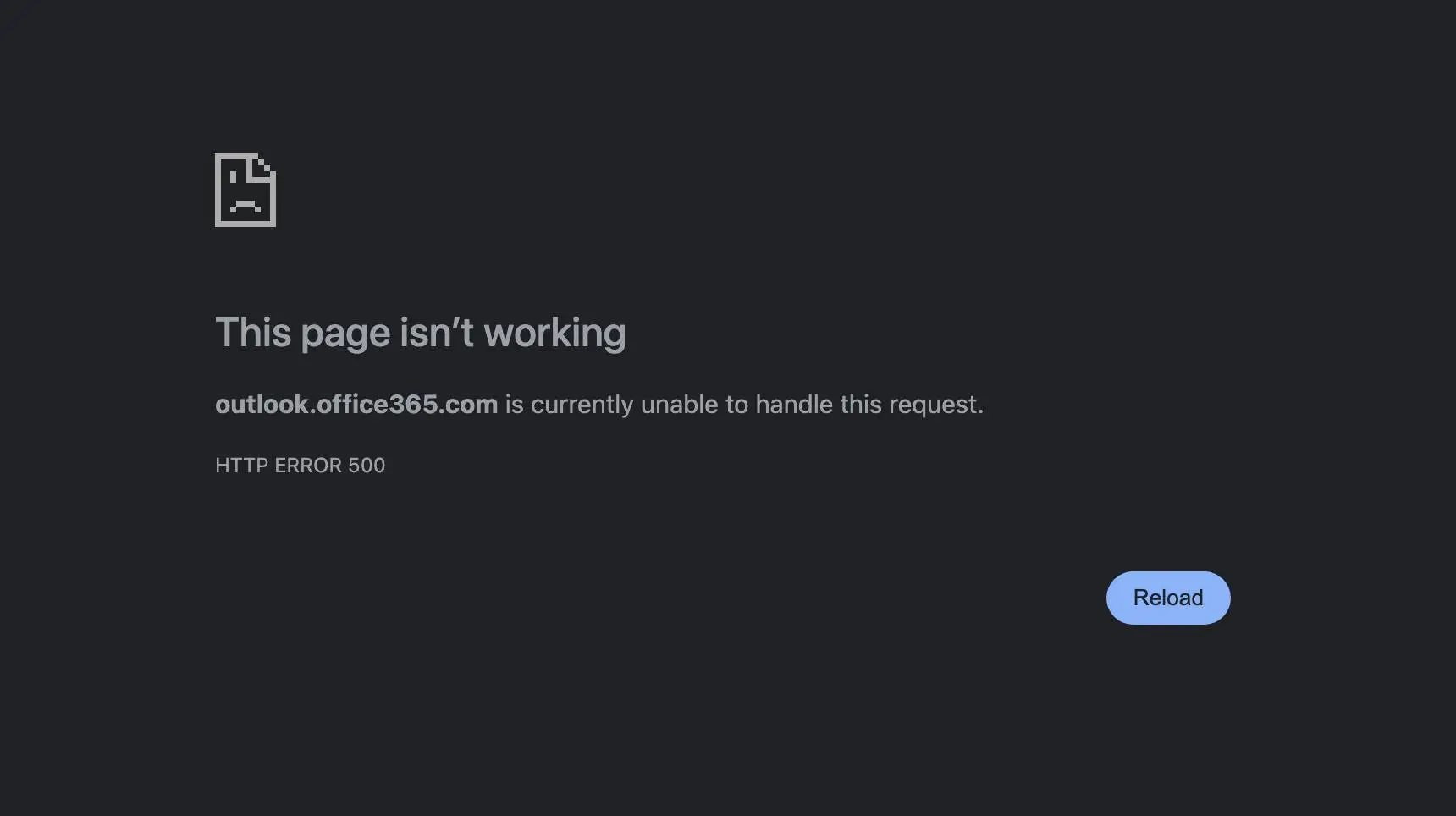
We put Microsoft to the test, seeing issues across the board. Despite the company's confidence that things are returning to some sort of normality, Outlook is still down. While it means we won't be sending or receiving emails for the foreseeable future, this is just the start of issues with 365 services.
Our morning meeting could also be in trouble, but we can confirm that while Microsoft Teams was a little slow to load, we did manage to sign in.
Copilot looked like it was going to load and then gave up the ghost, whereas OneDrive looked like it was okay but is now stuck on a white screen.
Microsoft Planner was struck with a spinning wheel and then delivered a HTTP error, and Microsoft Defender doesn't appear to be defending like it should.
These are undoubtedly annoying issues, but the bigger picture is even more concerning when you remember how much Microsoft is baked into our infrastructures.
Although emergency dispatch systems remain fully operational in the USA, police departments, the fire department, and municipal governments have reported widespread disruptions to email and administrative services.
We're encouraged to use 311 or telephone non-emergency numbers directly instead of sending email until Microsoft can confirm things are back to normal.
There's no timeline for when that could be, but we'll keep you updated.