Microsoft issues 'Code Red' declaration following major Outlook outage


As one of the biggest companies in the world, Microsoft has apparently issued a 'Code Red' warning in the aftermath of a recent outage that decimated Microsoft 365 services.
In November 2026, the internet was rocked by a massive Microsoft outage that saw millions of customers lose access to their emails and more for nearly 24 hours. Remembering that Microsoft tech is tied to the likes of OpenAI and Anthropic, the issues spread far beyond just not being able to get access to your morning Teams meetings.
The outage was supposedly caused by a bug that had been lurking quietly in Microsoft 365 networking gateway servers since July 2026, and in the aftermath, the company is working hard to prevent this kind of catastrophe from happening again.
What is Microsoft's 'Code Red' warning?
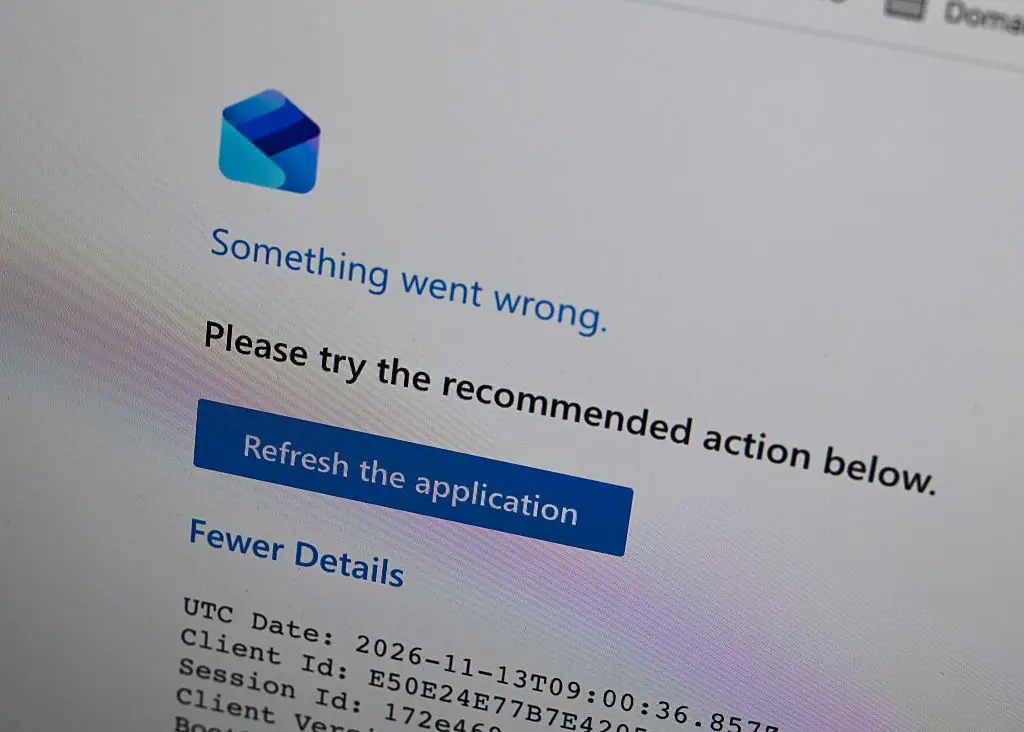
After reviewing internal memos, Reuters says the tech giant has issued a 'Code Red' warning over the November 12-13 outage. Reminding us that governments from Australia to the USA were hit hard, there were also broader concerns about how it affected everything from healthcare access to airline communications.
Advert
Although Microsoft has reiterated the outage wasn't related to cyberattacks or AI agents, it's raised questions about how our growing reliance on critical digital infrastructure could be putting us at risk.
As well as Microsoft CEO Satya Nadella apologizing for any disruption caused, M365 Core President Jason Henderson sent out a staff memo referring to the most customer-impacting incident in the history of Exchange Online.
Calling for vigilance, Henderson said: "Code Red means that this is the highest priority work for our team."
In a separate memo sent by Amanda Silver, Microsoft's corporate vice president overseeing M365 Core and Work IQ, she said engineers had to work through the 'fog of war' as over 11,000 messages were sent across 11 Teams chats.
As reported by The Verge, Microsoft had a running bridge call throughout the outage, which peaked with 1,000 participants at one point.
Staff apparently struggled to keep track of what was going on because diagnostic data was "scattered across fragmented internal tracking systems."
Silver's memo also mentions Charles Lamanna, Microsoft's executive vice president of Copilot, Agents and Platform. Lamanna told a Code Red review that the incident led to "roughly ten years' worth of acceptable failures."
As part of Microsoft's Code Red declaration, Silver has highlighted five workstreams that will focus on load shedding, geographic traffic partitioning, and faster recovery mechanisms.
What's next for Microsoft following the November 2026 outage?
Saying that he's conducted an extensive review of broader organizational and structural issues, Henderson concluded: "Unfortunately, all the work we have done over the years was not sufficient to protect us on Thursday."
An earlier memo read by Reuters had him saying that "urgent patches to our M365 Core services" took too long to deploy around the globe: "In a separate recent incident, an urgent production fix took five to six days to reach worldwide saturation.
“For our most urgent security issues, we need to get from detection to safe worldwide deployment in an hour. Needless to say, we aren't here yet."
Moving forward, Microsoft has a target of resolving any potential incidents within an hour. AI agents will also be deployed to help human engineers, while daily meetings with the group responsible for Microsoft 365 services are already underway, as well as weekly reviews.
When Reuters contacted Microsoft about the memos, a company spokesperson said: "Our work doesn't end when service is restored. Our teams keep working around the clock to quickly implement any lessons learned, and our leadership makes sure this is our top priority."
More than just aiming to stop future outages in an hour, the Microsoft spokesperson said the company is determined to stop them happening in the first place.
Hopefully, the November outage will just be an unfortunate smudge on Microsoft's timeline.