NASA issue statement on Iowa detonation as US army detonates tons of explosives


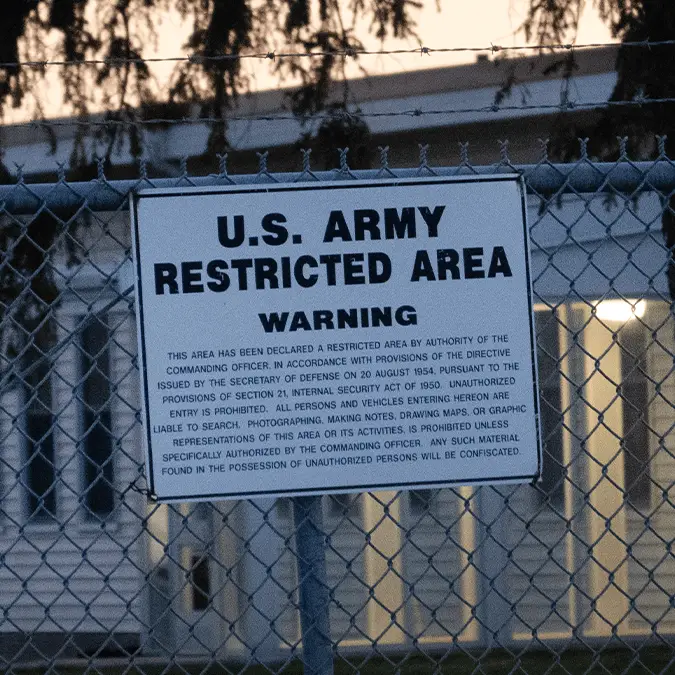
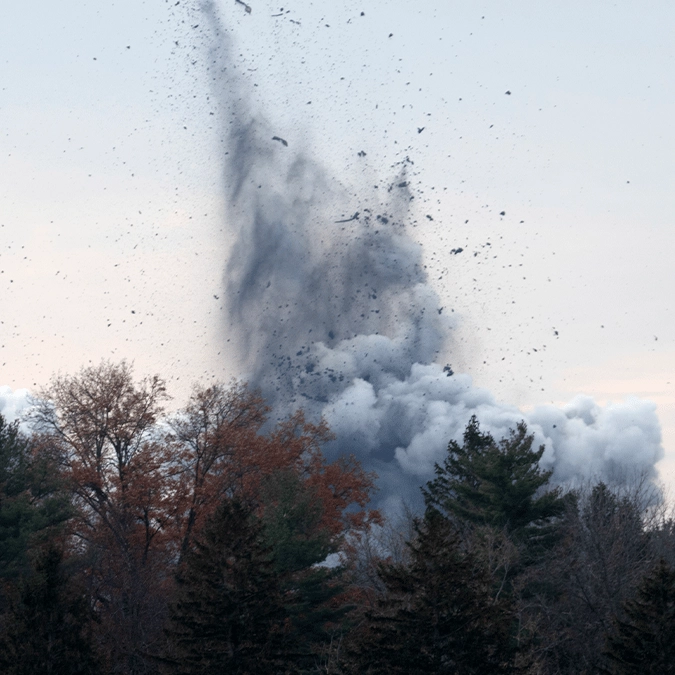
The US Army have just detonated five tons of unstable explosives in Middletown, Iowa after the military determined that the more than 9,700 pounds of lead azide became too unstable to safely move or treat.
Middletown residents and others within a designated five-mile zone southwest of the plant were advised to temporarily relocate, those outside the relocation zone but within the wider advisory area were urged to shelter indoors for 48 hours, close windows and doors, and set heating and air conditioning systems to recirculate indoor air.
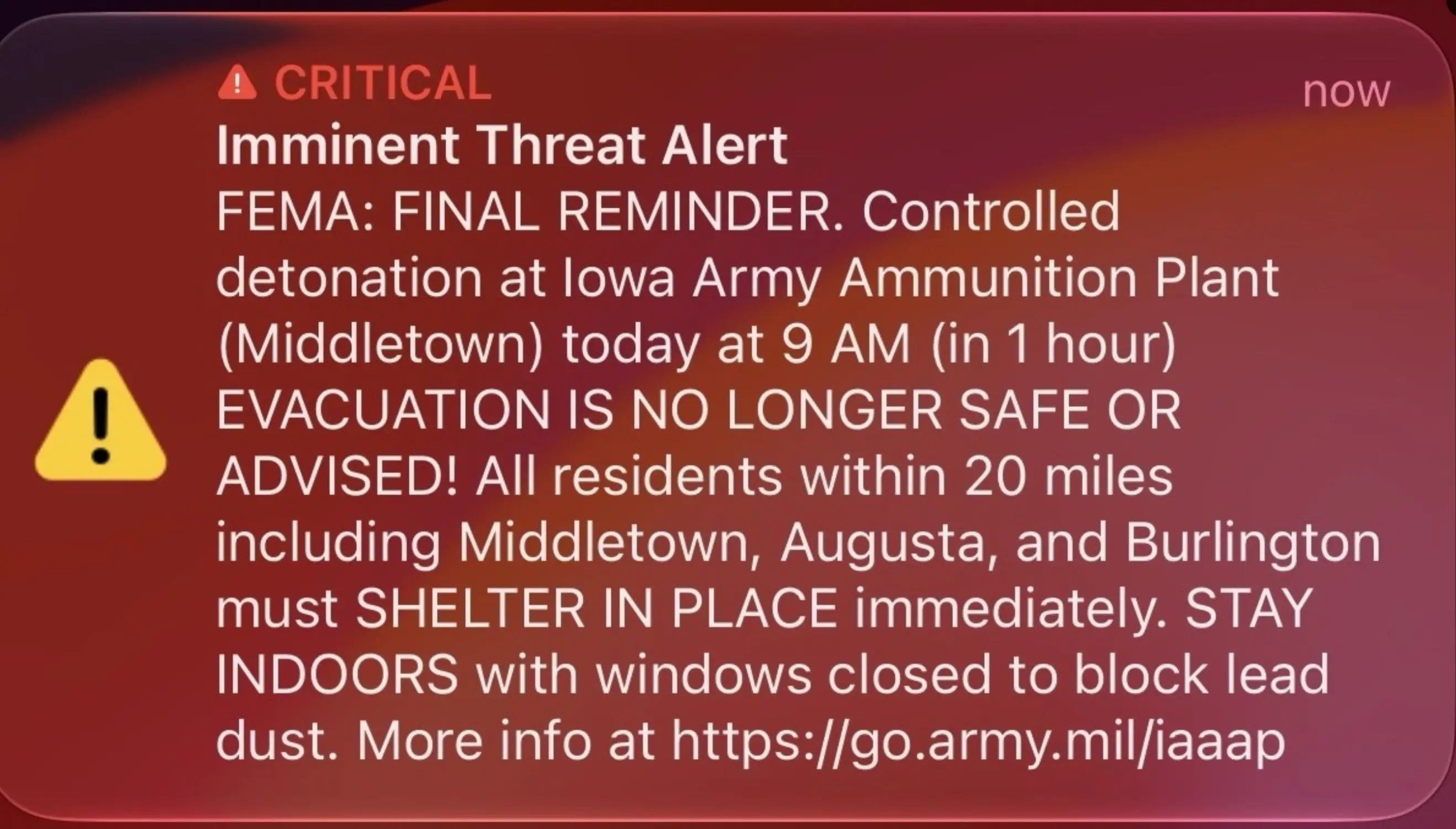
Residents of the area have since received an emergency alert to their phones informing them of an ‘imminent threat’ and the Army have provided a map informing people of the areas projected to be affected by the detonation.
The detonation had previously been postponed several times. In a November 19 announcement, the Army initially pushed the operation back from November 20 to November 23, saying it wanted to delay until the latest possible opportunity before a forecast temperature drop risked further destabilizing the explosives.
Advert
The Army then announced November 25 as the planned date - Now, NASA have issued a statement explaining their involvement in the detonation.
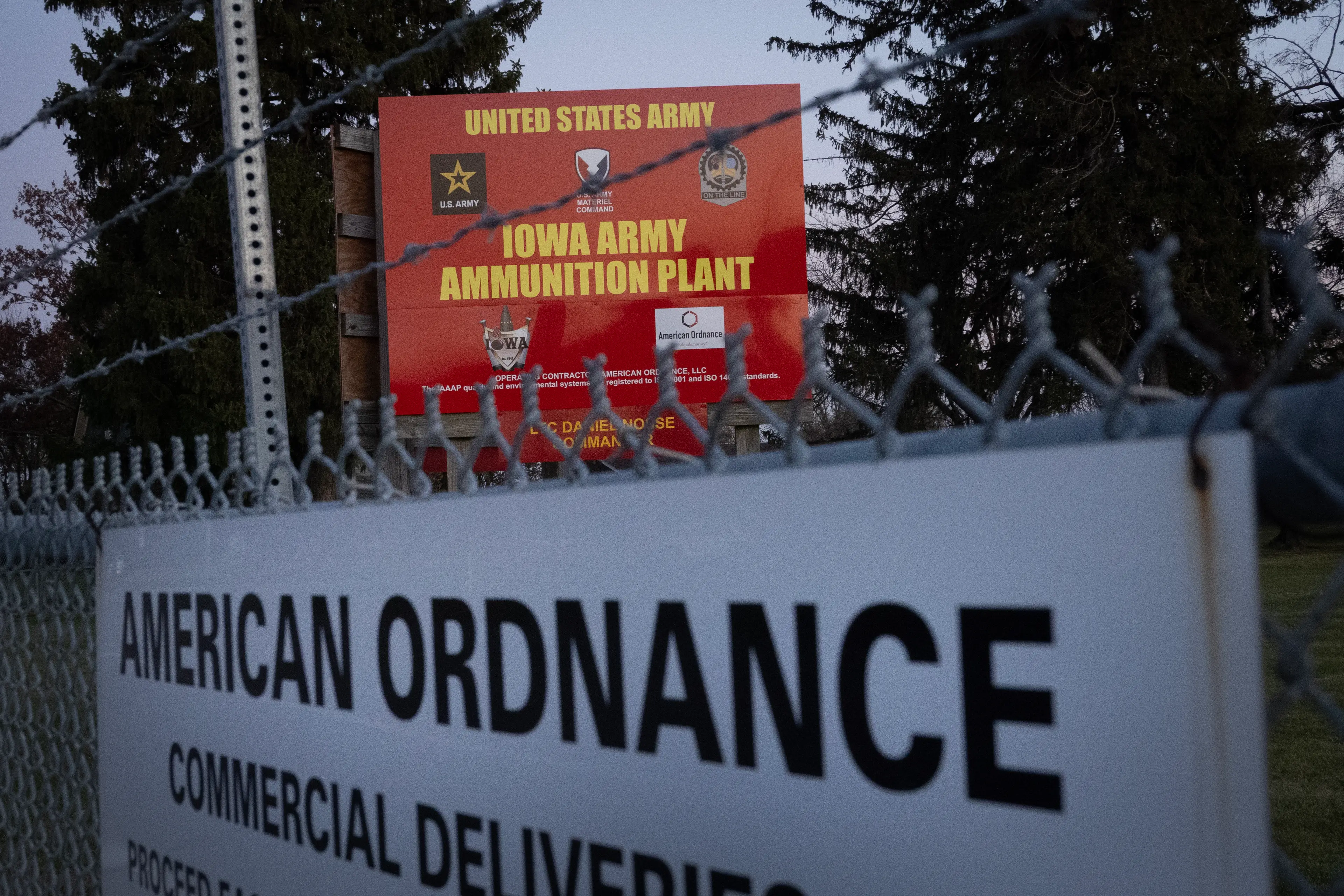
NASA speak out on Iowa ammunition plant detonation
Speaking out on X yesterday (24 November), NASA announced that they are helping other government agencies in measuring what’s happening in the air around the ammunition plant, keeping tabs on the situation following the detonation.
NASA wrote:
“As part of a coordinated, whole-of-government effort, NASA has rapidly mobilized specialized research aircraft, space-based observation capabilities, and scientific personnel to support ongoing efforts at the Iowa Army Ammunition Plant in Middletown, Iowa. NASA stands ready to bring its unique capabilities and world-class scientific expertise to bear whenever called upon in service of the nation and the American people.
“In support of this effort, NASA has deployed a P-3 Orion and Gulfstream III from the agency's Langley Research Center in Virginia and a NASA Ames contracted B200, and is leveraging observations from its space-based Tropospheric Emissions: Monitoring of Pollution (TEMPO) instrument.
“Working alongside our partners across the federal government, NASA is utilizing its advanced scientific instruments and expertise to collect environmental and atmospheric data to inform the broader federal response.”
In simple terms, NASA is bringing together measurements from specialist aircraft and observations from space to help officials assess the environmental conditions around the plant.
'TEMPO' gives scientists a view of air pollution all the way from space, collecting measurements across North America every daylight hour. It monitors gases and tiny airborne particles known as aerosols, which can include smoke and dust. However, NASA has not provided any findings yet or confirmed whether the instruments aboard its aircraft will directly measure airborne lead.
This is important because Iowa’s Department of Health and Human Services identifies potential lead exposure as the main anticipated public health concern. Particles released during the detonation could travel beyond the plant and settle on surrounding surfaces.
NASA is supporting a wider environmental monitoring operation. Ahead of the blast, the Environmental Protection Agency said it had collected more than 1,001 air, land and water samples, with testing continuing during and after the explosion. Those results will help officials determine whether cleanup is necessary.