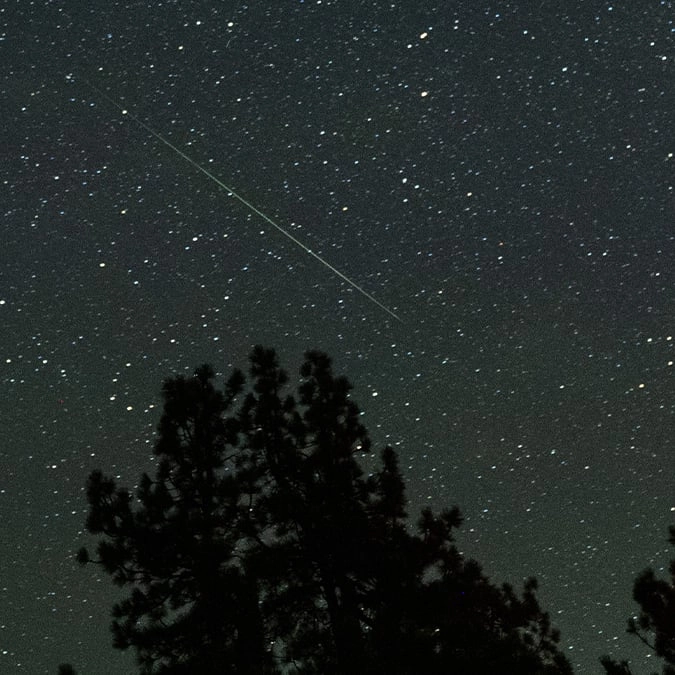
NASA issue statement over fireball meteor sighting spotted over Tennessee


Stargazers across the US were treated to an unexpected spectacle last week when a meteor shot across the night sky in what appeared to be a ball of light.
Known as a fireball, the meteor was spotted over Tennessee on Thursday (November 5), with multiple people taking to social media to share their reactions to the unusual sighting.
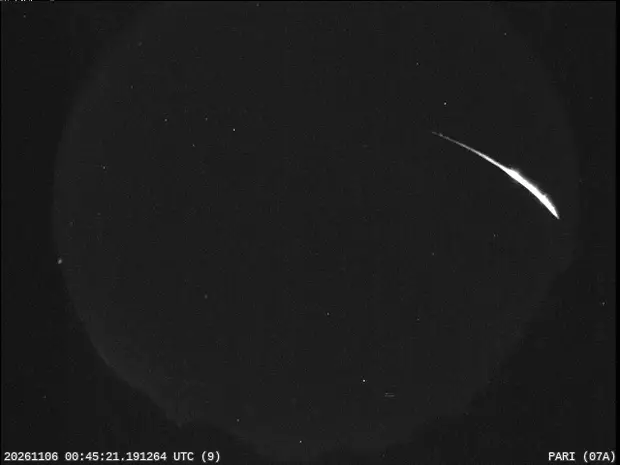
NASA released a statement on the news, taking to X, formerly Twitter, to write: “There have been many postings to social media of a fireball observed over southern Tennessee on November 5th at 7:45 PM Eastern Standard Time (2026 November 06, 00:45 UTC).
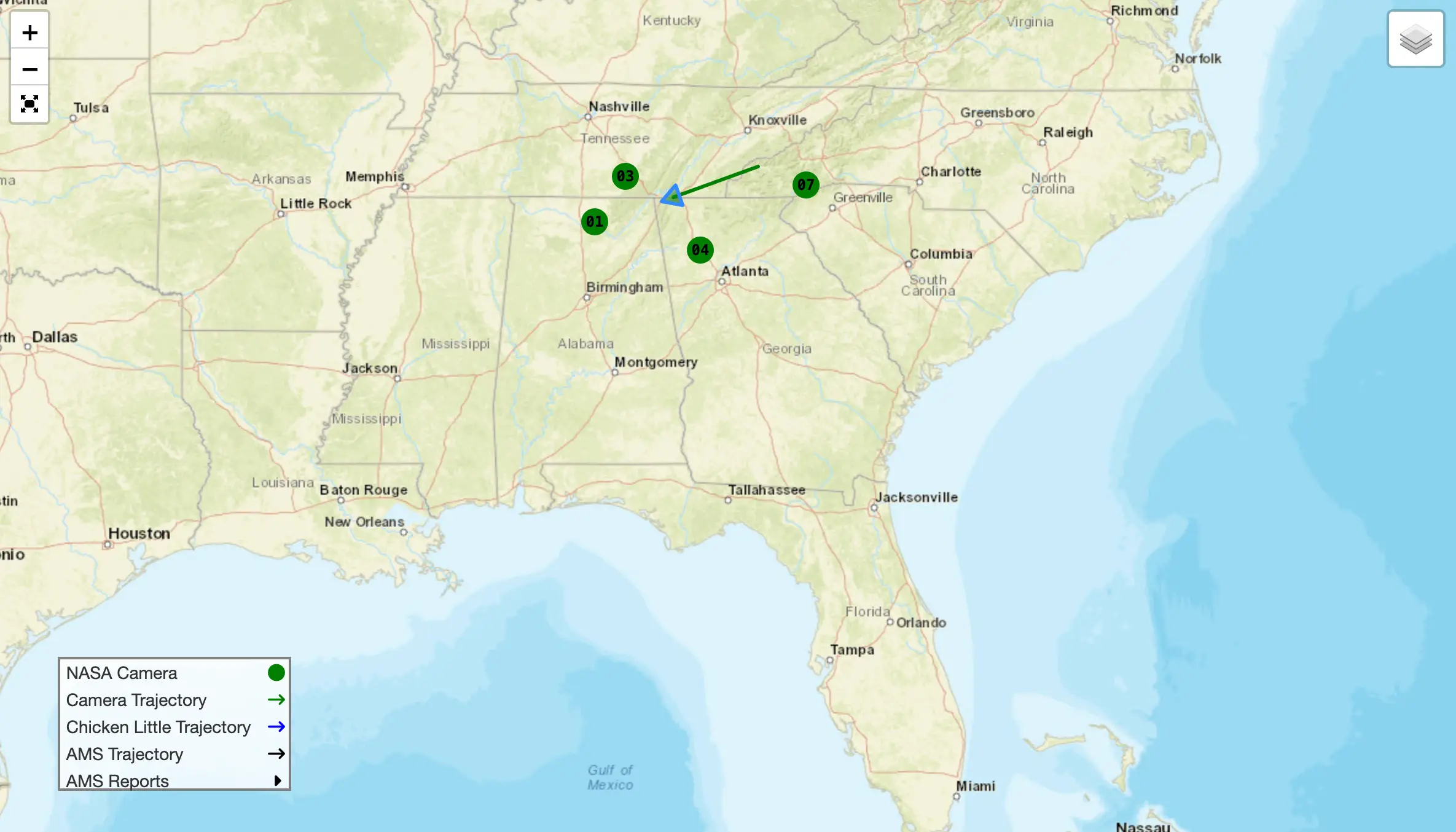
“The meteor was also detected by 4 NASA all sky cameras in the region and an analysis of the video data shows that the object - a small piece of an asteroid 2 inches in diameter and weighing 6 ounces - was first spotted 53 miles above the North Carolina town of Robbinsville, moving a little south of west at 47,000 miles per hour. It disintegrated at an altitude of 25 miles above East Ridge, Tennessee, just southeast of Chattanooga.”
Advert
According to the space agency, the object was a small fragment of an asteroid measuring around two inches in diameter and weighing approximately six ounces.
Despite its relatively small size, the space rock was traveling at an astonishing speed, reaching 47,000 miles per hour.
NASA also shared imagery of the fireball as it passed through the atmosphere and was captured on several NASA cameras.
What are fireball meteors?
The term ‘fireball’ is used for meteors that are ‘exceptionally bright’, according to the agency, and are ‘spectacular enough to to be seen over a very wide area’.
This usually occurs when rocks enter Earth’s atmosphere at high speeds, producing a visible streak of light, and although the sight can look dramatic from the ground, many objects responsible for these displays are relatively small.
NASA explains: “During the atmospheric entry phase, an impacting object is both slowed and heated by atmospheric friction. In front of it, a bow shock develops where atmospheric gases are compressed and heated. Some of this energy is radiated to the object causing it to ablate, and in most cases, to break apart.
“Fragmentation increases the amount of atmosphere intercepted and so enhances ablation and atmospheric braking. The object catastrophically disrupts when the force from the unequal pressures on the front and back sides exceeds its tensile strength.”