Manufacturers unveil major project that could transform the future of EVs


Electric vehicles are improving quickly, but most of the gains drivers notice still come from refining the same lithium-ion playbook: better packaging, smarter thermal management, and increasingly sophisticated software.
The next leap forward, however, depends less on marginal optimisation and more on whether manufacturers can industrialise a different type of battery chemistry that promises higher performance with fewer compromises.
That is why the electric car industry’s attention has been steadily shifting towards solid-state designs.
Essentially, replacing the liquid electrolyte used in conventional cells with a solid material could unlock higher energy density and improved safety qualities, while also supporting them being more durable over the long term.
Advert
In practice, the technology is difficult to scale, with major challenges around material stability, keeping up the consistency needed during manufacturing, and maintaining the production conditions needed.
Those hurdles have now prompted an unusually coordinated response from some of the biggest names in the sector.
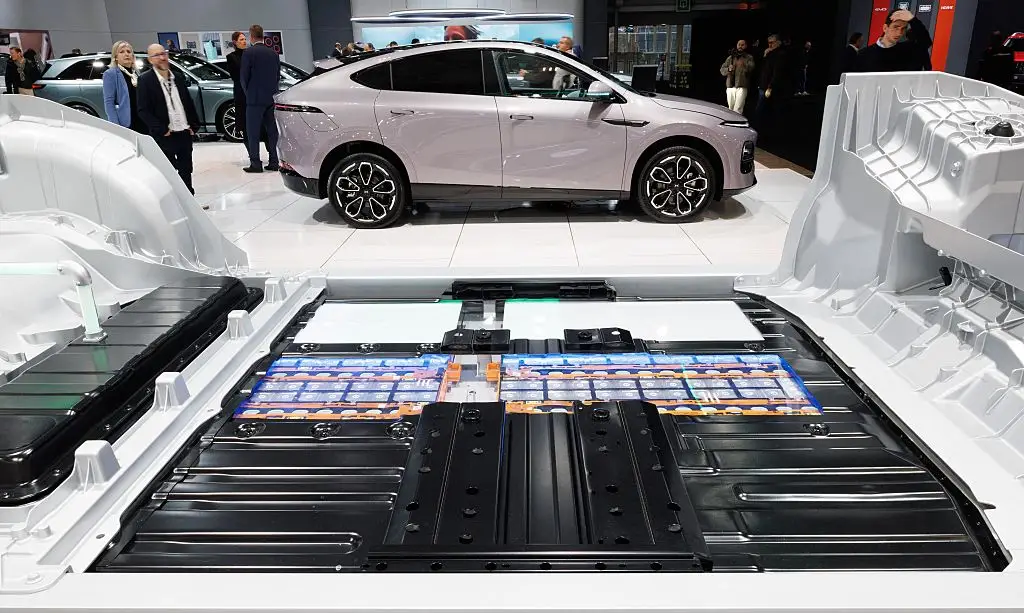
As reported by Interesting Engineering, a coalition of leading Chinese battery makers and automakers has launched a major project in Beijing focused on bringing solid-state battery materials closer to commercial readiness, including a shared facility expected to produce around 25 tonnes of electrolyte materials each year.
The effort is being led by the Guolian Automotive Power Battery Research Institute and draws in heavyweight backers across China’s automotive and energy ecosystem.
Among the names highlighted are battery giant CATL and automaker SAIC Motor, alongside major manufacturers such as Changan Auto and Dongfeng Motor, with additional backing from state-owned companies.
Rather than positioning itself as a full-scale factory, the Beijing site is framed as a testing and validation platform. Located in the Yanqi Economic Development Zone, it is intended to support research, pilot production, and rigorous verification of solid-state electrolyte materials — the building blocks that could determine whether solid-state batteries can meet real-world requirements for reliability, performance, and safety.
That’s because, for solid-state technology, the gap between promising prototypes and repeatable manufacturing remains one of the biggest barriers to progress to getting them out in the market and ready to drive.
With a dedicated facility designed to produce, evaluate, and standardise materials at pilot-scale, this joint effort can help shorten development cycles and reduce the uncertainty that has slowed wider deployment over the years.
The project also arrives at a moment when China is tightening the framework around solid-state batteries, combining infrastructure investment with clearer expectations on how the technology should be classified and assessed. If this new collaborative effort succeeds, it could accelerate a path toward batteries that could be used in more vehicles and last longer altogether, all while reducing the risks associated with today’s liquid-based systems.