
Fatal mistake that turned Kodak from a $31,000,000,000 photography company to bankrupt


Think how many happy memories we've snapped with Kodak over the years.
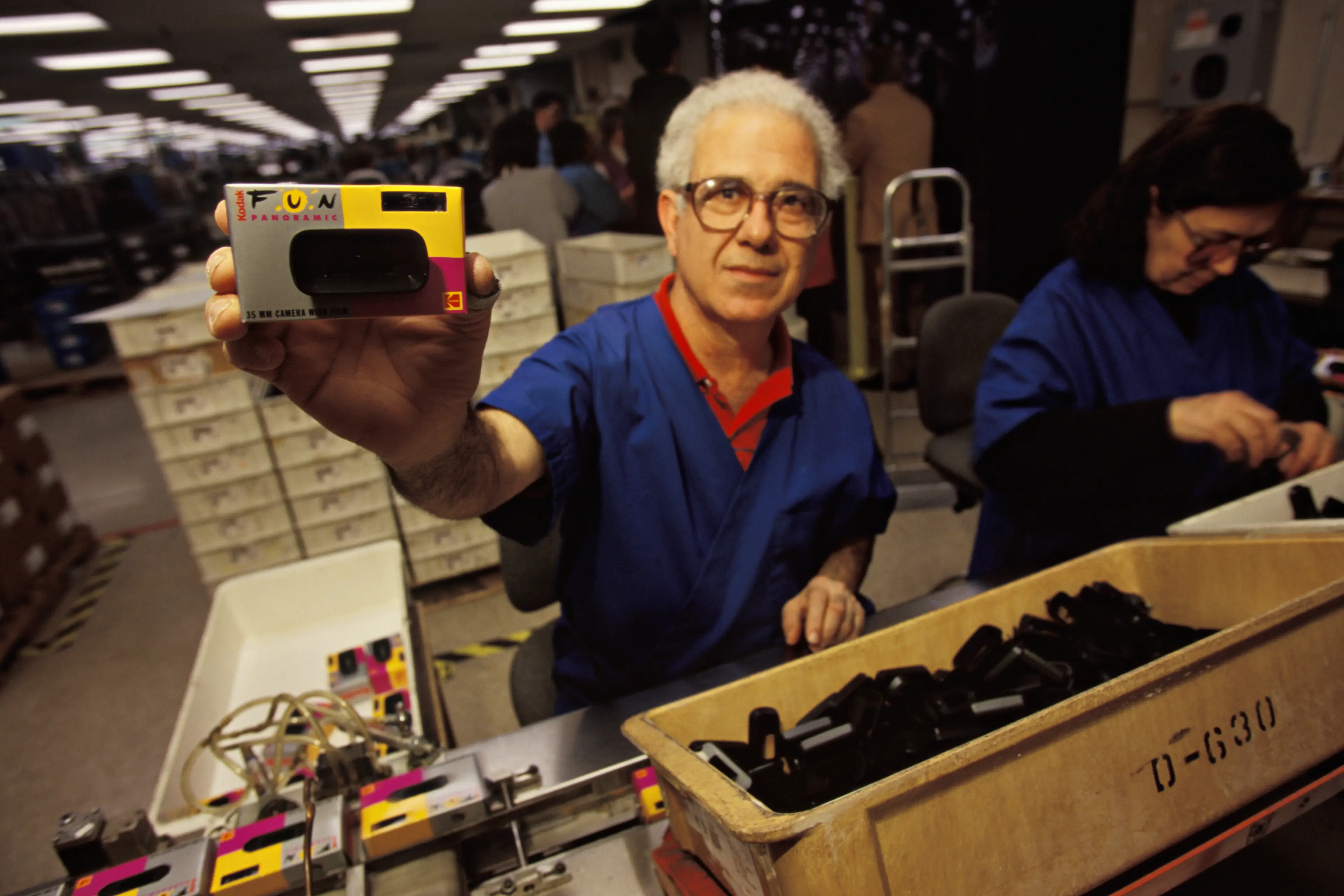
Whether it be summer holidays on the beach, first steps, or snowy Christmases, the photography brand had been there by our side. Kodak is still around, but you might not have noticed it as much these days. Chances are, you tend to take your holiday snaps on your mobile phones - after all, their cameras are far better than a Kodak disposable.
This is the story of how Kodak went from a $31 billion photography to bankrupt.
Advert
Founded in 1892 under George Eastman and Henry A. Strong, Eastman Kodak famously patented the fixed-focus Kodak box camera in 1888.
Costing a hefty $25, it came pre-loaded with enough roll for 100 exposures.
For $10, you could mail it to the company headquarters in Rochester for processing, while professional photographers who could develop their own photographs could buy additional rolls for $2.
And so Kodak rode the photography boom for decades. Kodak's traditional photography was a hit, but when Kodak employee Steven Sasson created the first handheld digital camera in 1975, he was told to bury his invention for fear of it being disruptive.
As selling film separately to cameras was where Kodak made a chunk of its money, digital would lead to the brand moving in a bold direction that would abandon decades of hard work. Things continued as usual, and with Kodak being worth a peak of $31 billion in 1996, sticking to its guns paid off...for a while.
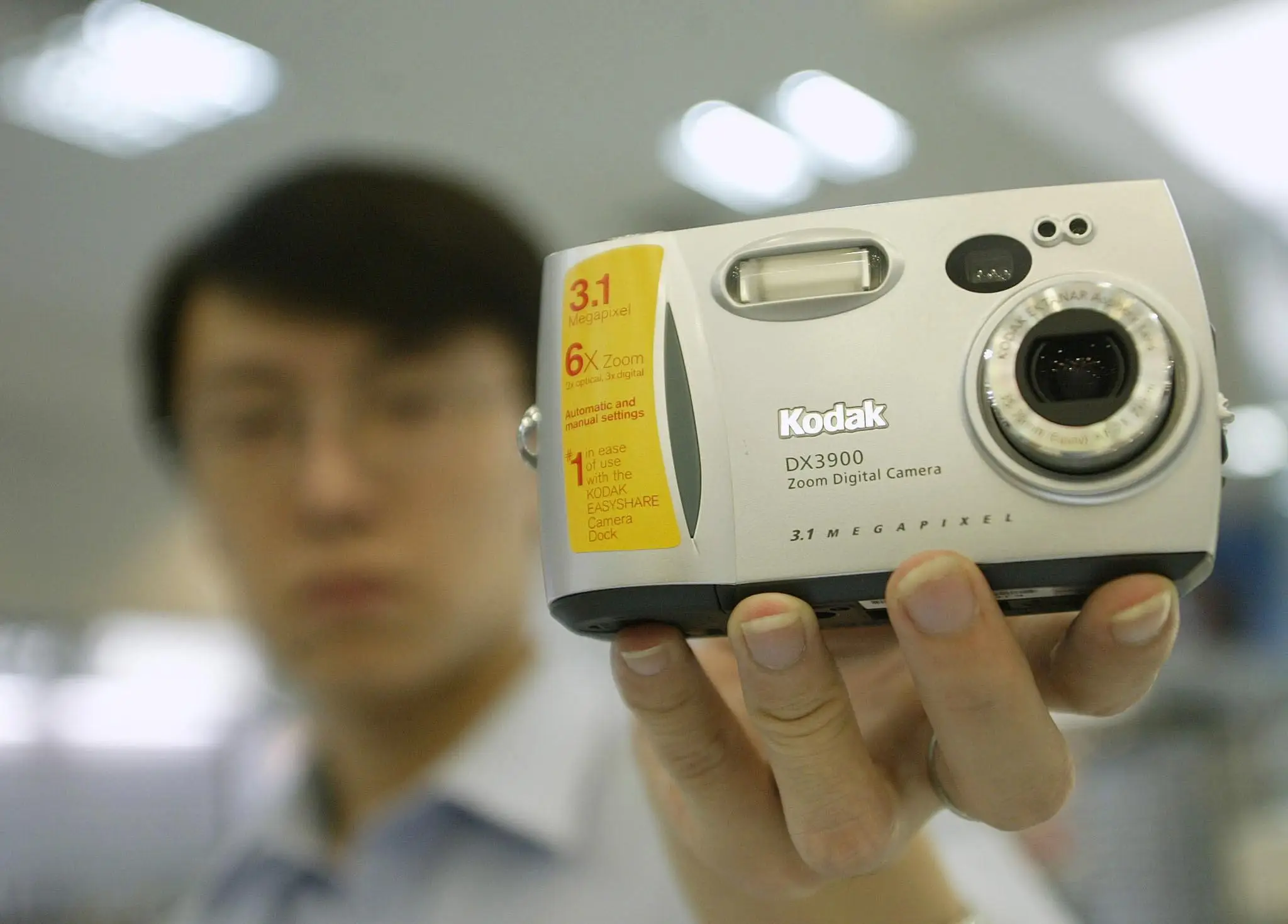
It was in the late '90s that Kodak started to wobble. Increased competition from Fujifilm finally saw Kodak embrace digital photography, but it was late to the game after soaring film sales made it delay a move to digital. Changes to its chemical operations failed to improve revenue, leading to an aggressive push into digital photography and printing under then-CEO Daniel Carp in 2001.
Even though Kodak ranked No. 1 in the U.S. for digital camera sales in 2005, the profit margins were low and many cameras were sold at a loss as the Asian market could undercut with cheaper models.
A new CEO shut down facilities and outsourced manufacturing, but in 2009, Kodak announced it was ending its 74-year legacy of selling its Kodachrome color film.
Negotiating a $300 million loan wasn't enough, and selling the profitable Kodak Health Group was the only choice. Kodak also had to wrangle with lawsuits from and against Apple for multiple copyright infringements, and on January 19, 2012, Kodak filed for Chapter 11 bankruptcy protection.
Of course, this isn't the end of the story, Kodak emerged from bankruptcy by September 2013, getting back on its feet by bringing its brand to other companies and becoming the primary provider of film stock in America's motion picture industry. Let's not talk about its two failed cryptocurrency ventures.
Employee Larry Matteson wrote a 1979 report predicting that the industry would face a complete shift to digital photography by 2010, and while he wasn't quite right, Kodak would've been smart to listen to him and Sasson. Sadly, hindsight is a wonderful thing.