
uniladtech homepage
  • News
    • Tech News
    • AI
  • Gadgets
    • Apple
    • iPhone
  • Gaming
    • Playstation
    • Xbox
  • Science
    • News
    • Space
  • Streaming
    • Netflix
  • Vehicles
    • Car News
  • Social Media
    • WhatsApp
    • YouTube
  • Advertise
  • Terms
  • Privacy & Cookies
  • LADbible Group
  • LADbible
  • UNILAD
  • SPORTbible
  • GAMINGbible
  • Tyla
  • FOODbible
  • License Our Content
  • About Us & Contact
  • Jobs
  • Latest
  • Archive
  • Topics A-Z
  • Authors
Facebook
Instagram
X
TikTok
Snapchat
WhatsApp
Submit Your Content
The 'cloud loophole' US border agents aren't allowed to cross when checking your phone

Home>News>Tech News
Published 15:33 7 Jul 2026 GMT+1

The 'cloud loophole' US border agents aren't allowed to cross when checking your phone

Border agents can't legally check everything on your phone with this one loophole

Harry Boulton

Harry Boulton

google discoverFollow us on Google Discover

Border agents might be able to access physical files and information stored locally on your phone, but a new directive indicates that they aren't legally allowed to access anything stored on the cloud — leading many to recommend exploiting the 'cloud loophole' when traveling to the United States.

Inbound security in the United States has become even stricter since President Donald Trump began his second term in the Oval Office with border and immigration agents appearing to deny entry for extreme reasons, such as sharing memes of high-ranking political officials.

While this has caused some people to reconsider their travel plans to or from the United States, it has prompted others to enact a 'clean sweep' of their social media profiles and content on their phones to ensure that no issues arise upon entry.

New directives have provided a method of relief for people who want to protect their own data, however, as border agents are now legally prohibited from accessing any files that are stored through cloud services like Google Drive, Apple's iCloud, or OneDrive via Microsoft.

Advert
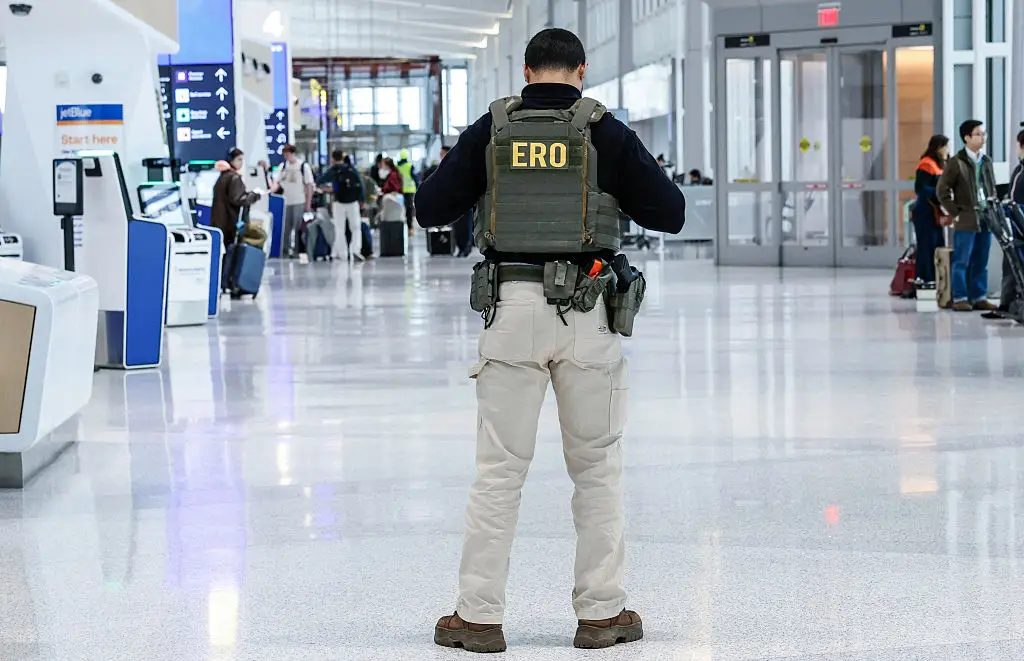
Border agents can't legally view or store any information kept on the cloud, but the same isn't true for local files (Kena Betancur/AFP via Getty Images)

As outlined by the Center for Democracy and Technology (CDT), searches of electronic devices "can have serious consequences even if the devices contain no illicit content," with the Trump administration "currently seeking to revoke visas based on political statements and ideology" that can be found through phone searches.

While border agents are able to "search, copy, and store for later examination the contents of electronic devices containing highly personal information or details about sensitive work activities," they can't do anything with cloud-stored information, and might sometimes even ask you to disable your Wi-Fi connection to ensure any prohibited content isn't accidentally viewed.
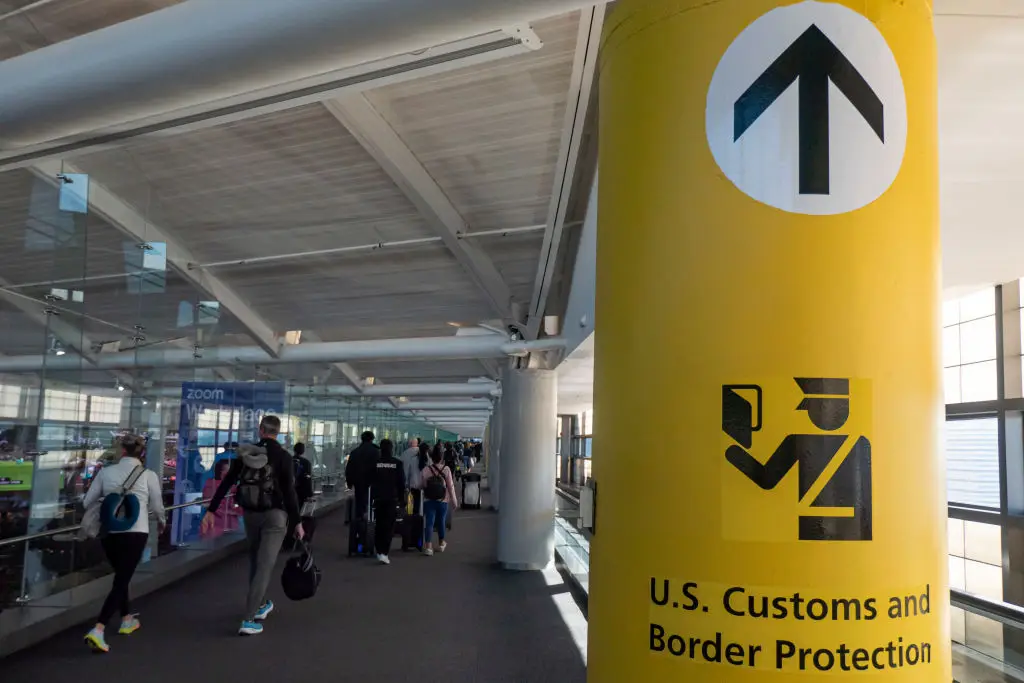
Travelers are recommended to store as much data on the cloud as possible, alongside logging out from all services (Nicolas Economou/NurPhoto via Getty Images)

Keeping anything that might perhaps be considered sensitive or even remotely politically compromising on cloud storage is highly recommended if simply deleting it is an impossibility, but that's far from the only steps you should take as a recommendation.

According to the CDT, you should log out of all cloud storage accounts – including your email, messaging apps, photo storage, or social media platforms – alongside disabling both Wi-Fi and cellular data on the device, as that protects you in any cases where your rights aren't maintained and legal procedures aren't strictly followed.

Additionally, you'll want to back up any important data to the cloud before you travel, as it removes the significant risk that could arise if any devices are seized by border agents, allowing you to access vital documents or information from another device if you don't get your phone or laptop back in time.

Featured Image Credit: EvgeniyShkolenko via Getty
Smartphone
Tech News
Politics
Travel

Advert

Advert

Advert

Choose your content:

20 mins ago
an hour ago
  • JEFF KOWALSKY / Contributor via Getty
    20 mins ago

    Erika Kirk breaks down in court as she attends preliminary hearing of Tyler Robinson

    Donald Trump Jr. has also attended the week-long hearing

    News
  • Bloomberg / Contributor via Getty
    an hour ago

    Anthropic reveals its AI has a hidden 'inner mind' it doesn't reveal to users

    Researchers found a hidden workspace inside Claude’s reasoning

    News
  • Jeffrey Greenberg/Universal Images Group via Getty Images
    an hour ago

    The secret '5-click' phone trick you should do right before entering US customs

    This could boost your smartphone's cybersecurity

    News
  • Jim Spellman / Contributor / Getty
    an hour ago

    Investor famous for predicting 2008 financial crash makes eerie prediction about future of AI

    Burry's role in the financial crash was portrayed by Christian Bale on the big screen

    News
  • What to do if US border agents try to inspect your smartwatch
  • The secret '5-click' phone trick you should do right before entering US customs
  • How to prepare your phone for US border force if they ask to look through it
  • Here's why your Android phone will soon have mysterious blue dot