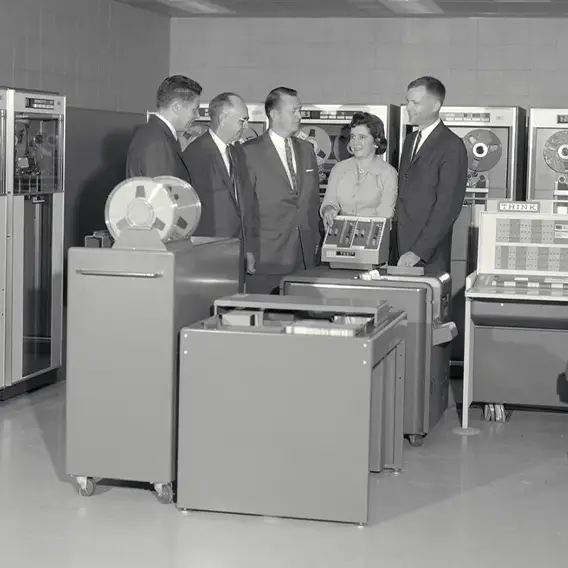
1961 recording of the first computer to sing a song is real 'nightmare fuel'


Even in the past decade, it's wild to think how far computers have come.
Our modern smartphones are like whole computers in the palm of our hand, and while there's still a massive market for both desktop and laptop computers, those early days of massive machines that took up whole rooms are long gone.
A resurfaced video of an early modern computer gives us the world's first 'singing' computer, and it's just as terrifying as you'd imagine.
In the 1960s, the IBM 7094 made a name for itself as the first computer that could program and produce a synthesized voice.
Advert
In 1961, Bell Labs made the most of its IBM 7094 in New Jersey, with researchers Carol Lochbaum and John Kelly using the computer to synthesize a human voice.
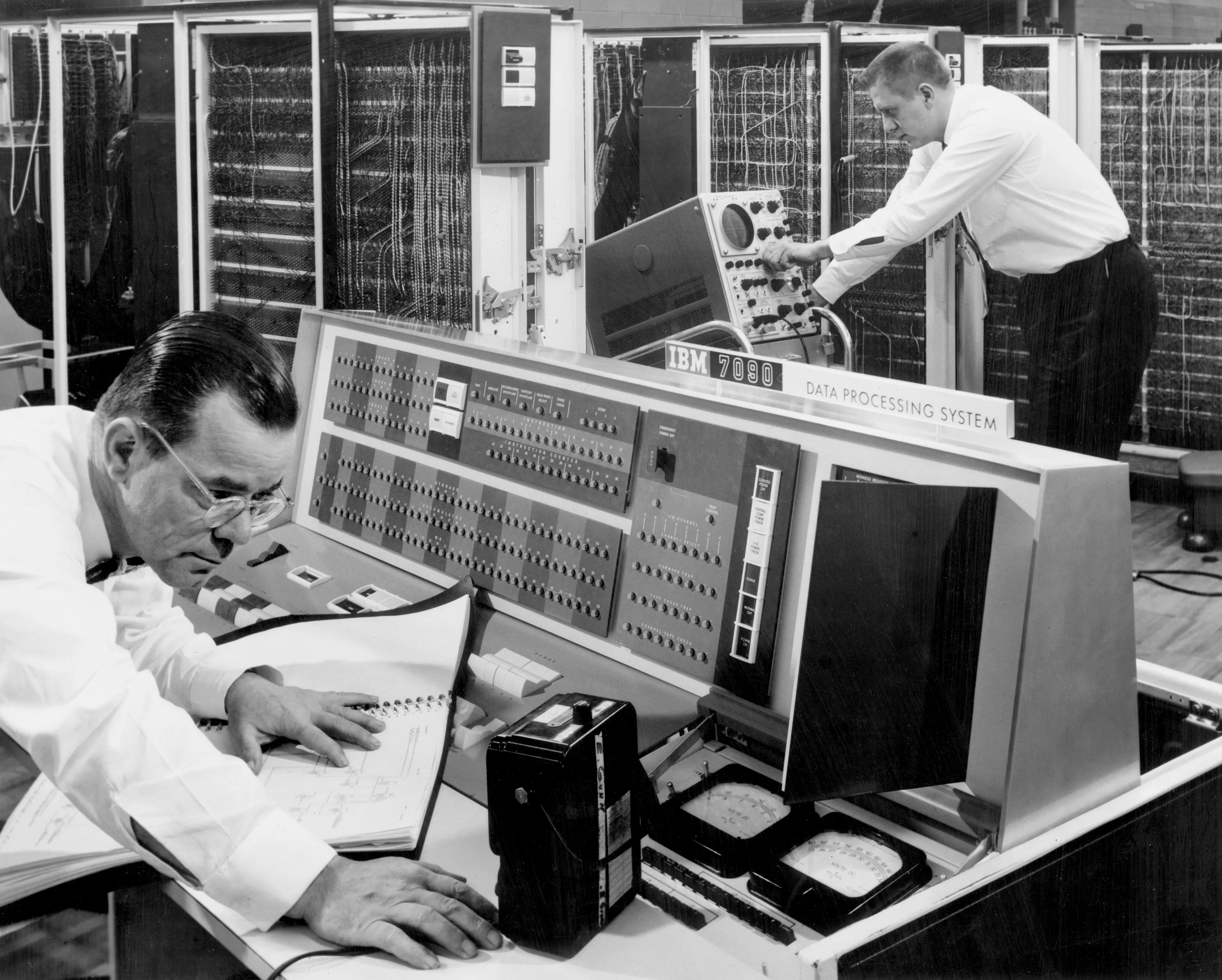
It is known as the Kelly-Lochbaum Vocal Tract, but back then, it was used to 'sing' "Daisy Bell”.
The 1892 tune is better known as "A Bicycle Built for Two", but synthesized by a computer, it sounds particularly haunting.
While Kelly and Lochbaum programmed the vocals, the accompaniment was programmed by Max Matthews.
Although it might not seem like much, the audio clip was placed in the Library of Congress’s National Recording Registry in 2009 and makes it into the history books as one of the first digital music recordings. Nowadays, modern digital formats of music distribution can be traced back to the IBM 7094's use of "Daisy Bell”.
Writing for the Library of Congress, Cary O'Dell says: "The breakthrough of 'Daisy Bell' shouldn’t be undervalued; one online posting even goes so far as to say, 'The advent of our information technology catalyzing our music was a harnessing of metaphor every bit as important to our collective history as the splitting of the atom.'"
O'Dell notes that while the IBM 7094's rendition of "Daisy Bell" is 'quite primitive' by today's standards, it's important to remember its legacy.
Things have come back around, as in 2009, artists Aaron Koblin and Daniel Massey shared “Bicycle Built for Two Thousand" online.
Comprised of 2,088 recorded voices singing "Daisy Bell", the pair gathered the recordings from around the globe using Amazon’s Mechanical Turk web service and synched them online.
YouTube account Nebbed made a viral animation set to "Daisy Bell", racking up an impressive 33 million views and somehow making it even more creepy.
The bizarre story doesn't end there, with sci-fi writer Arthur C. Clarke being inspired by the IBM 7094 to write a scene in Stanley Kubrick's 2001: A Space Odyssey.
When the villainous HAL 9000 is being shut down, it sings its own version of "Daisy Bell".