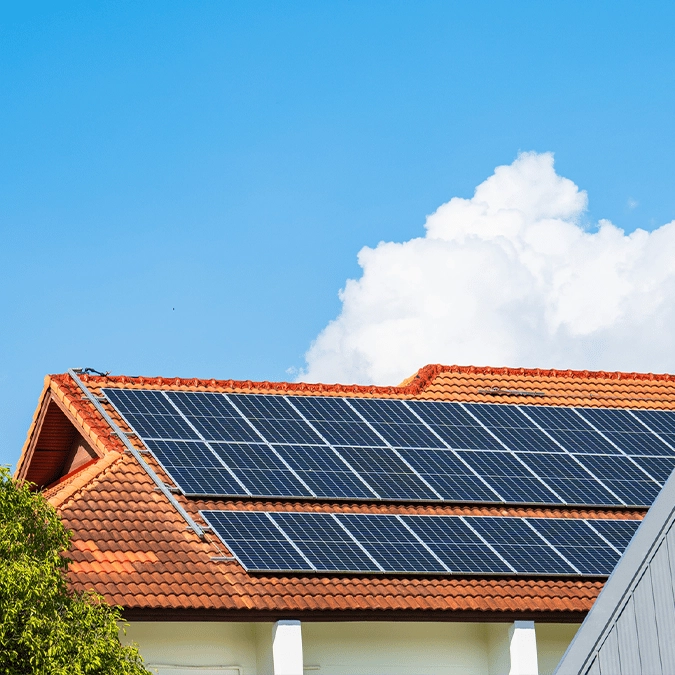
Shocking bill comparisons shows exactly how much money solar panels are saving U.S homeowners per year


Solar energy has transformed from futuristic technology to mainstream home improvement over the past decade.
What was once considered an expensive luxury for environmentally conscious early adopters has become a reasonable option for average homeowners.
How do solar panels save you money?
According to SolarTech, 'one of the biggest misconceptions about solar panels is that they completely eliminate your electric bill.'
Solar panels connect to the electricity grid through a system called net metering. The setup allows homeowners to use solar power directly, draw power when their panels aren’t producing, and send any surplus power to the grid in exchange for credits that can be used later to reduce future energy bills.
Advert

While solar companies may promise significant savings, the actual financial impact varies based on location, state policies, system size, local utility rates and household energy use. That said, these variables shouldn’t overshadow just how much money solar can actually save homeowners.
To show the reality of how much Americans save by installing solar panels, SolarTech's comparison bill uses real customer examples.
One case study examined a California Homeowner who had an average monthly bill of $245 and an annual electricity cost of $2,940 before installing solar panels. Their usage was 650 kWh/month.
After installing a solar (8.5 kW system), their average monthly bill dropped to an impressive $45 with an annual electricity cost of $540. According to SolarTech, the homeowner's total monthly energy cost is $180, and their monthly savings are $65, totalling $780 annually.
Another example is a Massachusetts Homeowner on full net metering.
Before solar, their average monthly bill was $180, and their annual electricity cost was $2,160. Their usage was 750 kWh/month. After solar (9.2 kW system), their average monthly bill dropped to -$15 due to their credit balance and their annual electricity cost to -$180 (also net credit).
Their total monthly energy cost is a remarkable $130, the company noted, with monthly savings of around $50.
"With full net metering, this Massachusetts homeowner achieves negative bills and saves $600 annually," SolarTech wrote.

A third case study was a Texas homeowner with an average monthly bill of $220 and an annual electricity cost of $2,640, with usage of 1,100 kWh/month.
After solar installation(12 kW system), their average monthly bill dropped to a reasonable $35 and an annual electricity cost of $420. Their total monthly energy cost was $200.
"Even with limited net metering, this Texas homeowner saves $240 annually," the website noted.
Of course, there are different factors to consider when it comes to solar energy, as not all savings are equal. Costs can vary between US regions.
High-savings areas include California, Hawaii, Northeast due to their high electricity rates, SolarTech explained. Moderate savings are found in Texas, the Southeast, and the Southwest, while the lowest savings occur in the Pacific Northwest, where there are limited sun areas.