Report says Saudi Arabia's $8.8 trillion giga-project is about to collapse after experts issue warning


Experts have warned that Saudi Arabia's $8.8 trillion giga-project is on the brink of collapse.
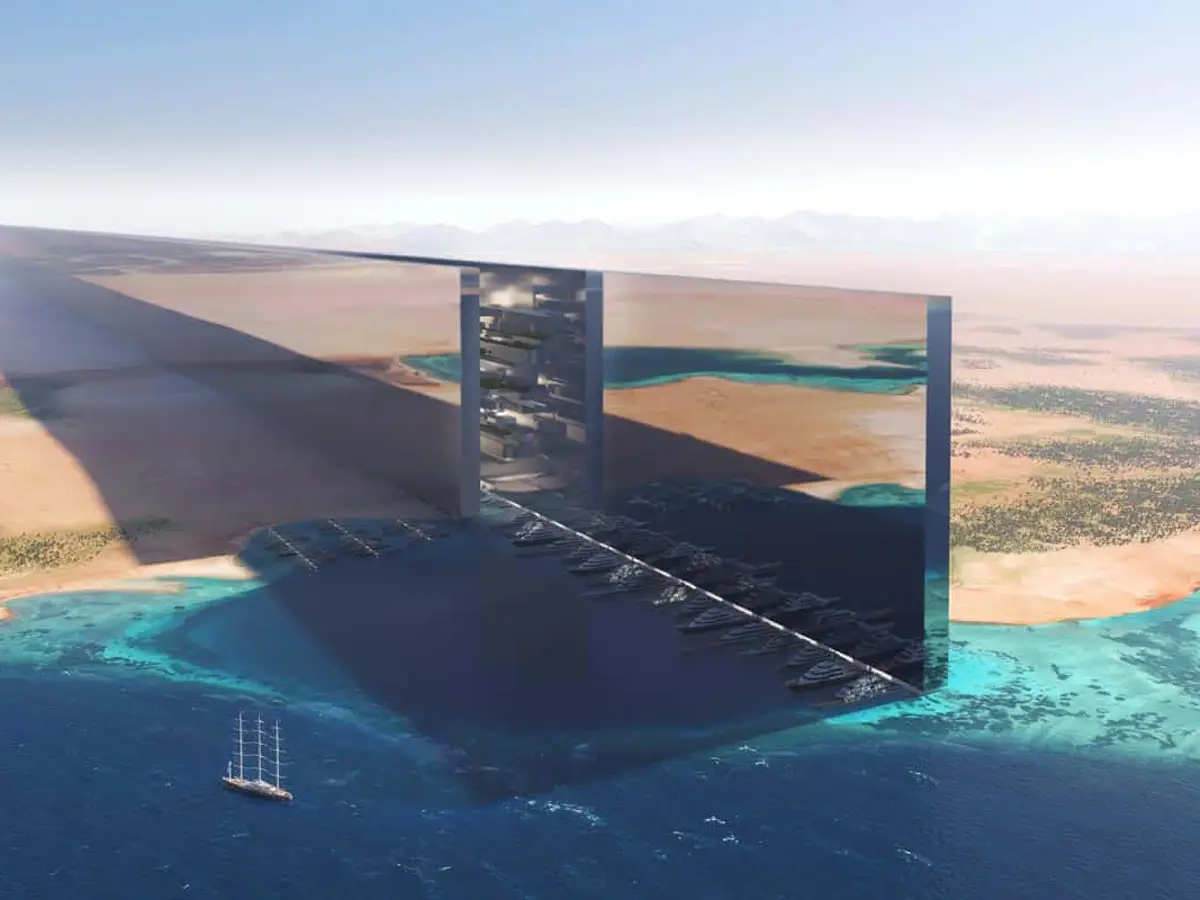
Saudi Arabia's massively expensive futuristic city project, Neom, appears to be falling apart. A new Financial Times report, based on insider sources, paints a grim picture of chaos and failure at the heart of the ambitious scheme. Neom was designed as a sprawling network of futuristic cities, luxury resorts, and high-tech hubs spread across 10,000 square miles of Red Sea coastline. Its centrepiece is 'The Line,' which is a proposed 105-mile-long city that developers initially claimed could house 9 million people by 2030.
The Line features wildly ambitious architectural designs that even the executives building it thought were impossible. One such example is an upside-down building nicknamed 'the chandelier' meant to hang over a marina entrance to the city.
Advert
But according to FT sources, the project is looking more like an absurdly expensive fantasy that will never actually happen.
So far, at least $50 billion has been spent and the desert is now littered with construction debris, deep trenches and unfinished foundations. Yet Prince Mohammed, who chairs Neom, has dramatically scaled back the first phase of plans.
Neom told the FT that The Line remains 'a strategic priority' that will ultimately 'provide a new blueprint for humanity by changing the way people live.' However, they described it as a 'multi-generational development of unprecedented scale and complexity.'
While Neom employees say much of The Line might still be technically possible to build, they don't believe anyone is willing to pay for it.
Construction has slowed across Neom, with the only site still moving at pace being Trojena, a desert ski resort intended to host the 2029 Asian Winter Games.
As Neom's bizarre developments have failed to materialise, it's become increasingly difficult to convince investors to fund the ridiculously expensive project.
FT wrote: "Senior executives were constantly asking for more money, but The Line was competing with other Neom projects.
"Some wealthy Saudi families put modest sums into the project, but the large investments Riyadh hoped to lure from foreign backers never materialised."
The failure could seriously harm Saudi Arabia's international image. As one of America's closest Middle Eastern allies, the Kingdom has long struggled with a poor global reputation.
Neom was a means to prove Saudi Arabia could modernise its image by positioning itself as a high-tech hub where Western-backed industries like AI, renewable energy, and electric vehicles could flourish.
Dubai's other strategy, which appears far more successful than its urban development efforts, has been making itself essential to the global AI boom.
Saudi Arabia has invested heavily in data centres and struck deals to provide infrastructure for the computing explosion happening in the West.