
Amazon and Nvidia back a massive $1.4B push to build 5M humanoid robots


Amazon and Nvidia back a massive $1.4 billion push to build five million humanoid robots.
The race to dominate the humanoid robot market is intensifying by the week. Elon Musk's Optimus programme at Tesla has been pushing ahead with its own ambitions, while Figure AI recently made headlines by running a team of humanoid robots through an eight-hour warehouse shift at human performance levels.
Now two huge tech giants are backing a new player in the humanoid robot race.
Who is behind the $1.4 billion funding round?
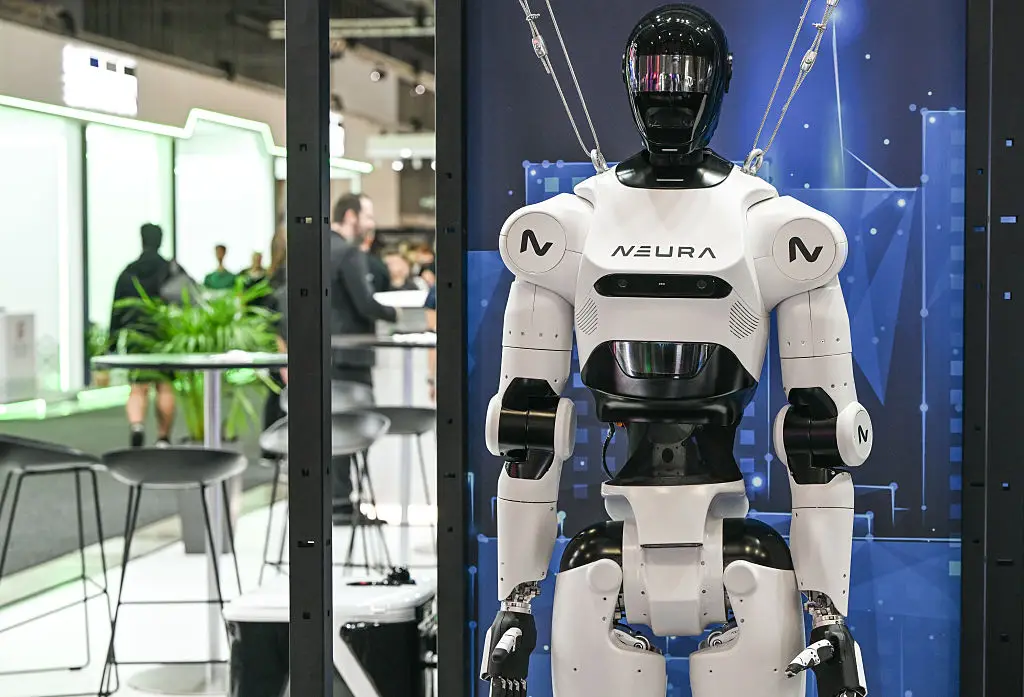
German robotics company Neura Robotics has secured up to $1.4 billion in Series C financing, in what is one of the largest funding rounds ever seen in the European robotics sector.
Advert
The round was backed by an impressive coalition of investors including Amazon, Nvidia, Qualcomm, financial giant Tether, European industrial heavyweights Bosch and Schaeffler, and the European Investment Bank.
According to CNBC, the deal values Neura Robotics at approximately $7 billion.
What does Neura Robotics plan to do with the funding?
The capital will be used to scale production to several million robots by 2030, with the company targeting applications across manufacturing, logistics, healthcare, and consumer use.
Neura is developing what it describes as a physical AI platform that enables humanoid and cognitive robots to operate alongside humans in real-world environments.
“The future of AI will not only live on screens,” said David Reger, founder and CEO of Neura Robotics (via CNBC). “It will move, interact, learn and work beside us in the real world.”
The company reportedly already has an order backlog exceeding $1 billion, suggesting demand is well ahead of its current production capacity.
Part of the investment will also go towards building a dedicated network for training robots in real-world conditions, which ensures the machines can handle the unpredictability of everyday environments rather than controlled factory settings, the company stated.
What does this mean for the wider AI robotics race?
According to data from Dealroom, robotics companies have raised $55.8 billion so far in 2026, a record figure nearly double the previous high set just last year.
Meanwhile, investors are increasingly backing robotics startups that focus on developing physical AI systems that can interact in real-world environments.
“Many believed globally relevant AI infrastructure companies could only emerge from Silicon Valley,” Reger said.
“We believe the next generation of AI leaders can emerge anywhere in the world where there is enough vision, engineering talent and execution speed."
He claimed: “With this financing, Neura is firmly among the global leaders in the robotics race, alongside the best in the US and China.”