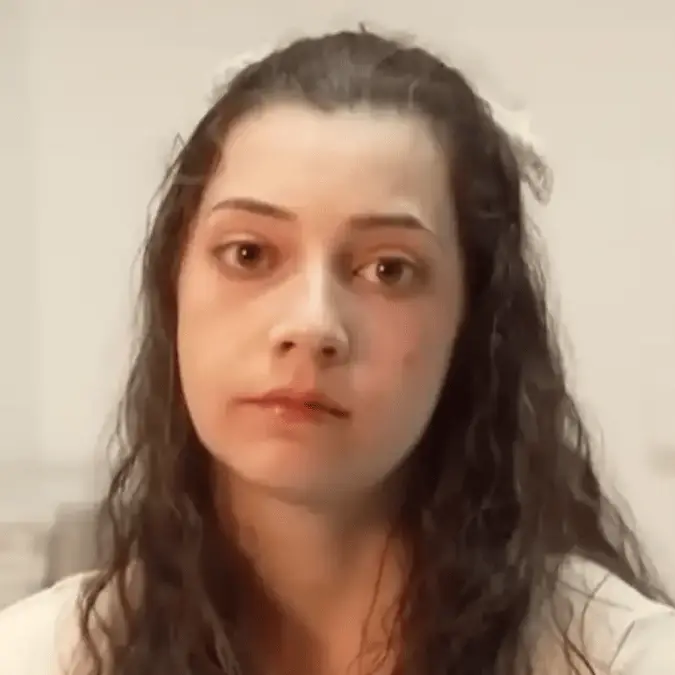
How AI could influence in assisted dying cases following decision of 25-year-old to die by euthanasia


Warning: This article contains discussion of assisted dying, which some readers may find distressing.
March 26 marks a legal milestone for assisted dying, with Noelia Castillo Ramos successfully convincing the European Court of Human Rights and Spain's Constitutional Court that she has a right to die.
Spain is one of just nine countries in Europe that have passed assisted dying laws, with its own legalisation coming in March 2021. The law states that adults suffering from incurable diseases that cause unbearable suffering can choose to end their own lives. Allowing both voluntary and assisted suicide, Spanish nationals and residents must be able to give informed consent.
Ramos has been fighting for her right to die in the aftermath of multiple sexual assaults at a care center in 2022.
Advert
As reported by Marca, Ramos previously tried to end her life when she threw herself from the fifth floor of a building, but in another tragic turn, it left her a paraplegic in constant pain.
A defiant Ramos has given a heartbreaking final interview with Antena 3's "Y Ahora Sonsoles", explaining: "I can’t take it anymore—neither the physical pain nor everything that torments my mind...I’ve always seen my world as very dark."
Saying that she doesn't have any goals or projects to keep her going, Ramos reiterated: "I never doubted my fight. From the beginning, I was clear that euthanasia was the ending I wanted.”
Still, critics have questioned her mental state and whether the courts should've approved the decision. This is something shared by her own father, who's similarly taken his battle to the courts and says he doesn't support his daughter's final wishes.
For those who disagree with the prognosis of Ramos' sanity, the idea of someone or a group of people judging a person's eligibility for euthanasia could soon take an even more dystopian twist.
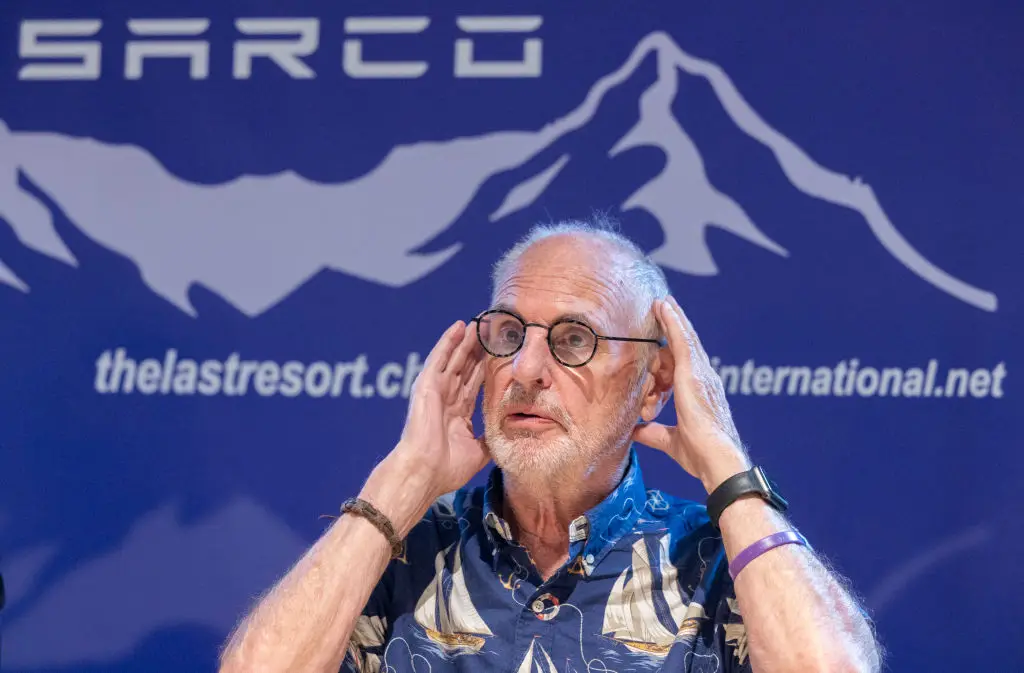
Remembered as the inventor of the controversial Sarco pod, Philip Nitschke has previously spoken out about AI’s potential of being the final judge in future euthanasia cases. The Sarco pod asks users three questions before allowing them to press the button that will ultimately let them end their lives.
Stating his belief that the "end of one’s life by oneself is a human right," Nischke explained how he thinks psychiatrists judging whether someone should be able to apply for euthanasia is a 'deeply inconsistent' process.
Speaking to Euronews Next, Nitschke mused: "I’ve seen plenty of cases where the same patient, seeing three different psychiatrists, gets four different answers. There is a real question about what this assessment of this nebulous quality actually is."
Whereas assisted dying laws in many countries require at least two medical professionals to sign off on a case, it's thought that AI could be used to circumvent this in non-clinical settings.
While it's true that AI is currently being used in some hospital environments as a mortality prediction tool to 'nudge' practitioners toward end-of-life care, the argument is that using AI as a final decider is a very different situation.
Angela Müller, policy and advocacy lead at Algorithmwatch, has shared her concerns as she told Euronews Next: "This clearly ignores the fact that technology itself is never neutral: It is developed, tested, deployed, and used by human beings, and in the case of so-called Artificial Intelligence systems, typically relies on data of the past."
If the technology moves forward, it's said that AI could analyze someone's voice for sounds of distress and to check that the decision really is voluntary.
It's thought that countries like the United Kingdom will be debating the use of 'medical devices' with AI components in cases like Ramos’ by 2027, but for most, it's believed laws will continue with a "human-in-the-loop" mandate that prevents AI from having legally binding approval.
For advice, support, and more information, you can contact Dignity in Dying via their website or email them at [email protected]. For more state resources, you can also contact End of Life Choices Oregon or Patient Choices Vermont.
Additionally, if you or someone you know is struggling or in crisis, help is available through Mental Health America. Call or text 988 to reach a 24-hour crisis center or you can webchat at 988lifeline.org. You can also reach the Crisis Text Line by texting MHA to 741741.