Dead internet theory spirals out of control as AI influencer Jean Philanthrope's family grows on TikTok


There are fears that we're in danger of losing the internet to artificial intelligence more than ever, with an influx of AI influencers proving why we can't trust everything we see online.
Given the deluge of 'AI slop' that's overtaking our feeds on a daily basis, we already know to look for verified sources. Still, it's getting harder than ever to figure out what's made with flesh and blood humans and what's mere pixels in a skin suit.
It's not helped when President Donald Trump is known for banging the AI drum, but while his videos of Canadian geese marching with his signature haircut are clearly made by AI, others are more difficult to spot.
Say what you want about the influencer culture, but in a move few of us saw coming, your classic human influencers could now be at risk of losing their jobs to AI.
Advert
AI influencers like Jean Philanthrope are taking over, and as the dead internet theory looms large, it seems the Philanthrope family continues to grow.
Why is Jean Philanthrope so popular?

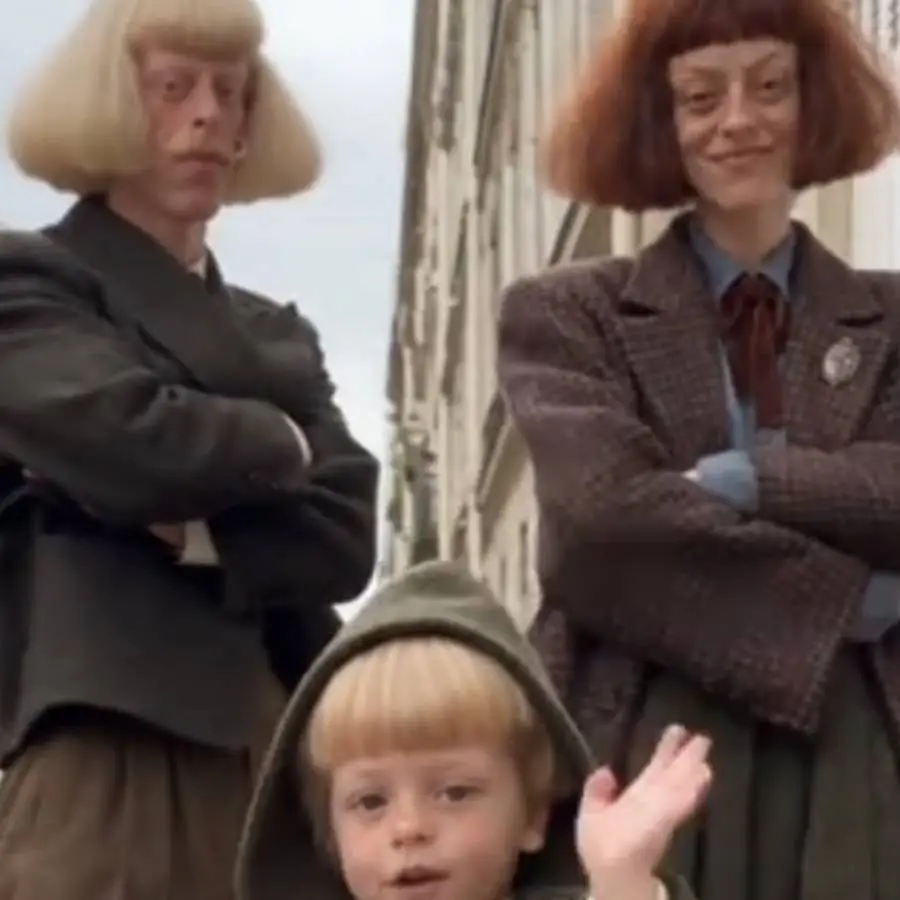
Appearing (literally) out of nowhere on September 17, you probably didn't notice Jean Philanthrope until much more recently. Standing out from the crowd with his '70s-inspired clothing and blonde Elizabethan bob, videos of Philanthrope shadowboxing in various Parisian locales started to infect our feeds.
The basic idea seems to be taking viral videos and reskinning them with a cavalcade of kooky characters that have standout features like outdated haircuts, oversized teeth, or ludicrous muscles. Even the untrained eye can probably spot that these are AI creations, and yet, no one seems to mind.
Those making money off these AI influencers are even encouraged to tag that their subjects are AI, with X full of guides on how you can also monetize your own AI abominations.
While we question how much longer this trend can continue until it bursts, the popularity of Jean Philanthrope shows no sign of slowing down as he's joined by a sister, a mother, a wife, and a son.
Copycat accounts have already popped up, and even though it's hard to trace the OG Jean Philanthrope, there are plenty of TikTok videos claiming that the family continues to grow.
Away from a 'jeanphilanthropefamily' TikTok account, there's also one for 'jeanphilanthrope' and 'jean_philanthrope', with all featuring the same blonde guy bopping around with various other characters around him.
With Jean Philanthrope undoubtedly being the most popular creation, it makes sense that people are trying to cash in on this by extending his family.
Then again, the various different accounts raise an interesting question about who 'owns' him. If this were an actual human influencer, they could simply copyright strike anyone who was pretending to be them. Not as simple when you aren't real and your creator isn't known to the public.
What is the dead internet theory?

While we wait to see who turns up next at the Philanthrope homestead for a home-cooked poussin, this overload of AI influencers is only fuelling fears that the internet died years ago. The dead internet theory claims that actual humans have been drowned out by bots and AI on the internet. Anthropic's Dario Amodei thinks we could lose control of the internet to AI in the next year, and OpenAI's Sam Altman has already spoken about the dead internet theory, but for many, it's already done its job
The dead internet theory goes back to the 2010s but gained popularity following a 2021 post titled "Dead Internet Theory: Most Of The Internet Is Fake" and The Atlantic's now-infamous "Maybe You Missed It, but the Internet 'Died' Five Years Ago."
As well as AI slop engulfing our feeds, the dead internet theory is backed up by search engines using AI-generated data that's scraped from other pages, claims from security firms like Imperva that bot traffic makes up nearly half of the internet, and general 'enshittification' where platform quality degrades while ads and automated content are prioritized over user experience.
It might be fun to pop in and see what the Philanthropes are up to on their perfect pastel-colored weekends, and the comments show that many others are enjoying this kind of content. The question remains: just how many of those are actual humans like us, and how many are robots in disguise?