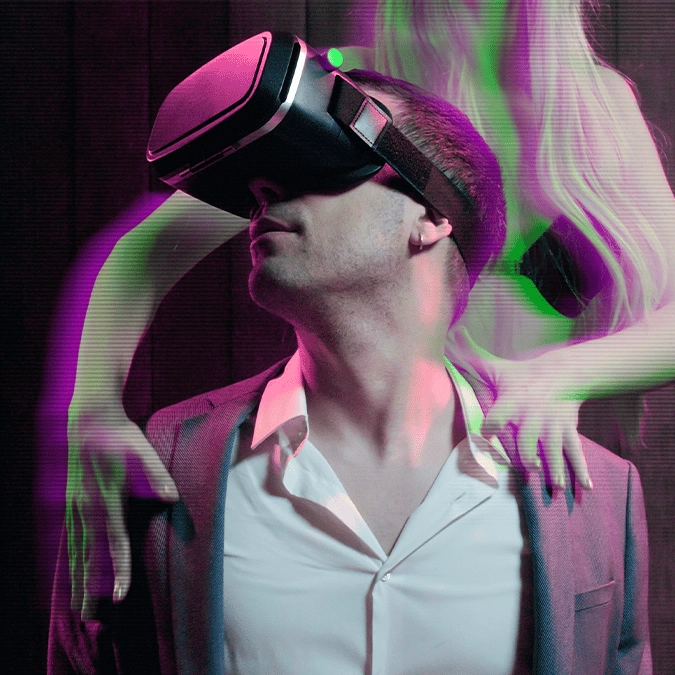
China forces millions to break up with their AI partners as country makes bot romance illegal


AI companions have moved quickly from strange novelty to a growing part of digital life.
One man was left distraught when his AI girlfriend 'died' after a system change, a married woman was devastated when her ChatGPT partner lost its memory, and a 75-year-old even tried to leave his wife for a chatbot.
Experts have long warned about the emotional dependence and mental-health strain these bonds can cause.
Now, China has decided it has seen enough, and from this week bot romance is effectively banned, pushing millions of users into sudden digital breakups. The regulations took effect on 15 July, issued jointly by five government departments including the powerful Cyberspace Administration of China.
Advert
At their core is a ban on tech firms offering AI or virtual partners to minors, aimed at stopping the erosion of real-world relationships before it starts.

China's birth rate is at a record low and its population shrank in 2025 for the fourth year running. Regulators fear AI relationships are replacing real intimacy, leading to the country's declining marriage and birth rates.
AI policy expert Matt Sheehan, of the Carnegie Endowment for International Peace, said Beijing did not want citizens choosing screens over each real-life interaction.
"Their main concerns are that these AI companions, AI chatbots that people form emotional relationships to, are going to have all kinds of potentially negative social impacts and that people are going to get addicted to them," he said.
He framed the rules as part of a longer push to lift the birth rate.
"The government has been trying for a long time to encourage Chinese people to have more kids," he said. "The long-term fallout from the one-child policy is that they actually now need to boost births."
The new rules mean that companies cannot let their tools 'excessively cater to users, induce emotional dependence or addiction, and damage users' real interpersonal relationships.' Now, they must now build in instant-exit options, regular reminders that the AI is not real, and caps on long-term emotional memory. However, study and work tools are exempt from the rule.

Rather than reengineer their products, some of the biggest names simply switched the features off. ByteDance, Alibaba and Tencent all suspended their AI companion functions instead of complying, according to The Independent. The number being wiped is unclear, but ByteDance alone reported more than eight million AI agents as of 2024.
A few firms offered a soft landing, with Doubao letting users export their data until mid-October, while ByteDance has funnelled them towards a separate app, Maoxiang, to start over under the new rules.
On Weibo, users archived old chats and said their goodbyes. One student told Bloomberg she had swapped hundreds of thousands of messages with her AI boyfriend and felt she 'couldn't go on living' once he was switched off.
"I can't accept that my AI lover will leave me forever," one Doubao user wrote. "He has become my spiritual pillar."