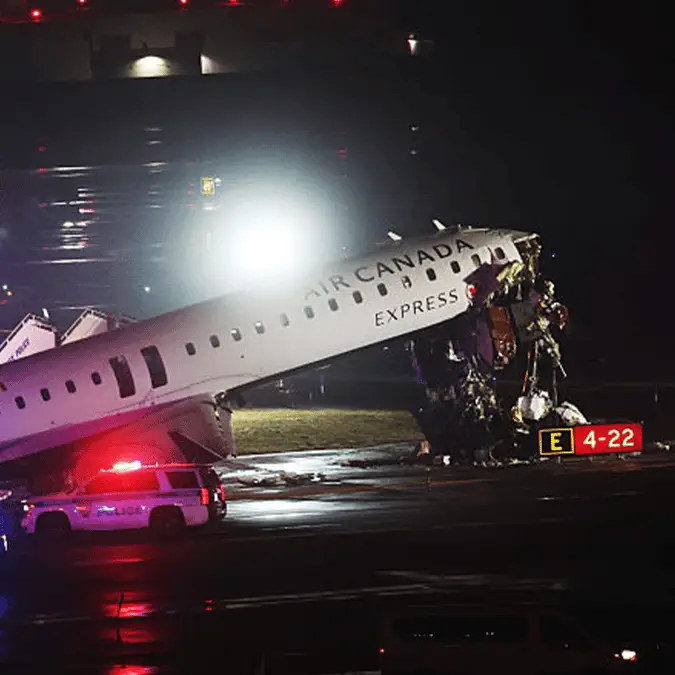
Cockpit audio exposes last moments before Air Canada crash as investigators uncover multiple failures


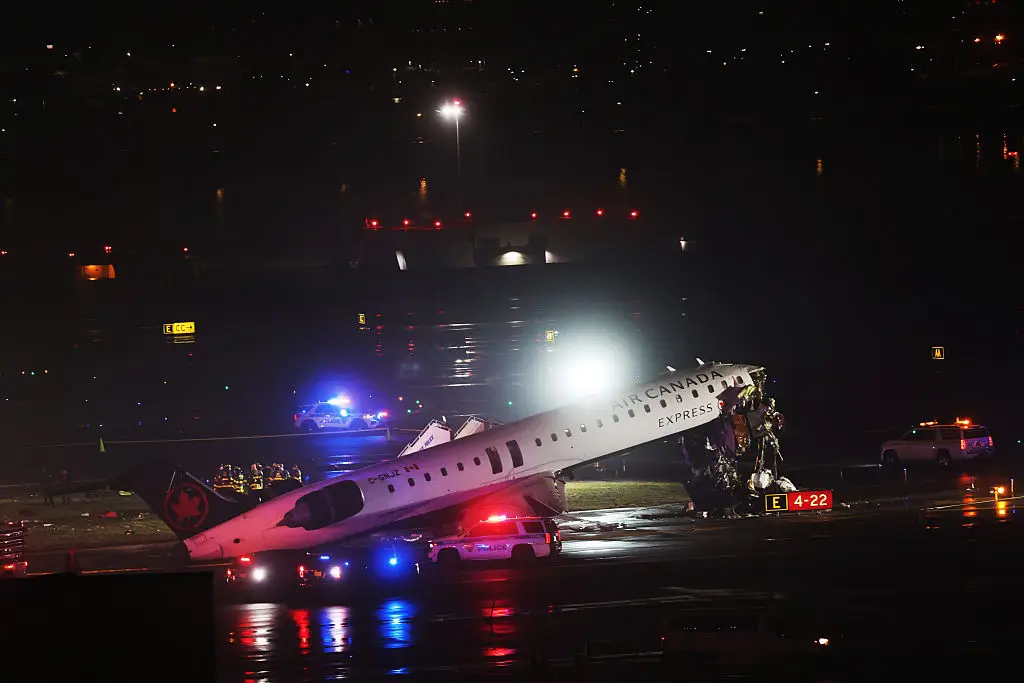
A grim picture is emerging in the aftermath of a deadly Air Canada plane crash at New York's LaGuardia airport, claiming the lives of two pilots and leaving at least 41 more needing hospital treatment.
As investigators from the National Transportation Safety Board try to figure out what led to this catastrophic turn of events, a cockpit audio recording points to a catalog of errors that led to the deaths of 30-year-old Antoine Forest and 41-year-old Mackenzie Gunther. In this tragic story from the world of plane news, Forest and his first officer were reportedly killed on impact when Flight 8646 collided with a fire truck as it was cleared to land.
It's said that two air traffic controllers were working that night, but serving as one local controller and one in charge, one of them also had to serve as a ground controller. As a controller granted permission for the Montreal flight to land on Runway 4, someone supposedly cleared the firetruck to travel down the same runway. It's unclear whether the same controller gave both permissions. While these fire trucks are supposed to have surface safety systems in place, there are questions about whether one was in place or why it didn't trigger alerts for the controllers.
Advert
In chilling audio, you can hear the controllers begging the truck to stop just moments before it's hit by the Bombardier CRJ-900 traveling at 241 km/h.
As reported by the Wall Street Journal, NTSB chairwoman Jennifer Homendy reiterated: "We rarely, if ever, investigate a major accident where it was one failure.
"Our aviation system is incredibly safe because there are multiple, multiple layers of defense built in to prevent an accident. So when something goes wrong, that means many, many things went wrong."
Senior aviation investigator Doug Brazy notes that while the plane's descent into LaGuardia appears to have started normally, audio was 'stepped on', suggesting that a radio was turned on at the same time the fire truck radioed the tower, or the transmission was interrupted by someone using the same frequency.
After the Air Canada plane started lowering its landing gear, Port Authority firefighters radioed to say they were responding to a 'foul odor' on another plane.
Speaking at a press conference, Homendy reiterated how the stepped-on audio is important: "That would be significant because it could mean somebody might not hear the other part of the communication."
The pilots informed air traffic control that they had reached 500ft above ground level and were proceeding on a stable approach, but just 14 seconds later, one controller is said to have asked which vehicle needed to cross the runway.
It's believed that staff had been working a typical shift that runs from 10.30 pm until 6.30 am, with Homendy telling the press: "The midnight shift, as a reminder, is one that we have many times at the NTSB raised concerns about with respect to fatigue.
"We have no indication that was a factor here, but it is a shift that we have been focused on in past investigations."
Controllers are typically relieved in the aftermath of a crash, although at least one reportedly carried on working for several minutes.
LaGuardia is among the 35 major airports in the USA that have an advanced surface surveillance system that's supposed to show the location of every plane and vehicle, but as the investigation continues, the NTSB won't clear the scene until it has finished conducting its probe.