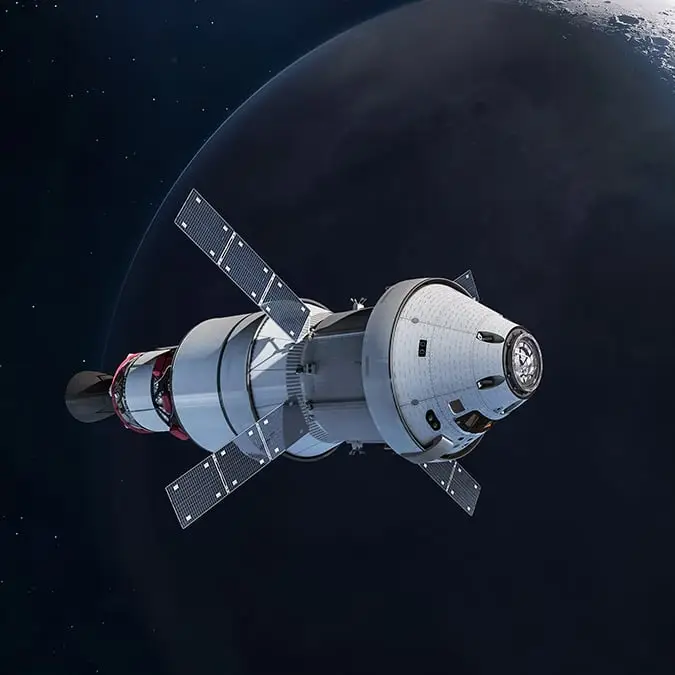
Exactly when Artemis 2 astronauts will be left floating in space with no contact to Earth


The crew of Artemis II is expected to reach the Moon later today after initially launching for space last Wednesday (April 1).
The 10-day mission will see NASA astronauts Reid Wiseman, Victor Glover, Christina Koch, and CSA (Canadian Space Agency) astronaut Jeremy Hansen, perform a flyby of the lunar rock before using its gravitational pull to slingshot back to Earth.
While this mission won’t involve landing on the Moon, it is hoped that this will pave the way for a lunar landing next year, with plans currently in the works for mid-2027.
Artemis II marks the first time humans have ventured to the Moon in over 50 years and will make history as the furthest space travel humans have ever done as the astronauts will venture around the dark side of the Moon.
Advert
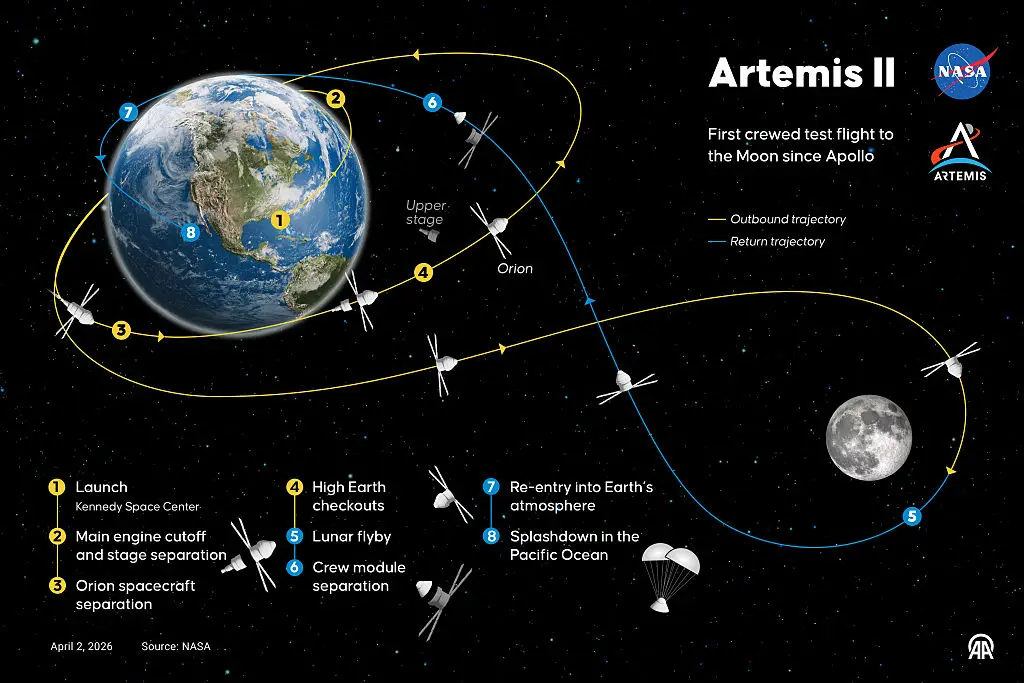
At this point, the crew aboard the Orion capsule are expected to lose contact with mission control back on Earth for around 40 minutes as the Moon will block any signal.
The crew are set to begin their journey behind the Moon at around 5.47pm EST today (April 6) but before that, viewers can watch the team as they make their approach to the lunch rock in a live broadcast.
This is because Netflix plans to live stream the event to its subscribers.
This is expected to be the most notable moment in space travel since the Apollo era as the streaming service will provide live footage of the astronauts performing a flyby of the Moon later today from 6pm EST.
The Artemis II mission officially launched from Cape Canaveral, Florida, last week as part of NASA’s new lunar programme and is set to splash down back on solid ground on Friday (April 10).
The space agency has been broadcasting a 24/7 live stream of a camera attached to the exterior of the Orion capsule, which is available to view on YouTube, with the caption of the video reading: “As bandwidth allows, this stream will feature live views from the Orion spacecraft, without commentary, as it makes its journey around the Moon. Viewers will see a blue screen if there is a loss of signal, or if the bandwidth is needed for mission activities. Viewers may see what appears to be a black screen when the vehicle is in darkness.
“This stream started as Artemis II began its ascent into space and will conclude shortly before Orion splashes down into the Pacific Ocean.”