
Physicist exposes world's hidden 'doomsday system' most people have no idea exists


Satellites could prove to be key to specific 'doomsday' scenarios employed by many of the world's most powerful nations, with Elon Musk's SpaceX appearing to play an increasingly prominent role in their delivery.
While some have deemed the notion of doomsday to be one of cosmic or natural proportions, pointing towards things like the Mayan calendar or various ominous clocks for answers, the frightening reality is within reach for global political leaders in places like the United States, China, or Russia.
American presidents have for many years now had access to what's known as a 'doomsday plane' for these exact scenarios, and it relates to the ever-present threat of nuclear weapons and the mutually assured destruction that comes with that.
What many don't realize, however, is how vital of a role that space and the satellites living within it play in both the preservation of our planet and the prevention of a potential doomsday event if it were to occur, with prominent physicist Dr. Laura Grego illustrating their importance.
What role do satellites play in the world's 'doomsday system'?
Speaking to The Guardian, Grego illustrated the increasingly prominent role that space plays in military contexts, as while the Outer Space Treaty signed in 1967 asserts that anything beyond Earth's atmosphere can only be used for peaceful means, the presence of satellites threatens to jeopardize that.
Advert
Satellites allow both nations and private companies to see what would otherwise remain hidden, effectively exposing any potential secrets that opposing nations might be trying to hide — with many of these relating to nuclear weaponry.
They also are the quickest and most reliable method of informing a nation that they're about to be attacked by a nuclear weapon themselves, giving powerful nations no more than around 30 minutes to activate an attack of their own to assure mutual destruction.
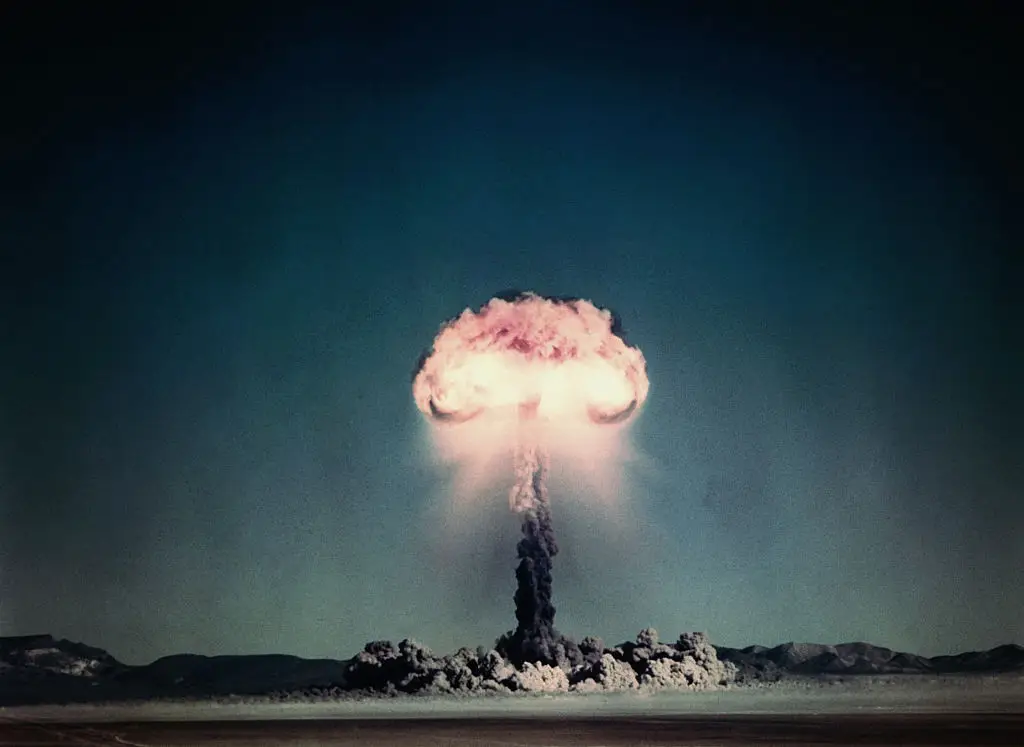
These weapons – likely launched using an intercontinental ballistic missile (ICBM) – give you a trajectory of around half an hour, but a time window of roughly 10 minutes, with Grego explaining that "you're compressed by detection, communication. So a president would have less than 10 minutes to decide whether to launch ICBMs or to wait it out.
"The system is built so that question gets asked right away. And it creates this intense time-pressure," she continued.
It becomes complicated in scenarios where an attack was perhaps launched by accident, leading the world into annihilation without true intention at the beginning.
"If the president decided to launch a counterattack, even if the initial attack was launched by accident, certainly the adversary is going to retaliate," Grego illustrated.
"That's a civilization-ending day — or an afternoon [...] I've had many years to acclimate to this. But most people haven't," the physicist noted. "Most people don't know we've set up a system that is essentially a doomsday system. And we can dismantle it. We just have not."
Does this make Elon Musk one of the world's most powerful men?
Ultimately that places a lot of power in the hands of those who control the satellites, and nobody stands to benefit from that more than Elon Musk — with SpaceX remaining unquestionably dominant over the skies.
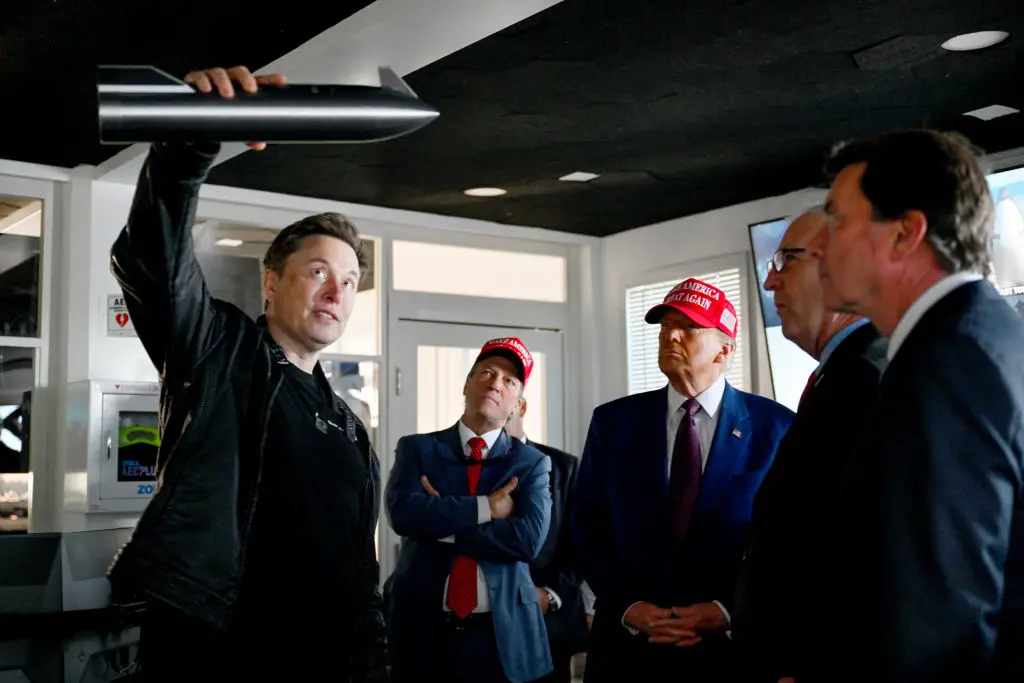
Musk's company – which only went public last month to initially overwhelming success – currently has anywhere between just over half or roughly two thirds of the total satellites in Low Earth Orbit (LEO) with approximately 10,800 in the skies, and a recent application to the government would see him extend this to one million.
He is receiving strong and growing competition from some rivals, including rapid expansion from Amazon and Jeff Bezos, but it looks incredibly challenging to unseat Musk in his already dominant position.
Combining that with his overwhelming wealth – which for a brief period sat over $1 trillion for the first time in history – and Musk holds an unparalleled position across both commercial and political worlds.