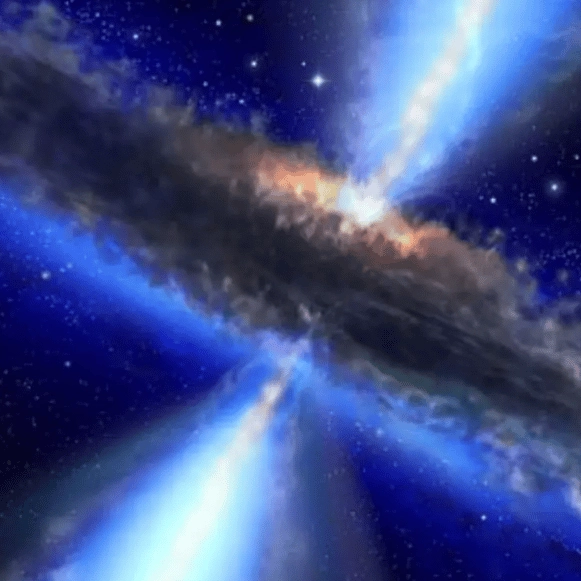
12,000,000,000-year-old body of water larger than anything on Earth discovered floating in space


In recent decades we’ve been treated to so many incredible space discoveries, from water on Mars to peculiar structures hidden on the Moon.
But perhaps one of the most bizarre and exciting discoveries made, was in 2011 when astronomers identified the largest and most distant reservoir of water ever detected in the universe.
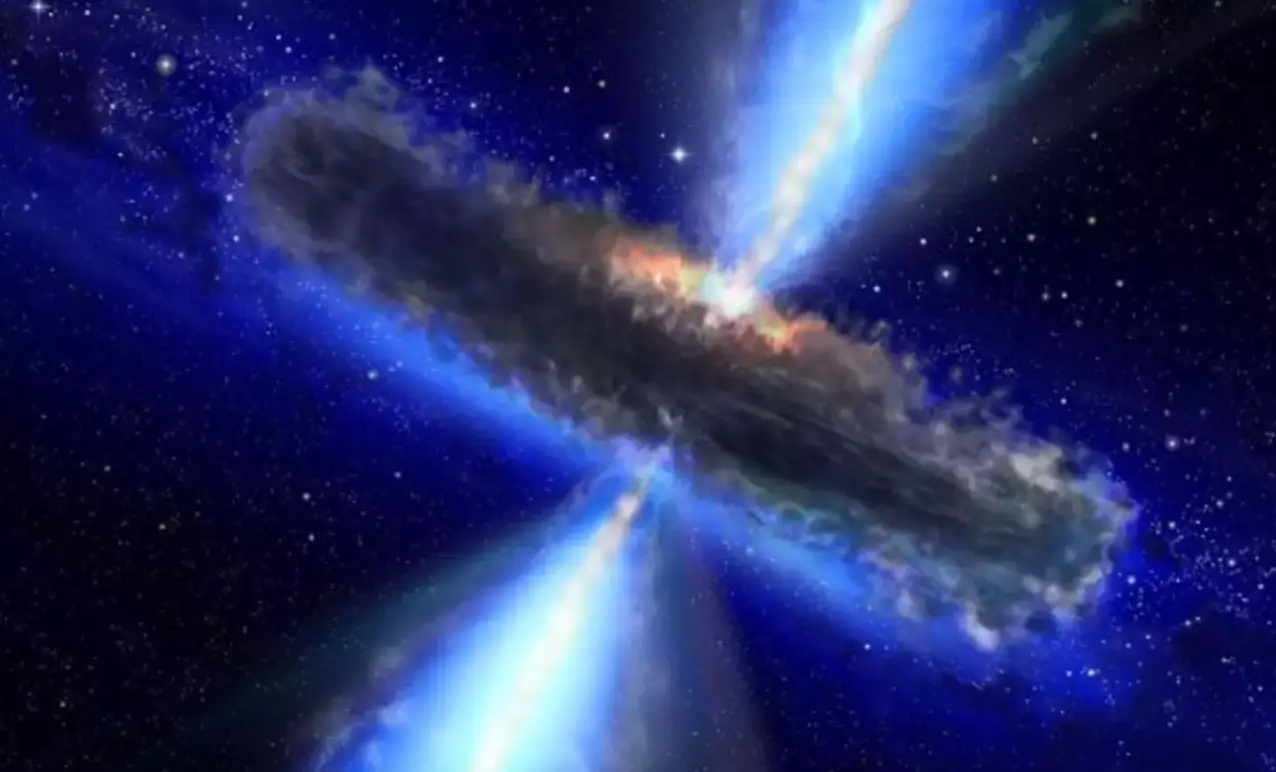
The huge body of water surrounds a black hole called a quasar over 12 billion light-years away.
Understandably light-years aren’t the easiest to understand, so to put that into context, one light year is the distance that light can travel in one year, which is about 5.88 trillion miles. Multiply that by 12 and you get… a lot of zeros. More than we can comprehend.
Advert
The team of astronomers out of NASA’s Jet Propulsion Laboratory in Pasadena, CA, used a 33-foot telescope placed near the summit of Mauna Kea in Hawaii to make initial observations. Later, radio dishes were used to make further observations in the Inyo Mountains of Southern California.
The second team of astronomers out of Caltech noticed that the water in the quasar, APM 08279+5255, is 140 trillion times larger than all the world's oceans combined here on Earth.
Their observations revealed that the reservoir was developed when the universe was only 1.6 billion years old — our universe is currently almost 14 billion years old, so yeah, its old.
Scientist and team-lead Matt Bradford expressed his excitement at the discovery confirming the presence of water in space.

Bradford said: "The environment around this quasar is unique in that it's producing this huge mass of water.
"It's another demonstration that water is pervasive throughout the universe, even at the very earliest times."
Presence of water on various planets in space is suspected by astronomers, with NASA investing millions of dollars into searching for water elsewhere in space.
Many scientific theories have speculated that water vapour was present in the earliest days of the universe.
Water does appear throughout the Milky Way too, but it’s actually in the form of ice, taking up a lot less space than that found in the quasar.
It spans across hundreds of light-years in size, and maintains a temperature of about -53 °C, which experts say is surprisingly warm.
By detecting several signatures of water vapor even further, Bradford and team were able to gain further insights into its properties, notably its remarkable mass.
Water vapor acts as an important trace gas, that reflects the nature of the state of the quasar. The fact that it is surrounding the black hole suggests unusually warn and dense conditions in the surrounding gas region.
To develop our understanding of the vast universe further, the Caltech researchers suggested building and utilising a 25-meter telescope in Chile's Atacama Desert.