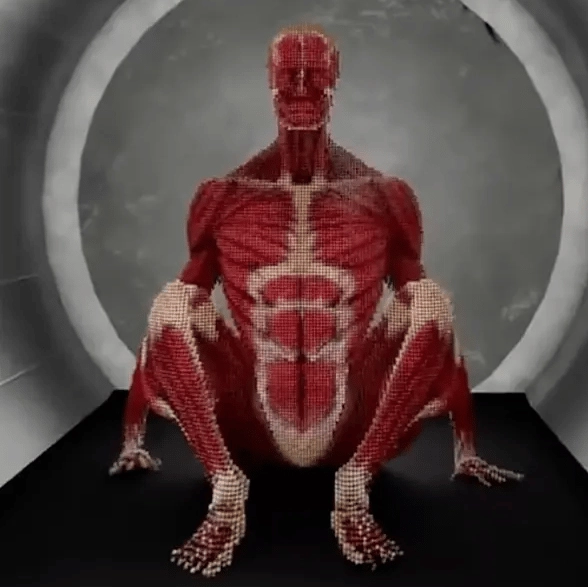
Disturbing simulation shows what happens to the human body when it implodes 3,800m below sea level


Warning: this article contains content that some readers may find distressing.
We all love a good 'what if' scenario, right?
Most of us will never know what entering a black hole feels like (probably a good thing) or see a world where Earth is doughnut-shaped. But one can imagine.
Advert
Thanks to the YouTube channel SciScape, we now know how the human body would visually react to being deep under the ocean.
The average depth of the sea is around 12,080 feet (3,682 metres), according to the National Ocean Service.
While it’s difficult to pinpoint exactly how deep a human can dive until they’re crushed, the deepest free dive we have on record is 831 feet.
Austrian-born Herbert Nitsch achieved this feat in 2012, experiencing pressure 26 times greater than on the surface of the Earth - enough to crush most human lungs.
However, the record-breaking dive didn't come without consequences.
Nitsch developed severe decompression syndrome that caused multiple brain strokes during his life.
While an intense period of rehabilitation helped him return to free diving, incredibly, he only scratched the surface of the ocean’s depths.
So, what happens if you go deeper?
SciScape's viral video shows a human body inside of a submarine.
The simulation was supposed to mimic the OceanGate Titanic submarine, which was believed to have been 3,500m below sea level when contact was lost on June 18, 2023.
At the time of the incident, it was thought that all five passengers on board died after the sub suffered a ‘catastrophic implosion’ caused by enormous water pressure.
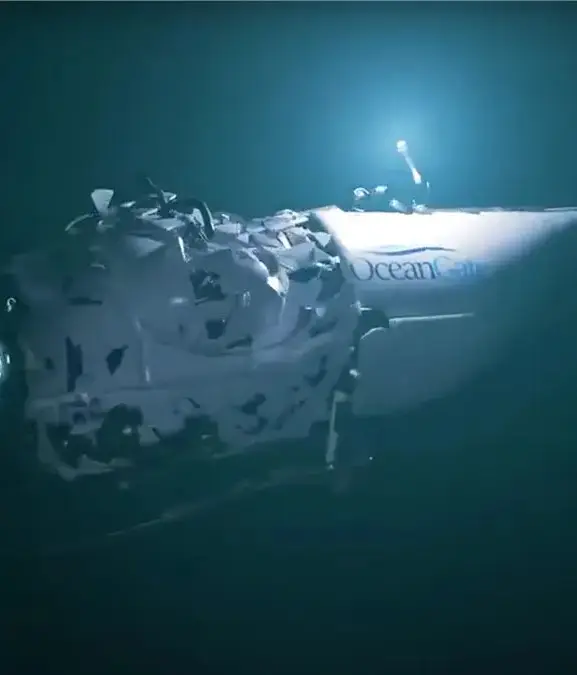
At that depth, the pressure on the sub would have been immense - the BBC commented that the weight of the water would have been equivalent to tens of thousands of tonnes, or roughly the same as the Eiffel Tower sitting on top of it.
Since SciScape shared the video, viewers have taken to share the stark topic on Reddit.
Following the YouTuber posting the potential impact ocean depth can have on the human body, viewers have taken to Reddit (r/damnthatsinteresting) to have their say.
One viewer wrote: “Not the worst way to die tbh. You’d have no time to react or feel fear, and it would be completely painless. Just gone in an instant.”
A second added: “IDK, I just feel like I'm built different.”
A third chimed in: "Someone said in a situation like that “you cease to be biology and become physics.”"
But not everyone was impressed.
“This is a cool visualiser but in no way scientific,” complained another viewer. “Unless our feet really are several hundred red balls?”