Scientists left mind-blown by 'never-seen before' from supermassive black hole 130,000,000 light years away


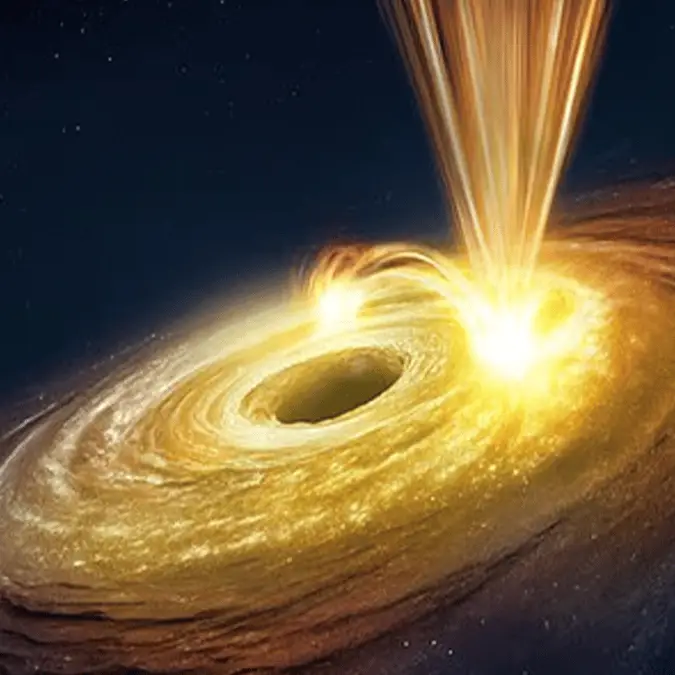
Scientists are left mind-blown by a 'never-seen-before' blast from a supermassive black hole 130 million light-years away.
The massive black hole resides at the centre of spiral galaxy NGC 3783, weighing more than 30 million times the mass of our Sun.
Using two powerful space telescopes, astronomers observed a brilliant X-ray flare explode from the black hole before disappearing.
Within hours, the black hole generated cosmic winds that launched material into space at 37,280 miles per second (60,000 km/s) which is one fifth the speed of light.
Advert
This is the first time scientists have witnessed, in real time, how an X-ray burst from a supermassive black hole triggers ultra-fast winds.
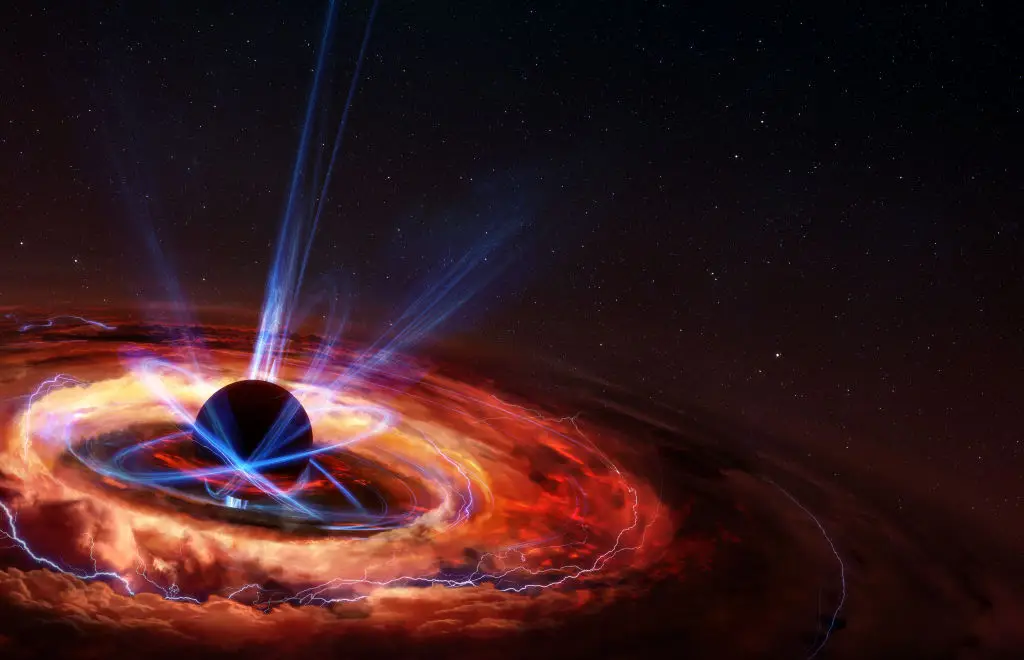
However, the process proved to be far more rapid than astronomers had previously expected.
"We've not watched a black hole create winds this speedily before," said Dr. Liyi Gu, lead researcher of the Space Research Organisation of the Netherlands.
"For the first time, we've seen how a rapid burst of X–ray light from a black hole immediately triggers ultra–fast winds, with these winds forming in just a single day."
We call the largest and oldest of black holes 'supermassive' because they release enormous amounts of energy and transform into what scientists call an 'active galactic nucleus.'
Sometimes these active galactic nuclei (AGN) produce X-ray explosions that are even more intense, though the exact cause remains a mystery to scientists.
They theorise it could be down to pushes from the black hole's intense radiation field, pressure from extreme heat, and centrifugal forces in the surrounding plasma disc. However, their recent research suggests an alternative explanation.
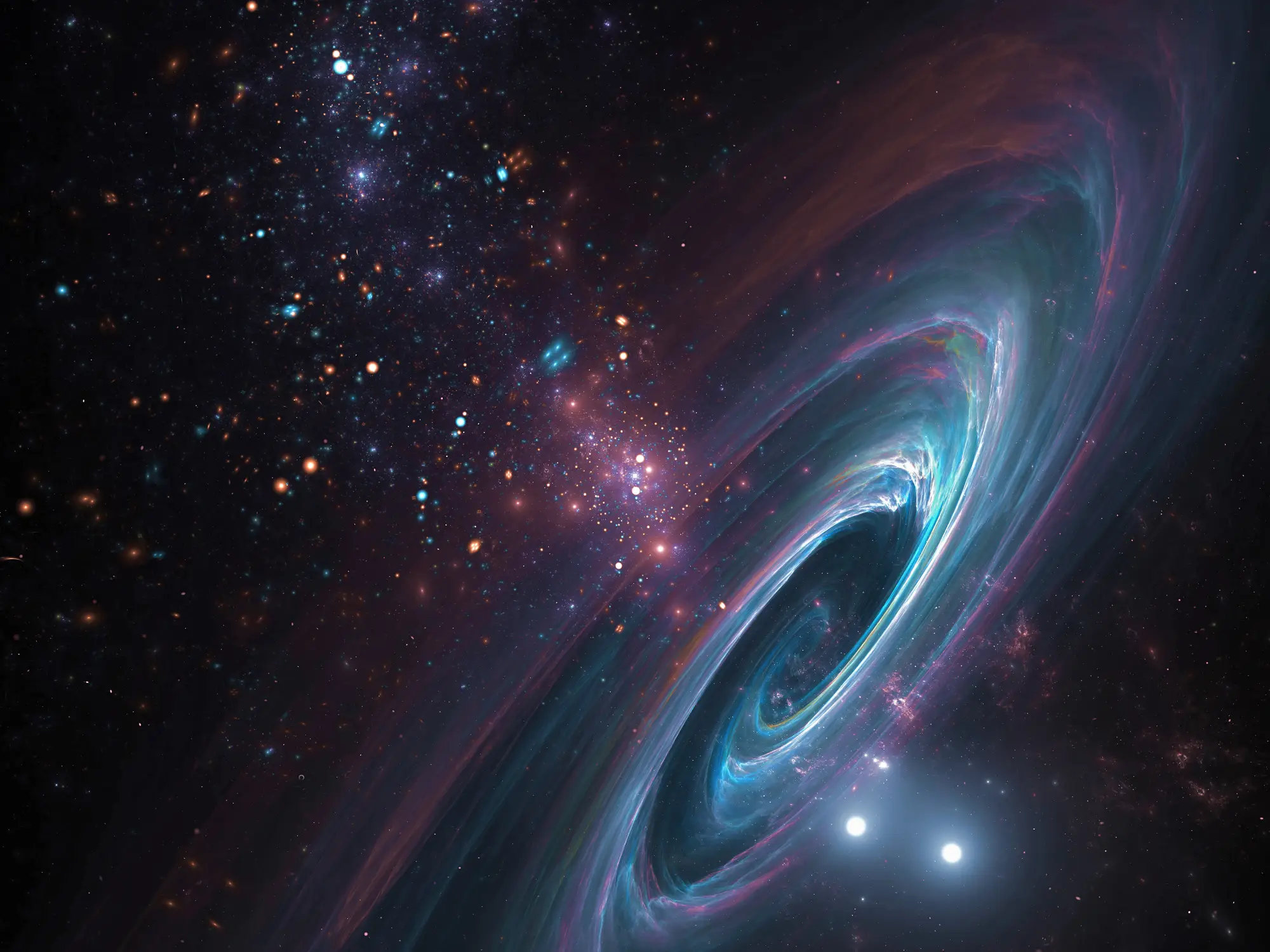
"The winds around this black hole seem to have been created as the AGN's tangled magnetic field suddenly 'untwisted'," said Dr. Matteo Guinazzi, study co–author and astronomer at the European Space Agency. "If the black hole in our galaxy would be active, it would be the strongest X–ray source in the sky."
This X-ray radiation would be so intense that some scientists have even debated whether it could threaten Earth's habitability.
A similar process happens on the Sun during 'coronal mass ejections,' which is when twisted magnetic fields called 'flux ropes' build up energy around sunspots before snapping and launching billions of tonnes of material into space. The following eruptions can create the Northern Lights as the particles collide with the atmosphere.
If the study proves accurate, black holes and stars may operate more similarly than scientists thought, furthering their understanding of how 'windy' galactic nuclei are important for shaping their host galaxies.
"By zeroing in on an active supermassive black hole, the two telescopes have found something we've not seen before: rapid, ultra–fast, flare–triggered winds reminiscent of those that form at the Sun," added co-author Dr. Erik Kuulkers, of the European Space Agency. "Excitingly, this suggests that solar and high–energy physics may work in surprisingly familiar ways throughout the Universe."