Scientists baffled by discovery of giant structure beneath Bermuda said to be 'unlike anything else on Earth'


Scientists have been baffled by the discovery of a giant structure lurking beneath Bermuda.
Scientists have discovered a strange, 12.4-mile-thick (20 kilometres) rock layer sitting beneath the oceanic crust under Bermuda. What's crazy is that no other similar layer in the world comes close to this thickness.
"Typically, you have the bottom of the oceanic crust and then it would be expected to be the mantle," said William Frazer, study lead author and a seismologist at Carnegie Science in Washington D.C. "But in Bermuda, there is this other layer that is emplaced beneath the crust, within the tectonic plate that Bermuda sits on."
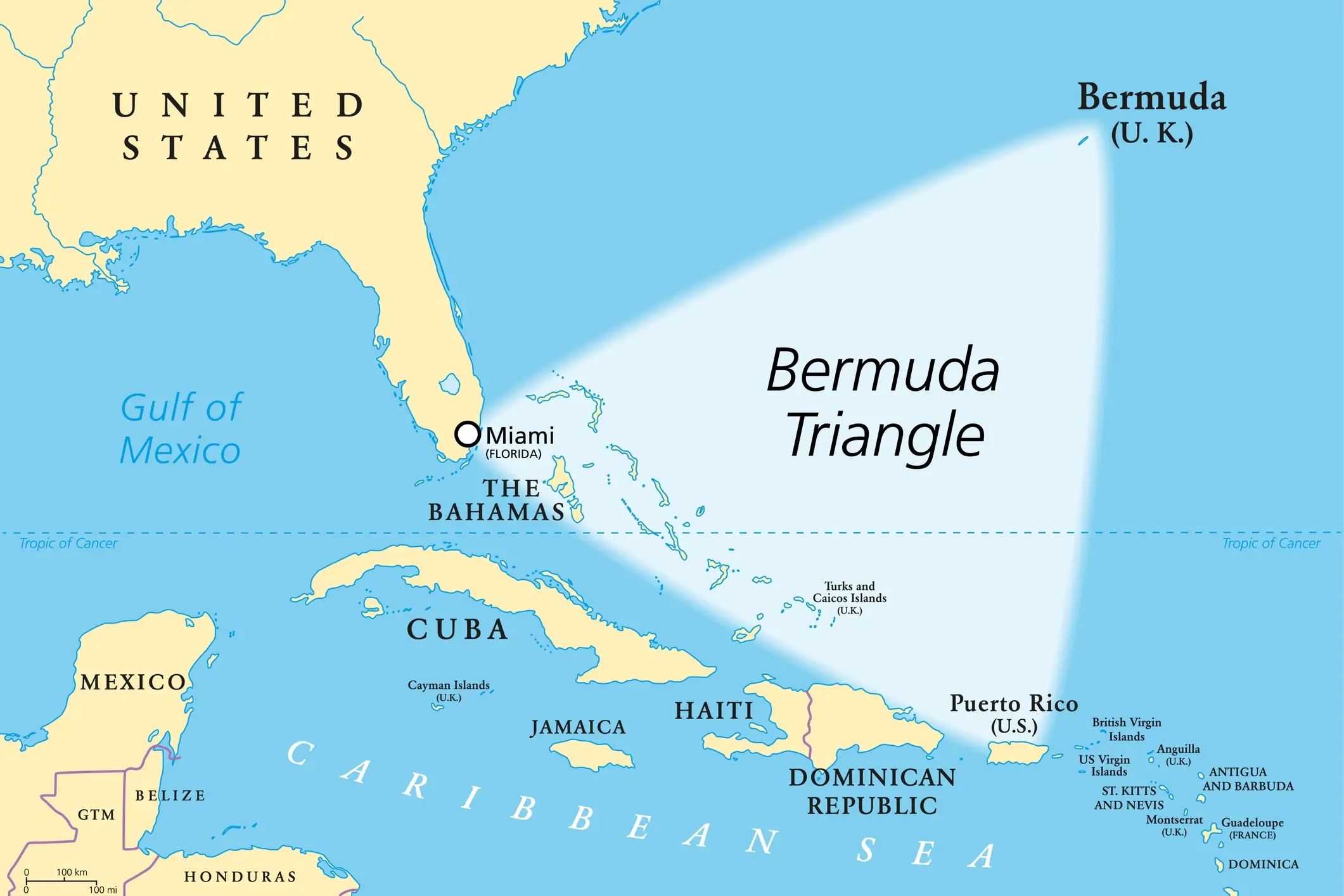
Bermuda has long carried a reputation for mystery, mostly due to the Bermuda Triangle - an area between the archipelago, Florida, and Puerto Rico where an allegedly unusual number of ships and aircraft have vanished.
Advert
But geologists are more concerned with what keeps Bermuda's section of the ocean floor elevated. Similarly, places like Hawaii are elevated due to the volcanic hotspots underneath that push molten rock from the mantle upward and raising the seafloor.
But Bermuda's different, Frazer explained to Live Science. This newly discovered layer could be the missing piece of the puzzle. No active volcano is keeping the swell propped up, the last eruption in Bermuda occurred 31 million years ago.
The discovery of this giant 'structure' suggests that the ancient eruption may have injected mantle rock into the crust, where it solidified in place. This created something like a geological raft that raises the ocean floor by approximately 1,640 feet (500 metres).
In the study, Frazer and co-author Jeffrey Park, a professor of Earth and planetary sciences at Yale University, used recordings from a Bermuda seismic station that captured distant large earthquakes around the world.
This gave them an image of Earth down to approximately 31 miles (50 km) below the surface of Bermuda.
They examined points where the seismic waves from these quakes changed character, revealing an unusually thick rock layer. In turn, they uncovered that the newly–discovered layer is 'less dense than the surrounding rock,' and so, it deflects passing seismic waves and pushes the island upwards.
"There is still this material that is left over from the days of active volcanism under Bermuda that is helping to potentially hold it up as this area of high relief in the Atlantic Ocean," explained Sarah Mazza, a geologist at Smith College in Massachusetts who was not involved in the work.
Frazer is now investigating other islands to determine whether similar layers exist beneath them or if Bermuda is one of a kind.
"Understanding a place like Bermuda, which is an extreme location, is important to understand places that are less extreme," Frazer concluded. "And gives us a sense of what are the more normal processes that happen on Earth and what are the more extreme processes that happen."
Their findings were published 28 November in the journal Geophysical Research Letters.