US states to be hit hardest by El Nino as scientists warn its set to be 'strongest in living memory'


The Met Office has issued an official warning that the approaching El Niño is set to become the ‘strongest one in living memory’.
This comes after scientists warned the public that this weather event could bring extreme heat, deadly floods, droughts and economic chaos across the globe.
According to a report by CNN, the current El Niño is set to become a Super El Niño by October 2026, and is expected to become the strongest one on record by the end of the year.
Northern states are expected to experience a warmer than usual winter while the Mid West is set to get drier weather.
Advert
States across the Bible Belt including Texas, Mississippi, Alabama, Tennessee and Georgia will experience a wetter and cooler winter than previous years.
As per the BBC, Professor Adam Scaife, who is the head of long-range forecasting at the UK Met Office, stated: “We should be clear that this is an unprecedented event. I have never seen an El Niño signal this intense in our forecasts.”
Earlier this year, the US National Oceanic and Atmospheric Administration (NOAA) also issued an urgent warning about the anticipated super El Niño, saying: “El Niño conditions developed over the past month, as shown by above-average sea surface temperatures (SSTs) across the central to eastern equatorial Pacific Ocean.”
The agency continued: “There is a 63% chance of a very strong El Niño during November-January, that would rank among the largest El Niño events in the historical record going back to 1950.”
What is an El Niño?
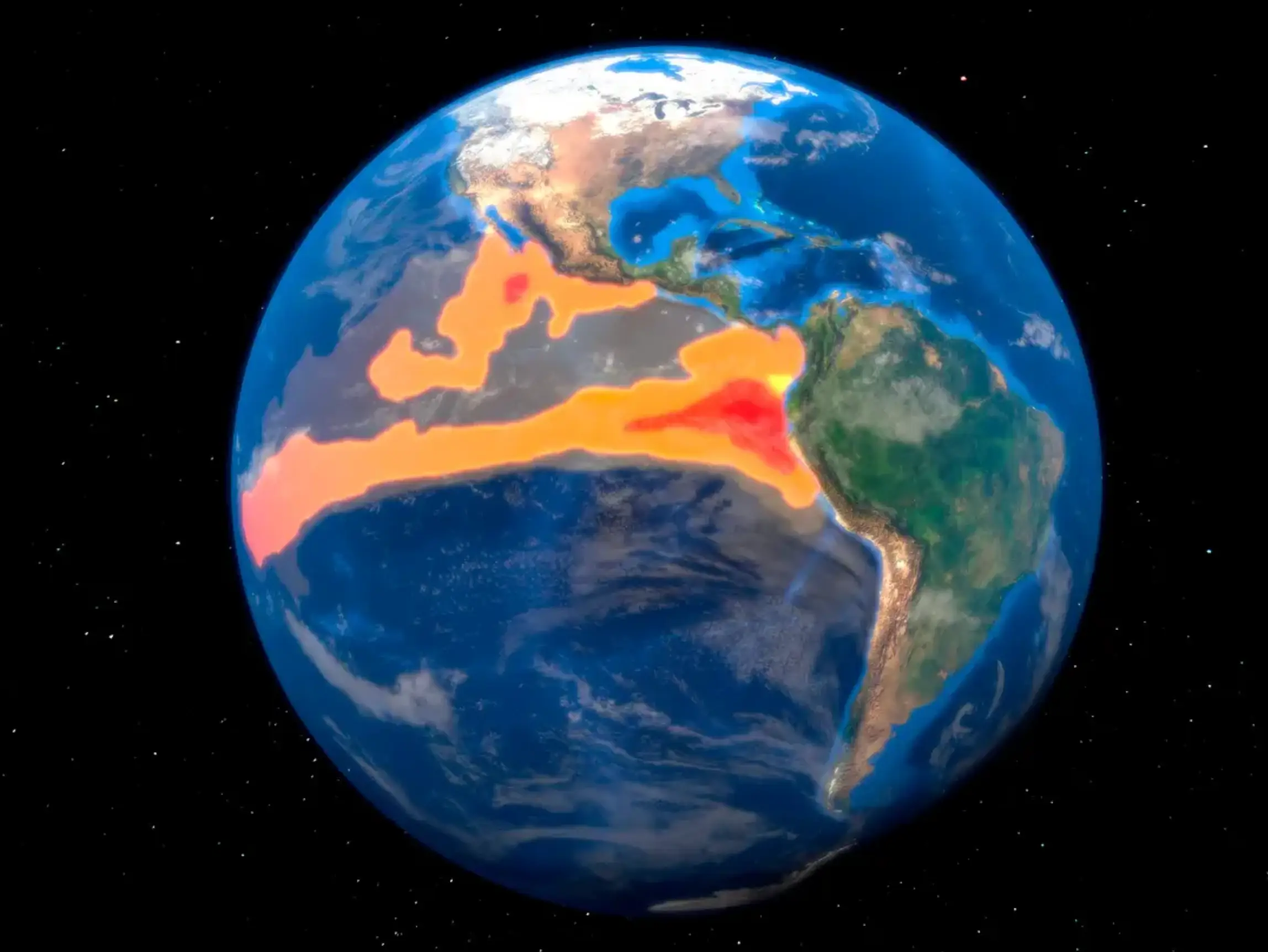
An El Niño is a complex climate pattern which involves the warming of sea surface temperatures in the central and eastern part of the Pacific Ocean.
This leads to knock-on effects with weather globally, including the shifting of rainfall patterns, leading to floods and droughts in certain areas.
Back in 1877, the world suffered one of the deadliest climate disasters in recorded history when a massive El Niño event disrupted weather patterns across huge parts of the world.
This caused extreme drought in countries including India, China, Brazil and regions of Africa, with crops failing on a huge scale, rivers dried up and food shortages spiralled into famine.
Historians and climate researchers estimate the combined death toll from the global famines linked to the 1877 El Niño reached somewhere between 30 and 60 million people.
Researchers around the world now fear that another El Niño might push the planet into even more dangerous territory because global temperatures are already being supercharged by climate change.