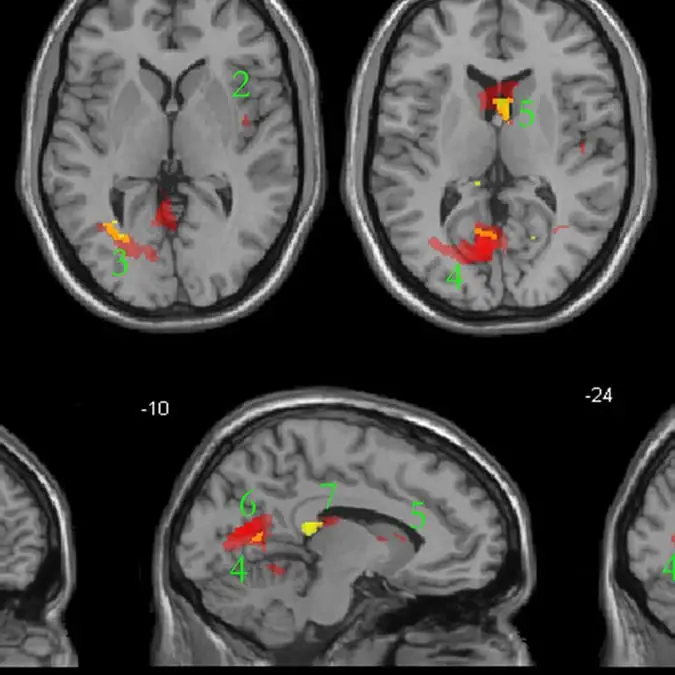
Shocking MRI scans show stark difference between brains of smokers vs non-smokers


A study which compared different MRI scans has revealed shocking results as the stark difference between brains of smokers and non-smokers is blatant.
In the research, which was published by Frontiers, it delved into the impact that lifetime tobacco consumption has on the body.
The study details: “To test whether the altered brain structures were significantly associated with tobacco consumption and nicotine dependence, every cluster from the between-group differences (i.e., heavy vs. light smokers, moderate vs. severe nicotine dependence) were selected as the candidate region, and partial correlation analysis was used to find the relationship between the pack-years/FTND score and the abnormal region volume with age, intracranial volume, FTND/pack-years as covariates.”
So, what were the results? It turns out that smokers have smaller brain volumes compared with non-smokers.
Advert

This smaller brain volume tends to be particularly prevalent in regions related to cognition, control, and sensory processing.
Meanwhile, heavy smokers have more pronounced atrophy and smoking appears to be linked with shrinking of both grey and white matter compared with non-smokers.
Heavier smoking also tends to show stronger structural loss in brain regions used for thinking, emotional regulation, and motor functions.
In the research, it said: “In this study, the effects of nicotine dependence and tobacco consumption on brain structural changes are compared, and nicotine dependence was found with distinct atrophy patterns on the brain volume in contrast to the findings of tobacco consumption.
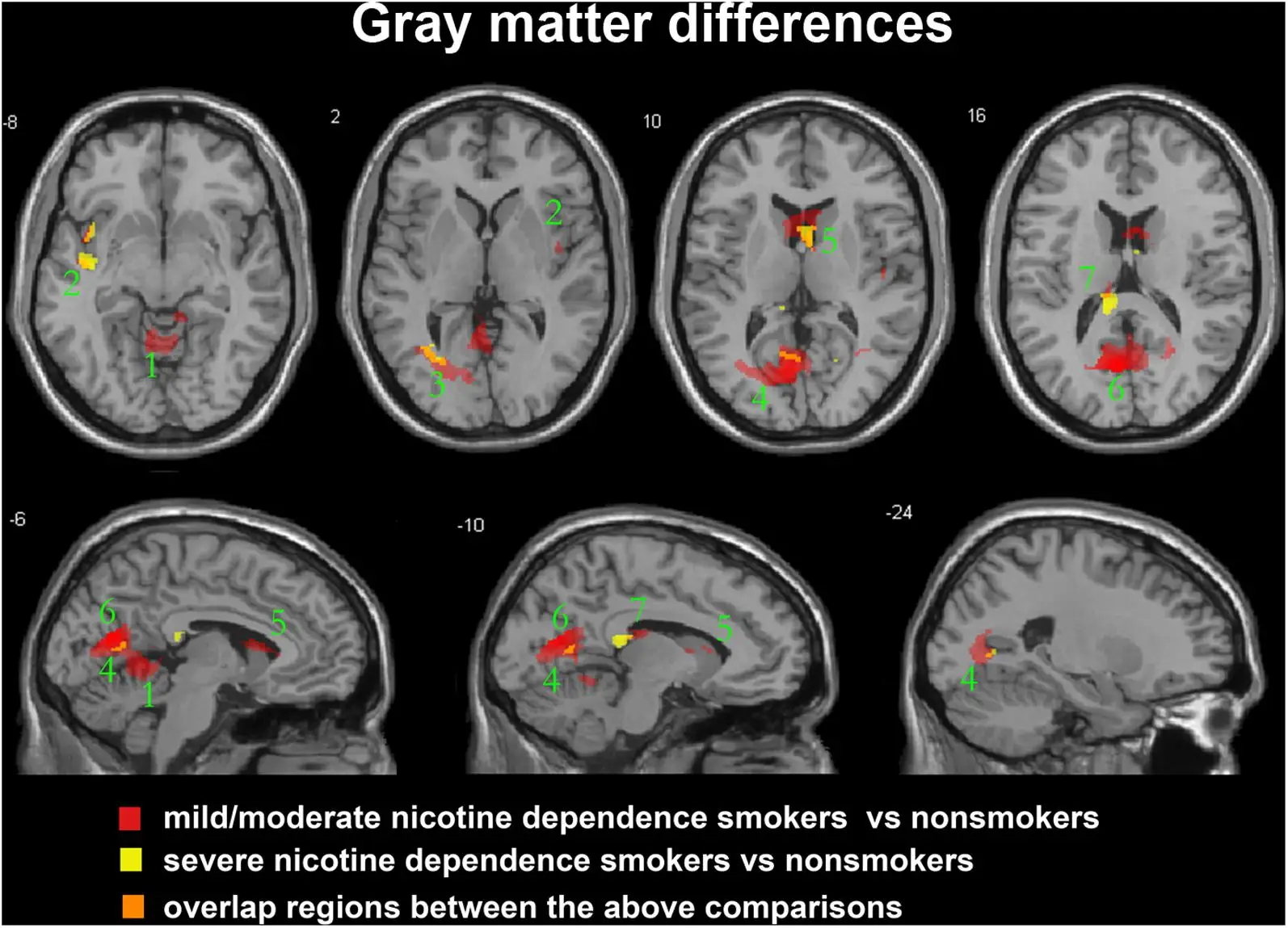
“It is very interesting to find that mild nicotine dependence smokers displayed more structural alternations than the heavy nicotine dependence smokers. We speculate this phenomenon may be related to the intensified neuroplasticity, in other words, when the brain experiences more cigarettes within a certain period of time, the brain becomes accustomed to the adverse effects of smoking and may adjust itself against brain atrophy.
“Another possible reason is that severe nicotine dependence may accompany with intense pleasure, which may act as a protective role for the brain volume.”
The study continued: “This current study confirms that brain volume atrophy appears to be more serious in smokers with higher levels of cigarette consumption and in smokers with moderate nicotine dependence, and nicotine dependence displayed contrary patterns on the brain volume of smokers compared with tobacco consumption.
“Our results indicated that the combinations of the FTND, pack-years and MRI findings could help to comprehensively evaluate the cumulative influences of smoking on smokers and to well understand the roles of affected brain regions, which finally promotes the development of appropriate medical interventions for smokers.”