
Biohacker trying to 'live forever' injected ketamine and tracked his brain data for 15 days to find shocking results


A biohacker who is trying to ‘live forever’ has injected himself with ketamine and tracked his brain data for 15 days to find out some shocking results.
Bryan Johnson is well known for spending millions of dollars on ‘de-aging’ treatments in an attempt to turn back his biological clock.
The venture capitalist has taken some extreme measures to try to halt the aging process over the years, including receiving blood transfusions from his son.

Advert
It seemed like Johnson was taking things a step further when earlier this year he revealed what his next treatment would be.
Publishing a post on X, formerly Twitter, the dad-of-three wrote: “I am no longer injecting my son’s blood. I’ve upgraded to something else: total plasma exchange.”
You’d be forgiven for thinking you’d heard it all at this point but it seems like Johnson isn’t quite finished there.
Once again taking to X, the biohacker announced his latest effort in his ‘don’t die’ plan.
He wrote: “I injected the horse tranquilizer Ketamine and tracked my brain data for 15 days. It completely scrambled my brain.
“In a world-first we answered the question ‘what happens to the brain before, during, and after ketamine treatment?’ We also discovered how long it took for my brain to return to ‘normal’. The results surprised me.”
Describing the effects, Johnson continued: “After ketamine, my brain’s activity patterns were completely scrambled. Instead of predictable routes between major hubs, traffic was rerouted to smaller, less-used airports across the U.S., Europe, and Asia.
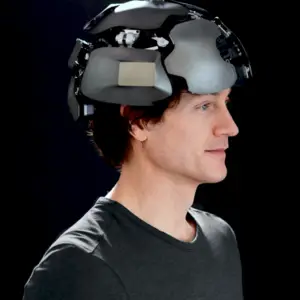
“This means brain activity that was once rigidly structured became more flexible and varied, potentially unlocking new connections and ways of thinking.”
The data was studied using Kernel Flow, a non-invasive brain interface technology firm founded by Johnson.
For the past six years, the company has been researching neurological diseases and dysfunctions such as Alzheimer’s and Parkinson’s diseases, depression and anxiety.
Many people took to social media to share their reactions to Johnson’s latest experiment.
On X, one user wrote: “This would be more convincing if we could see a lot of 80-90yos posting about the success. Or elderly people who have actually recovered from dementia.”
Another said: “The amount of work you’ve put into this is crazy. The brain scanner didn’t exist so let’s just make one!
A third person joked: “Can I join a study where I get ketamine injections?”
And a fourth added: “Bro discovers weekend seshing.”