
We asked ChatGPT who to vote for in the world’s first 'AI election'


It's not just on the battlefield that artificial intelligence is becoming more than a personal therapist, and as the 2026 midterms loom, some are calling them the world's first 'AI election'.
Remembering that the Republican Party currently has slim majorities in both the House and Senate, the Democrats winning in either chamber could effectively block President Donald Trump's future agenda.
The 2026 midterms are said to be crucial in deciding how the next two years of his presidency go, and with them being so important, voters are increasingly turning to AI for help in deciding who to vote for.
NPR spoke to several Americans who are supposedly using chatbots to help them decide which way to go in the midterms. It comes in the aftermath of research from the Pew Research Center reporting that around half of American adults use chatbots and 42% of users use them to search for information.
Advert
Leaning on AI for help in the midterms might sound like a tech-savvy idea to make your politics more informed, but according to Rafael Batista, a postdoctoral fellow at Johns Hopkins University, it could just reinforce and persuade you to go the way you were already going. Keen to test this idea for ourselves, we asked ChatGPT who to vote for in a major battleground.
Putting ChatGPT through the political wringer
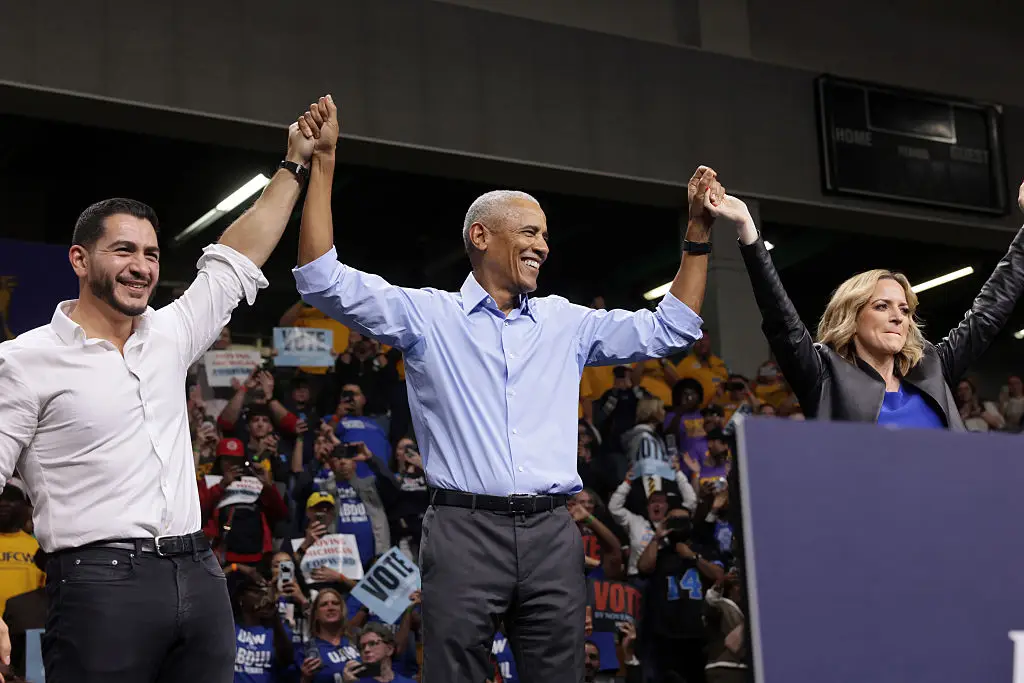
The 2026 midterm elections are likely to hinge on just a handful of critical swing states, with Michigan, Georgia, Ohio, North Carolina, Maine, Texas, and Pennsylvania tapped as key battlegrounds. Seeing whether AI could be just as crucial to voting as advice from friends and family, we tried to ask OpenAI's souped-up chatbot whether we should vote red or blue in each of these. As we'd be sat here all day and undoubtedly end up in a mind-melting loop, we decided to focus on Michigan as the 'premier' battleground.
While we're sure your loved ones, neighbors, colleagues, or even strangers on the street might be vocal with their opinions, ChatGPT is (unexpectedly) a little more cagey with its advice.
Then again, with an OpenAI spokesperson directing NPR to its election information and safeguards page, a mention that the tech giant continues to "monitor bias in our models to keep ChatGPT's responses politically neutral" should've already told us what we needed to know.
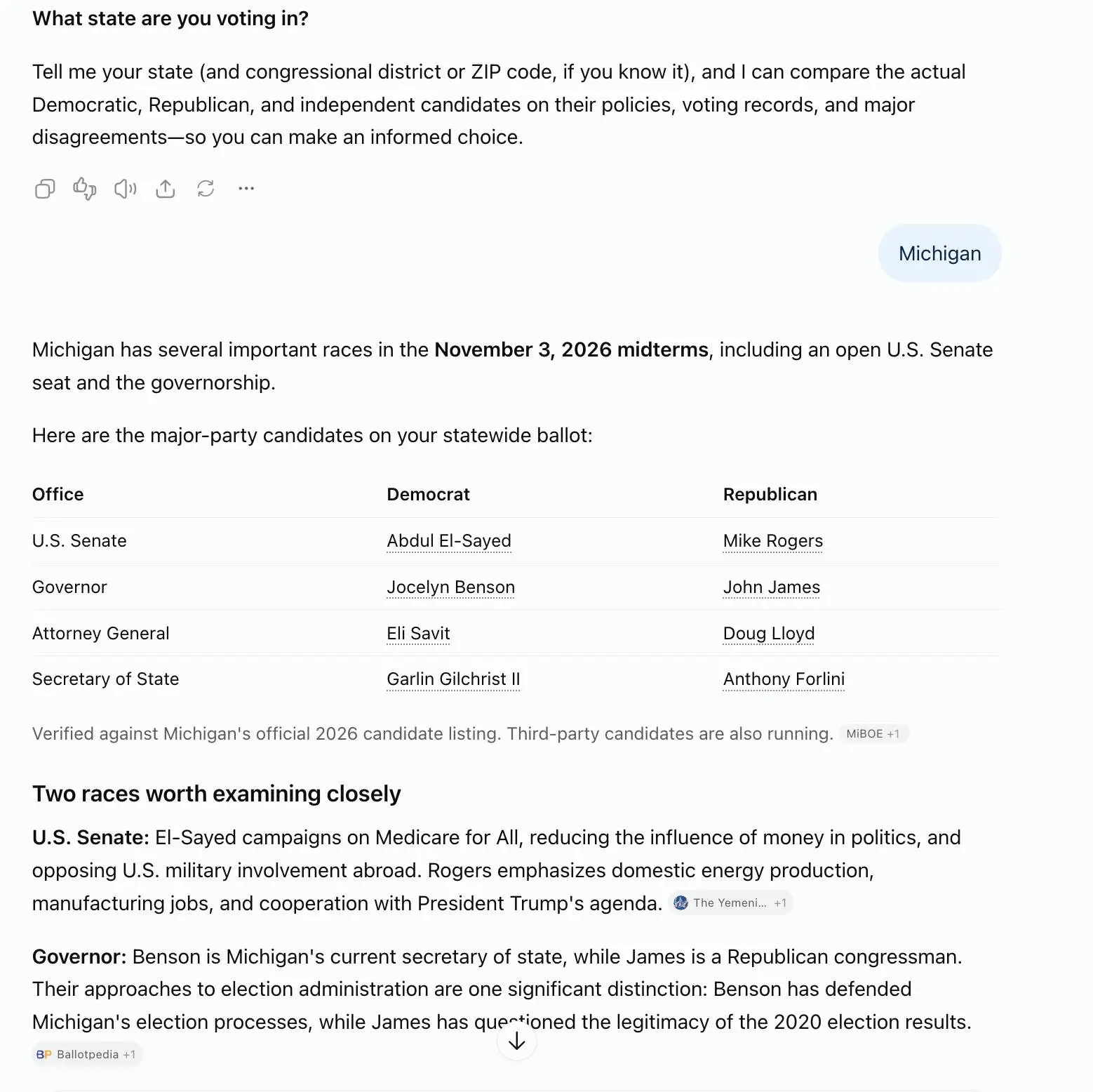
Asking ChatGPT for some political guidance, we were told to narrow down our choice to which state we reside in and what issue matters most to us.
Typical options include cost of living and jobs, healthcare and abortion rights, immigration and public safety, democracy, education, and foreign policy and wars.
Opting to prioritize cost of living and jobs, ChatGPT looked at a variety of candidates while highlighting the Senate race between Democrat Abdul El-Sayed and Republican Mike Rogers. As for who could replace the term-limited Governor Gretchen Whitmer, Democrat Jocelyn Benson and Republican John James are also locking horns.
What does ChatGPT say about the Michigan vote?
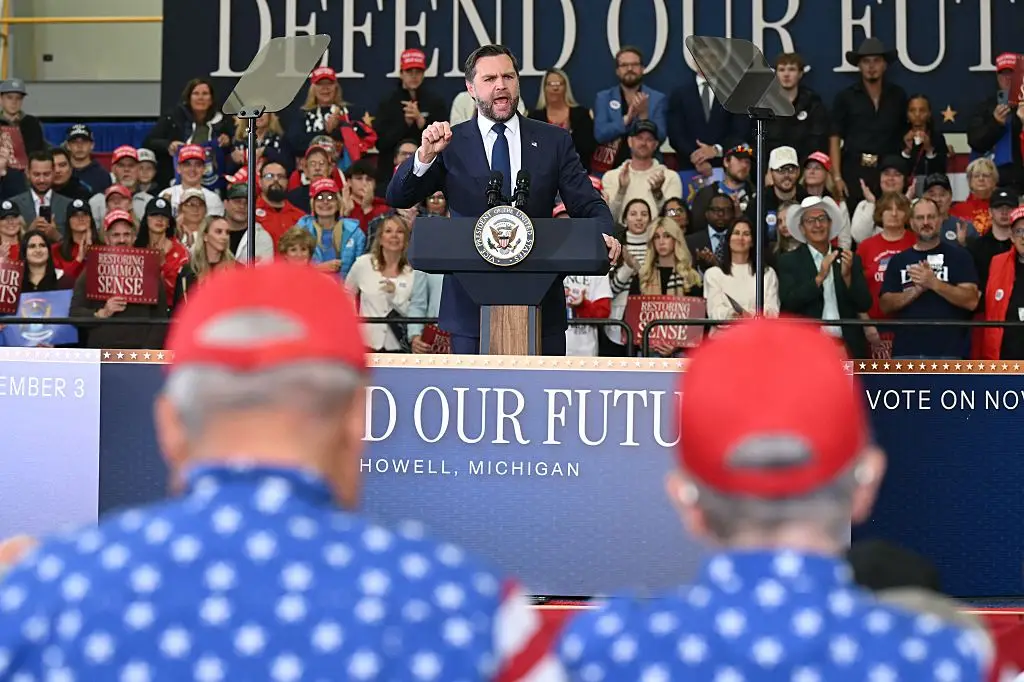
Reiterating what most of us already knew, ChatGPT reminded us that Michigan's major candidates have vastly different approaches to affordability, with the central disagreement being over how the government should handle households and businesses in terms of tax reductions and regulatory changes, or by focusing on worker protections and public investment.
Whereas El-Sayed proposes a larger federal role in labor standards, financing healthcare, and redistributing tax burdens, Rogers is prioritizing private sector growth, reducing taxes, and reducing regulatory costs.
For Benson and James, she wants to reduce particular costs and support investment while looking at how much relief households would receive.
James is more interested in income-tax reduction and increasing take-home pay for residents who owe state income tax.
Both want to reform Michigan's economic-development incentives, although neither approach guarantees that subsidized investments will be able to produce the jobs that are promised.
As well as highlighting how their various policies raise questions about costs, taxes, and how employers would likely respond, ChatGPT also breaks down their track records in terms of voting.
ChatGPT suggests that for any proposals, you should consider how they're funded, who benefits directly, how quickly it could take effect, and what evidence suggests it would work.
Still, it repeatedly tells us it can't make an informed decision on who to vote for based on these parameters alone, constantly delving deeper into what individual voters want.
Basically, if you think turning to a chatbot to ask for some last-minute advice on who to vote for as you're heading to the polls, you're probably looking in the wrong place.
At the end of the day, no one knows your voting priorities better than you, and while the likes of ChatGPT can help you simplify a lot of the political jargon, they simply won't tell you who to vote for.
We imagine that would open up all kinds of legal nightmares for the tech companies overseeing them, although it seems more people than ever are turning to AI for a helping hand in deciding who to vote for.