uniladtech homepage
  • News
    • Tech News
    • AI
  • Gadgets
    • Apple
    • iPhone
  • Gaming
    • Playstation
    • Xbox
  • Science
    • News
    • Space
  • Streaming
    • Netflix
  • Vehicles
    • Car News
  • Social Media
    • WhatsApp
    • YouTube
  • Advertise
  • Terms
  • Privacy & Cookies
  • LADbible Group
  • LADbible
  • UNILAD
  • SPORTbible
  • GAMINGbible
  • Tyla
  • FOODbible
  • License Our Content
  • About Us & Contact
  • Jobs
  • Latest
  • Archive
  • Topics A-Z
  • Authors
Facebook
Instagram
X
TikTok
Snapchat
WhatsApp
Submit Your Content
The US has officially lost its crown after China secretly built the world's fastest supercomputer

Home>News>Tech News
Published 14:18 24 Jun 2026 GMT+1

The US has officially lost its crown after China secretly built the world's fastest supercomputer

The shift has marked a major surprise turning point in the supercomputer race

Ben Williams

Ben Williams

google discoverFollow us on Google Discover
Featured Image Credit: VCG / Contributor via Getty
China
Science
Computers

Advert

Advert

Advert

China has dealt the US a major blow in the global supercomputer race, ending America’s run at the top of one of the most closely watched technology rankings in the world.

Whilst it sounds quite niche, compared to all the bigger things going on in the world right now, it’s a monumental shift nevertheless. Supercomputers are used for some of the most demanding work in science, defence, medicine, climate modelling and artificial intelligence, making their speed a closely watched measure of national technological strength.

The US has particularly continued to dominate much of the high-performance computing conversation in recent years, especially through machines housed at government-backed national laboratories.

However, as reported first by outlets like The Guardian, the latest ranking shows that China has now moved ahead with a system that was not even previously listed among the world’s fastest publicly verified machines.

Advert
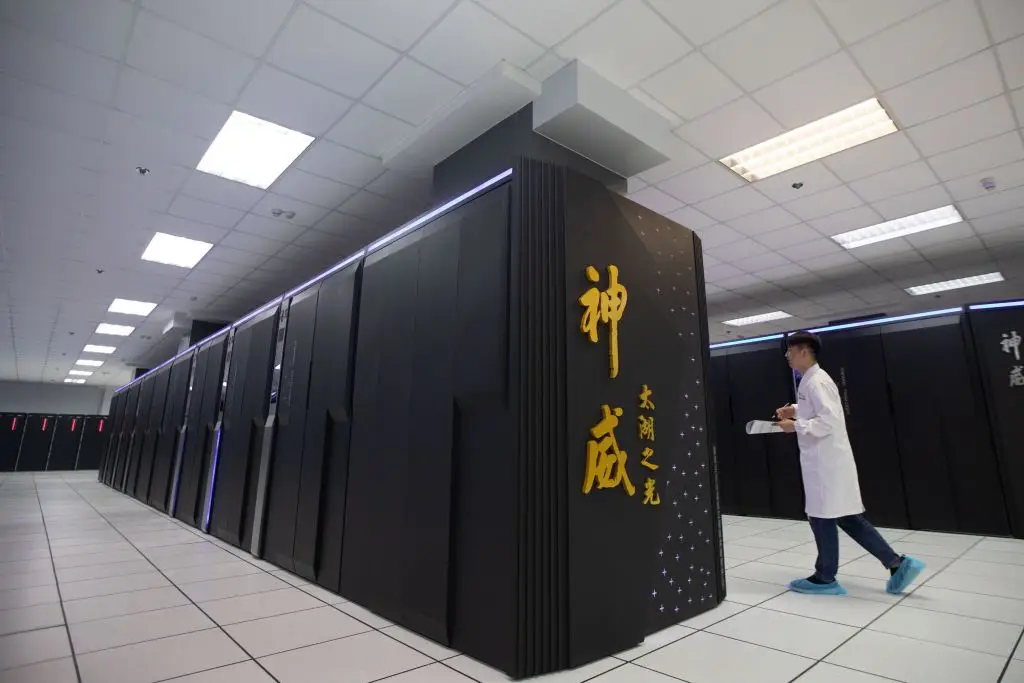
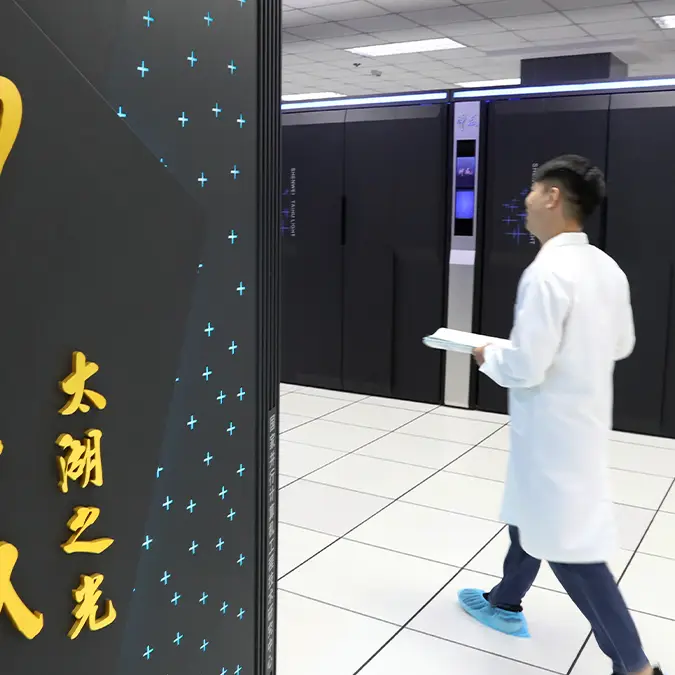
China's LineShine supercomputer beat the US' lead by reaching 2.198 exaflops, all without relying on traditional GPU-heavy architecture (China News Service/Contributor/Getty Images)

That machine is LineShine, a supercomputer based in Shenzhen, which has debuted at number one on the latest TOP500 list.

LineShine displaced El Capitan, the US supercomputer based at Lawrence Livermore National Laboratory in California, which has now dropped to second place.

According to scientists behind the TOP500 project, LineShine achieved 2.198 exaflops. That means it can carry out more than 2 quintillion calculations per second.

The result marks the first time since 2017 that a Chinese machine has topped the ranking, which is often seen as a measure of a country’s technological power.

El Capitan is now followed by two other US supercomputers, housed at national laboratories in Tennessee and Illinois.

Germany’s Jupiter machine has fallen to fifth place, with those five computers currently standing as the only publicly verified exascale systems in the world.
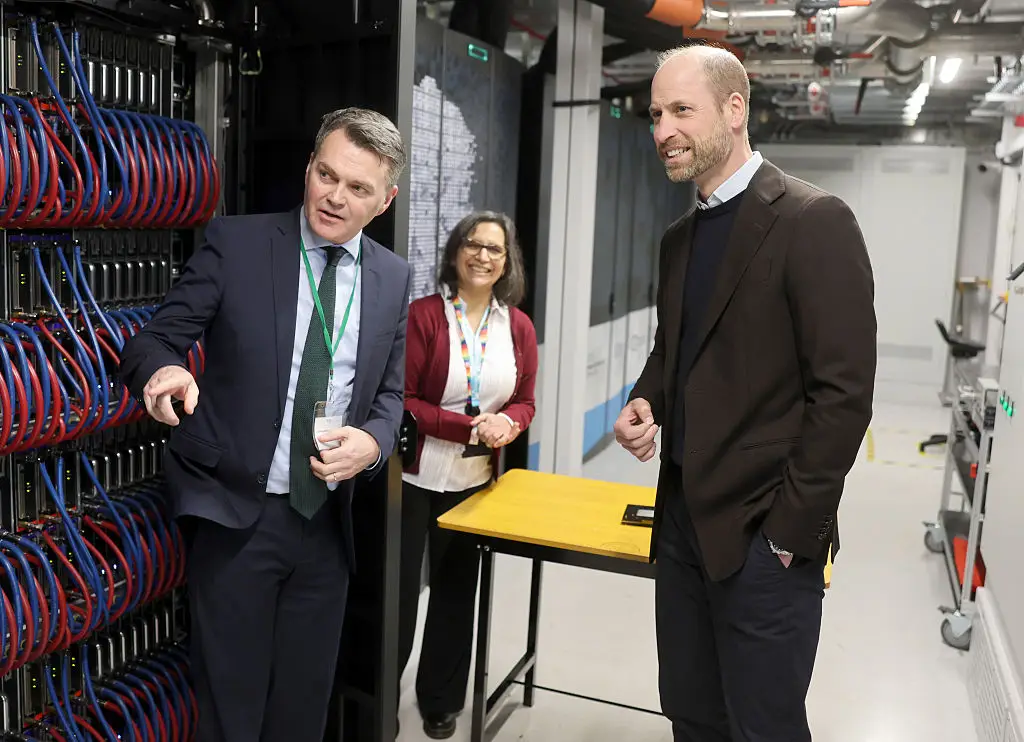
Although much further down than LightShine, Britain’s Isambard-AI remains the UK’s highest-ranked system on the TOP500 list(Chris Jackson/Staff/Getty Images)

One of the most striking details about LineShine is the type of hardware it uses. This is because, unlike many modern high-performance computers, particularly those linked to artificial intelligence, LineShine runs entirely on conventional computer chips, known as CPUs.

That sets it apart from the GPU-heavy systems that have become central to the current AI race, with graphics processors now widely used to train and run advanced models — taking up the majority of supply chains and driving up memory-based components’ prices as a result.

However, the system’s performance comes with a large energy demand. TOP500 lists LineShine’s operating power at around 42.2 megawatts, underlining the huge infrastructure required to keep machines of this scale running.

The wider ranking also shows the gap between the leading machines and much of the rest of the world. The UK, for example, has 11 systems in the TOP500, with the University of Bristol’s Isambard-AI the highest-ranked among them at number 11.

Choose your content:

an hour ago
2 hours ago
3 hours ago
  • Curtin University
    an hour ago

    An asteroid slammed into Earth 3,000,000,000 years ago and we finally know where it hit

    The North Pole Dome impact structure is nowhere near as cold as its name would suggest

    Science
  • Education Images / Contributor / Getty
    2 hours ago

    Virus behind 'Frankenstein' rabbits with tentacle growths on their heads explained as they 'invade' US states

    Cottontail papillomavirus looks like something from a Resident Evil game

    Science
  • Tatsiana Volkava via Getty
    3 hours ago

    Warning issued following patients in liver failure from knock-off weight loss drug

    Multiple life-threatening illnesses have emerged from the counterfeit treatment

    Science
  • Catherine Falls Commercial / Getty
    3 hours ago

    Why your boss might soon track the rogue autonomous AI tools running on your laptop

    Unapproved AI agents are creating a workplace security problem bosses can no longer ignore

    News
  • Physicists just built the world's first 'nuclear clock' that will change how we measure time
  • China releases 'world's fastest' humanoid robot as people worry about where technology is heading
  • China officially opens world's tallest bridge that cuts 2 hour journey to just two minutes
  • NASA officially kills Mars mission leaving goal wide open for China