
Scientists found a secret secondary feature hidden inside 1,200 Starlink satellites


With more than 12,000 Starlink satellites launched by SpaceX since 2019 - and a total of 42,000 approved - it seems the company has firmly planted its roots within the communications sector.
More and more firms are bringing Starlink aboard as part of their network coverage and now, scientists have discovered a secret secondary feature.
This comes after a team of researchers at Kyoto University used a series of these satellites to map out the Earth’s thermosphere.
The thermosphere is the fourth layer of our planet’s atmosphere, which is located above the mesosphere and below the exosphere, and is also the region in which satellites orbit around the Earth.
Advert
The experts released a study, published in Earth, Planets, and Space, which detailed how ‘developing observation methods for thermospheric density is essential both to further advancing the science of the upper atmosphere and for applications in space engineering’.

Co-author Mamoru Yamamoto said: “This is a multidisciplinary study between space science and space engineering. Reading papers from both research fields, we realized that deeper dialogue between researchers from both fields is necessary.”
According to the Kyoto University website, the studies could hold ‘significant social impact, as they provide information that can help mitigate the risk of collisions between satellites or between satellites and space debris’.
They went on to say: “The methods used may also eventually be able to support near-real-time monitoring of atmospheric density around satellites, strengthening space-weather forecasting and helping to make future space operations safer and more reliable.”
The study highlights how three notable density increases were recorded on October 8, 11, and 18–20, 2024.
The study goes on to detail: “The first two events are well associated with geomagnetic storms. The density perturbations appeared across the most altitude range and lasted approximately one day.
“The third event, however, showed a weak association with the geomagnetic disturbance, persisted for several days, and was limited to altitudes above 400 km. Our findings confirm that contemporary TLE data are a valuable resource for monitoring thermospheric density dynamics.”
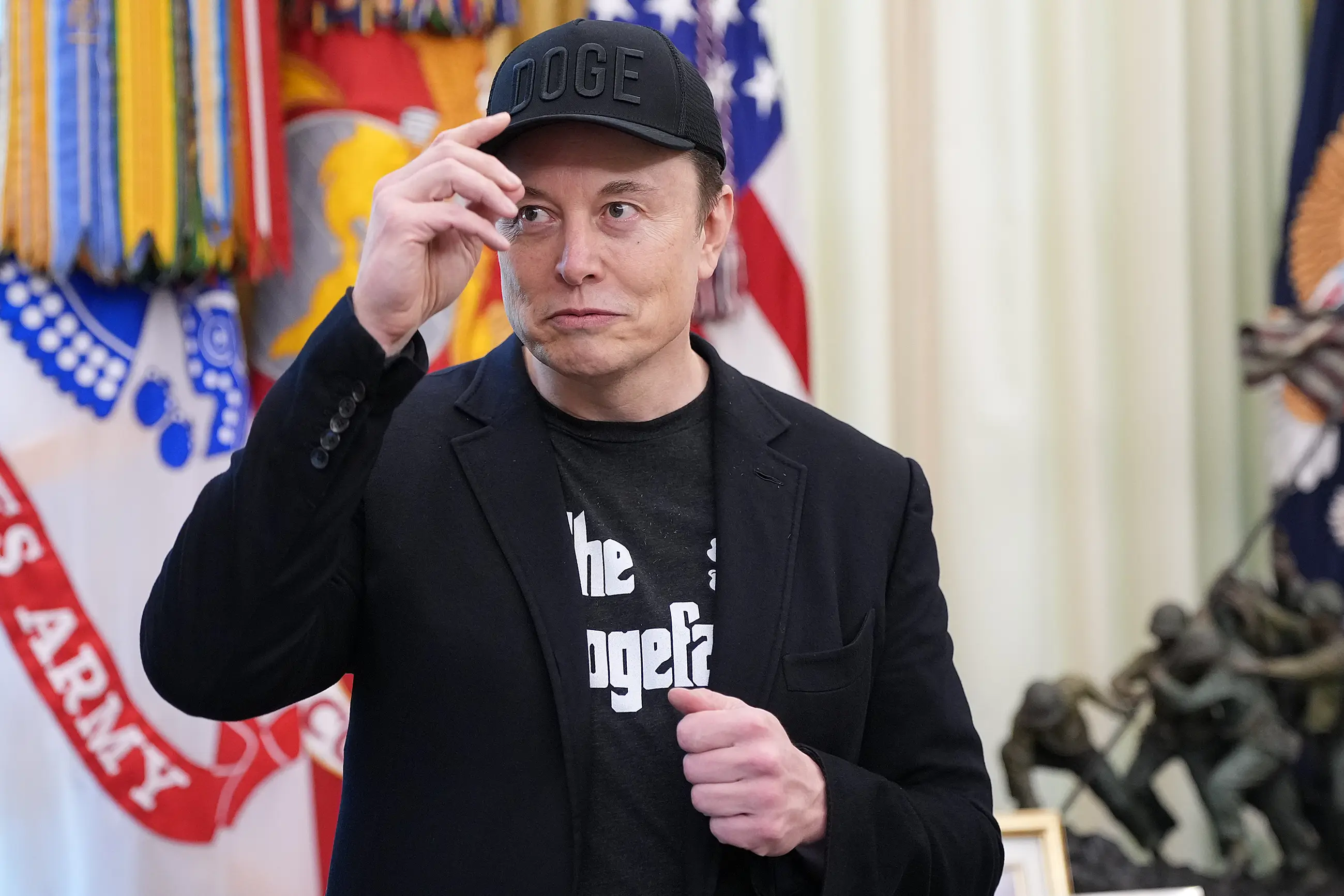
Starlink was first announced back in January 2015 by the CEO of SpaceX, Elon Musk.
The world’s richest man revealed hopes that the expansion of Starlink will help his ambitions to get humans to Mars.
Musk has had his sights set on the Red Planet for years, previously stating that his firm could achieve ‘life sustaining life’ on Mars in as little as 20 to 30 years.