You could own Nvidia stock without realizing


The stock markets are in a state of flux right now, and while we're sure many of your pies are currently showing slices of red instead of luscious green, fear not.
President Donald Trump has been on the rampage in the aftermath of the American midterms, with the Republican Party seemingly suffering its worst defeat since the post-Watergate elections of 1974.
The Grand Old Party is also feeling the burn of a sitting president losing control of the House of Representatives and the Senate in a single midterm cycle since George W. Bush did in 2006.
It’s not just the POTUS feeling the strain, with companies like Nvidia also taking a hit.
What is going on with the stock market following the American midterms?
Advert
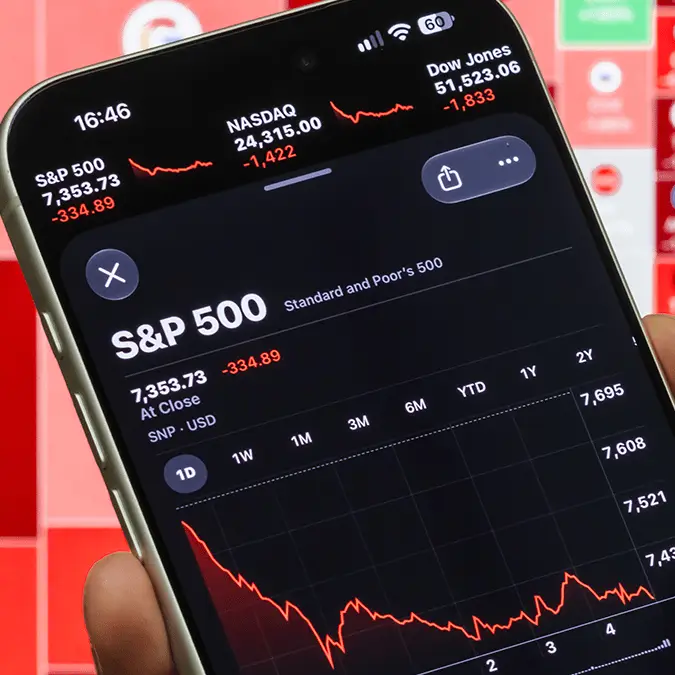
While Democrats are celebrating the 'blue tsunami' that's swept across the USA, the stock market definitely isn't. In particular, companies tied to data centers have been struck particularly hard, with SanDisk facing a 22% single-day slump and AMD taking a 17% dip.
The Nasdaq index includes the biggest tech firms in the USA and was down over 5.5% on November 5, Japan's Nikkei 225 slipped 6.3%, and the UK's FTSE 100 index suffered a 2.2% fall.
Looking at the even bigger picture, global technology stocks wiped out $2 trillion and marked Wall Street's biggest single-day declines since Donald Trump's trade tariffs upended the stock market in April 2025.
Nvidia might be the biggest company in the world, but its stock faced a 9.5% slump. As there's already been a partial climb and hopes that things will return, you might want to check if you've got some Nvidia stock lying around without even knowing.
How could you have Nvidia stock without knowing?
We recently covered how a $1,000 Nvidia investment would look today when compared to its October 2026 peak, but what about us owning stocks without knowing? Millions of people around the world own Nvidia stocks indirectly through savings accounts and pension funds.
If you've ever invested in a broad stock market index fund, you'll own Nvidia. Most major indices are weighted by market capitalization, and as Nvidia is the biggest in the world (a current market cap of $4.53 trillion), it has massive holdings in the S&P 500.
For anyone who has an S&P 500 index fund or exchange-traded fund through the likes of Vanguard or BlackRock iShares, a large chunk of every dollar you've invested goes directly to Nvidia. Nasdaq 100 funds have an even higher allocation to Nvidia, while most global equity funds favor US mega-cap tech stocks like Nvidia.
In terms of pension pots, providers tend to place your money into a default investment strategy. Default target-date funds shift from stocks to bonds as you approach retirement, but if you've still got decades until you'll be able to call it a day, you'll again be heavily weighted toward stocks like Nvidia.
The managed pension pools of larger workplace pension schemes pool their dollars and invest them across global markets. This means they naturally absorb Nvidia and others to match market growth.
Even if you don’t invest in passive index funds, handing your money to a fund manager through a mutual fund or ISA means they've likely allocated a slice of your capital to Nvidia in hopes of avoiding underperforming the broader market.
How to check if you've got Nvidia stock?

As an example, $10,000 in a fund with a 1% Nvidia allocation would mean $100 exposure to the tech giant. That means Nvidia's post-election drop of 9.5% would take $9.50 from the fund investment.
While those who know they own Nvidia stock can check something like Trading 212 or whatever platform they use to check how they're performing, it's relatively simple to check whether you own any without realizing. Log into your investment or pension portal to check your workplace pension, Stocks & Shares ISA, or standard brokerage account.
You can also look at a holdings or fund fact sheet to find the specific name of the fund your money is currently sitting in.
Alternatively, open your fund's monthly or quarterly fact sheet. Because Nvidia is the biggest company in the world in terms of market cap, it will almost definitely be in the top 10 holdings section and show what percentage of the fund it currently has.
The good news is that the stock market has already started to rise again. When US markets opened on November 6, Nvidia's share price leaped by over 7%, and even though we're not quite back at pre-midterms levels yet, it's a step in the right direction for the chipmaker.