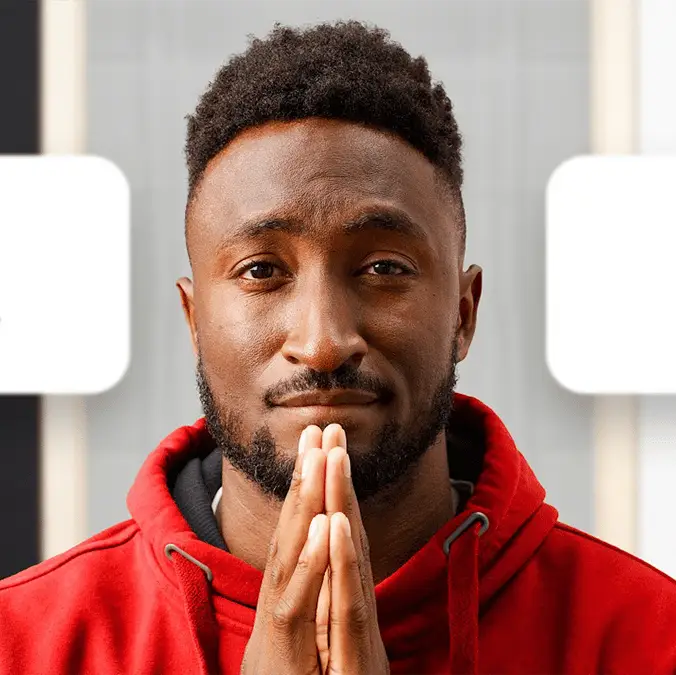
Marques Brownlee slams YouTube's latest feature as 'possibly their worst idea yet'


Marques Brownlee has revealed just how he feels about a new feature added to YouTube which is designed to use its viewers as test subjects.
Brownlee is a YouTuber known as MKBHD who specializes in tech content, drawing in over 21 million subscribers on YouTube and more than six million followers on X.
So, when he talks about ‘risks’, people listen.
Whether it’s about lifting the lid on a little-known part of Apple devices, or revealing scary pitfalls in the latest tech, MKBHD’s opinion on technology is taken seriously.
Advert
Which is why when he says YouTube’s new feature is the ‘craziest, riskiest, and possibly worst idea yet,’ it invites a few questions.
In the YouTube video, Brownlee revealed his thoughts regarding YouTube’s upcoming video A/B testing feature next year, that it could present a problem for the company if their viewers stop trusting the content.

The A/B testing feature draws upon a simple A/B method, which is where two groups (A and B) are given two different versions of the same product.
From there, researchers will see which one is a bigger hit with their target market and will generally choose to launch the version that performed the best with the focus groups.
Similarly, YouTube announced its plan to allow its creators to upload videos that have different thumbnails, different cuts of the same footage, and more, which will then be presented to different viewers to see which keeps them watching longer.
MKBHD then claimed it would mean that content creators could see where their content ranks against their competition and choose the one that performs best.
It comes as YouTube also shared its aim to adopt AI, and more, which Brownlee praised.
“But this latest one, in my opinion, is their craziest, riskiest, and possibly worst idea yet,” he said.
He explained that while it’s good for performance metrics, it’s not so good for building viewer trust.
“As a viewer, if I’m watching a video, do I know if that video is part of an A/B test or not? Probably not,” Brownlee said.
“If I’m reading the comments on a video, how do I know which version of the upload they watched? And if someone’s comment [has a] timestamp, does that break if I’m watching the other version of that video?”
He also brought up the issue of YouTubers potentially creating wildly different cuts of the same video, making them too separate to be considered versions of one video.

He revealed that after talking with YouTube engineers, the company allegedly plans to use a semantic analysis model to scan each uploaded video to determine which has a high similarity score.
Those that pass the criteria will be eligible for A/B testing.
He also said it only applies to new content, and that creators will not be able to go back and test their old videos.
But ultimately, he took issue with the cohesiveness of the viewing experience.
“There’s this sort of unspoken rule of community on YouTube that, like, we’re all having the same experience together. We’re all watching the same video,” Brownlee said. “So letting people put up two or three different versions of the same video at the same time just kind of fundamentally breaks that.”
“This is being framed as a tool to help you improve your videos, but I think for 99.9% of creators, well, to be literal, it’s not actually helping you make better videos,” he said. “It’s helping you find which version of your video has the best retention, which doesn’t necessarily mean it’s a better video.”
UNILAD Tech reached out to YouTube for comment.