
Everything to know about 'Project Athena' as top secret plans for NASA's controversial project leak


A new vision could be on the horizon for NASA as a leaked document known as Project Athena reveals a billionaire’s blueprint for the space agency’s future.
The secretive plan, reportedly circulated among top officials in Washington before Jared Isaacman’s nomination as NASA administrator, outlines bold reforms that could redefine how the U.S. explores space — and who gets to lead the charge.
Donald Trump nominated Isaacman to be NASA administrator after he won the presidential election last year. However his nomination was retracted months later. But last Tuesday (November 4) he was nominated for the job once again.
Isaacman, a billionaire entrepreneur, pilot, and astronaut, has acknowledged the authenticity of the leaked document, date-stamped May 2025 and now splashed across multiple news sites, is real. However he insists that some parts of it are now outdated, without specifying which parts no longer reflect his vision.
Advert
In a statement shared on the day he was nominated again, Isaacman said that Project Athena, “was always intended to be a living document refined through data gathering post-confirmation.”
“I would think it is better to have a plan going into a responsibility as great as the leadership of NASA than no plan at all,” the statement reads.
Among Isaacman’s proposed goals are revamping certain NASA centers to focus on nuclear electric propulsion, establishing a new Mars exploration program, and embracing an 'accelerate/fix/delete' philosophy to reshape the agency. If put into practice, many of the policies could dramatically alter the day-to-day lives of NASA employees. CNN has obtained a copy of the leaked Project Athena document, which details these suggested changes.
One bold idea in Project Athena is a new Mars program called “Olympus,” designed to align NASA with SpaceX’s plan to send an un-crewed Starship to the Red Planet. The first un-crewed Starship mission is due to take off in 2026.
The document also calls for a major push into nuclear electric propulsion, a technology that uses small nuclear reactors to power spacecraft engines. This could give future missions, including trips to Mars, a steady, long-lasting energy source, making deep-space travel faster and more flexible.
A source familiar with Project Athena said some of the plan’s more ‘controversial' ideas need further explanation. One notable line calls for taking “NASA out of the taxpayer funded climate science business and leave it for academia to determine”, a move critics warn could hinder the U.S. from collecting vital environmental data.
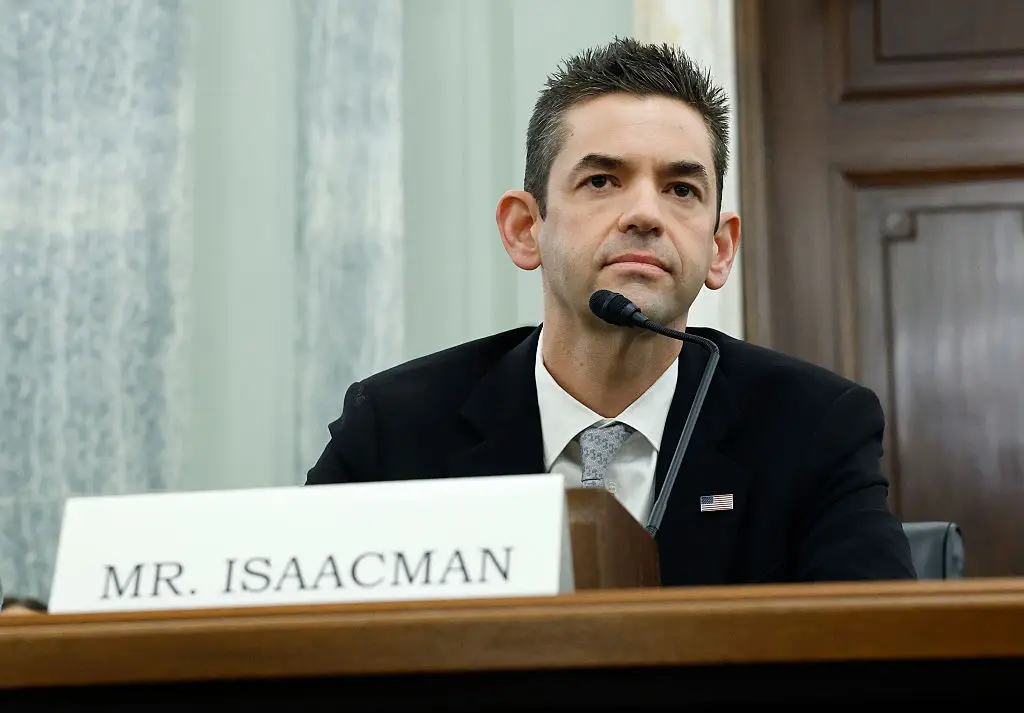
Other proposals in Project Athena focus on speeding up NASA’s reorganization. The agency has already seen about 4,000 of its 18,000 employees leave under the Trump administration’s deferred resignation program. Isaacman told followers on social media that he wants to move away from slow, gradual changes and instead pursue “a single, data-driven reorganization aimed at reducing layers of bureaucracy between leadership and the engineers, researchers, and technicians.”
But critics have warned that this could further frustrate workers.
As a tech CEO, Isaacman is an unconventional choice to lead NASA. Traditionally, the agency’s administrators have been scientists, engineers, academics, or public servants. However he has also gained a good reputation as a bold outsider, a private-space pioneer seen by many who could shift the 67-year-old space agency into a bold new phase.