Gigantic concrete dome is still holding tons of nuclear waste 77 years after US tests


The effects of the Unites States' Cold War-era nuclear testing still continue to show to this day over half a century later, yet perhaps none are quite as shocking as the gigantic concrete dome that currently sits on an island in the middle of the Pacific Ocean, purpose built to contain tons of nuclear waste.
Nobody was under any illusion that nuclear weapons weren't incredibly dangerous – as that's precisely the reason why they were developed – yet there was little long-term consideration for the effects that nuclear tests would have on not only the land but the people around it.
With recent political movements sparking fears that nuclear war could be on the horizon, many are rightfully concerned about what might happen to the world if bombs start to be used, but you only have to look at the many nuclear testing sites that the United States government used over the years to see the effects.
As reported by The Guardian, some of the most notorious existed in what's known as the Marshall Islands, which is a chain of volcanic islands situated in the centre of the Pacific Ocean.
Advert
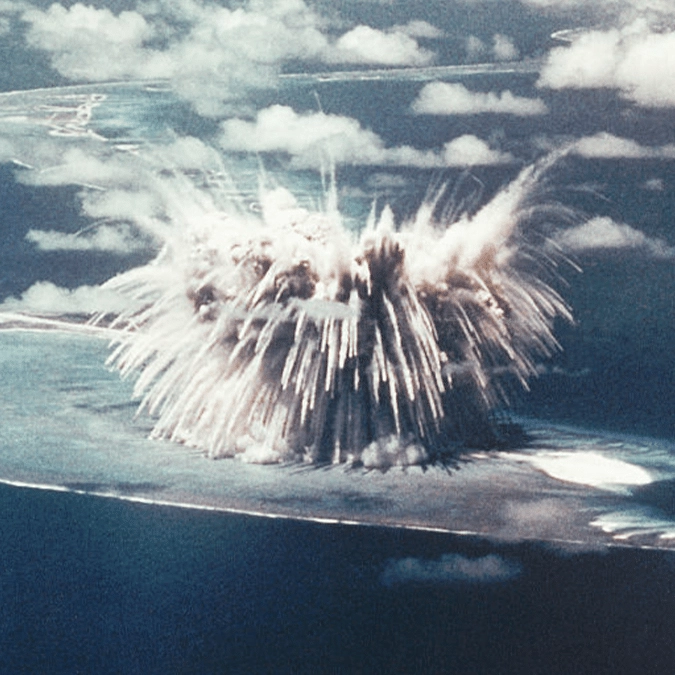
There were 67 total nuclear weapon detonations that took place here by the US military between the years of 1946 and 1958, with bombs exploded both above ground and underwater on the Bikini and Enewetak Atolls.
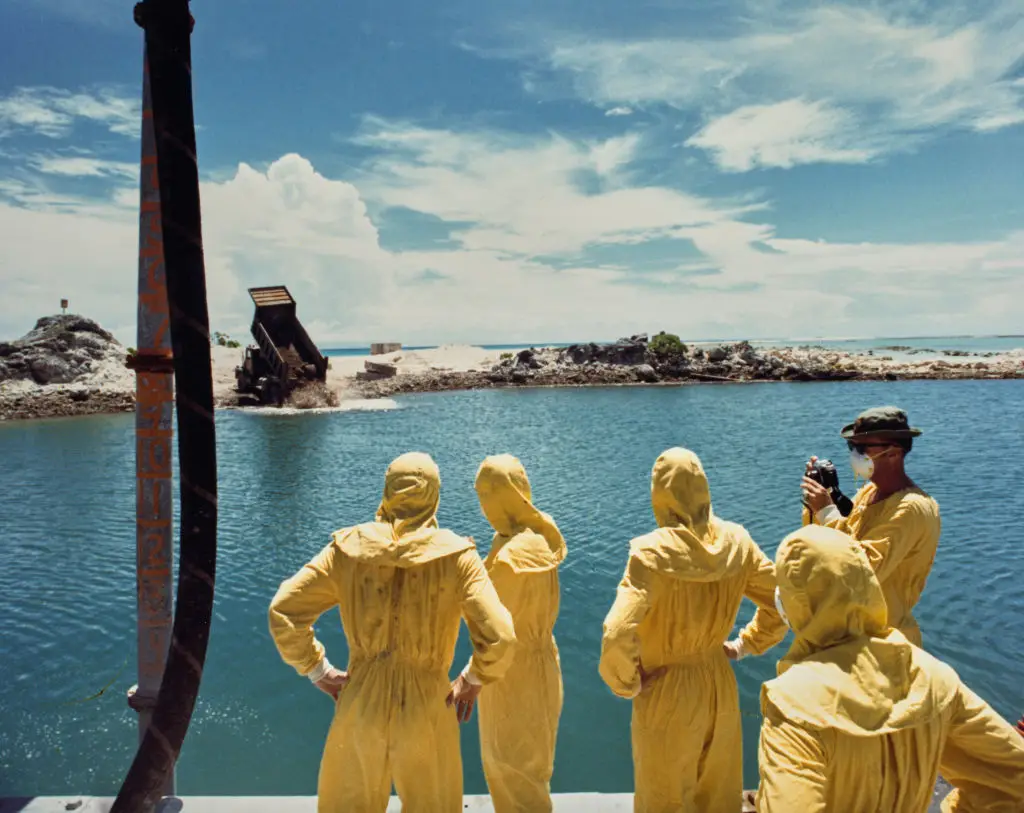
One device that was around 1,100 times larger than the 'Little Boy' atomic bomb dropped on Hiroshima was even tested, and extreme levels of radiation matching that of Chernobyl forced the residents of the islands to evacuate, and only now are some slowly returning to Enewetak.
Arguably the most fascinating and frightening remnant of this nuclear testing environment though is found on Runit Island, as there exists a gigantic concrete dome nicknamed 'The Tomb' that's currently storing tons of radioactive soil and nuclear waste, transported from tests conducted in Nevada.
The Tomb is around 115 meters (377 feet) wide, and covers more than 90,000 cubic meters of land on the island, working out to roughly 35 Olympic-sized swimming pools for reference, so a sizeable and incredibly dangerous amount of waste.
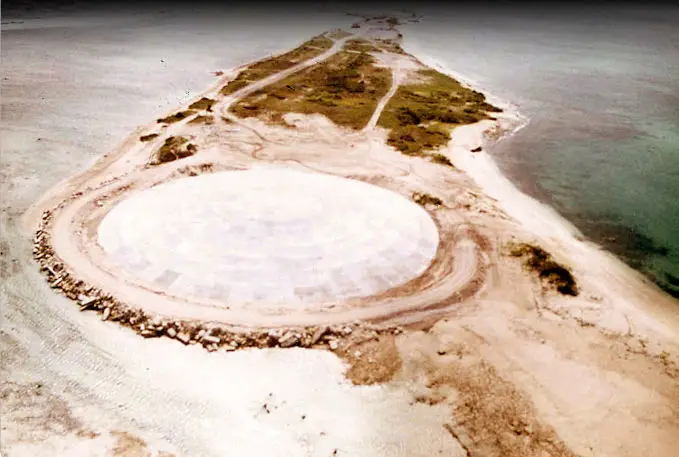
It remains situated there with seemingly no plans to actually do anything about it in the future, but many see it as a physical manifestation of the generation-spanning damage that nuclear testing caused for certain communities, as they're still seeing the effects decades later.
"The health impacts on our people have never been investigated," declared Ian Zabarte, principal man of the Western Bands of the Shoshone Nation, who were heavily impacted by nuclear tests conducted on Native American land and described by many as 'the most bombed nation on Earth'.
Zabarte added that "we have never received an apology, let alone any kind of compensation," and the ramifications on the health of these communities continues to show its face.
"Cancers continue from generation to generation," explains Alson Kelen, a community elder who grew up on Bikini Atoll. "If you ask anyone here if there's a legacy of nuclear impact on their health, the answer would be yes.
"The Marshall Islands Nuclear Claim Tribunal has a list of cancers that are related to nuclear throughout our people. These cancers are hereditary."