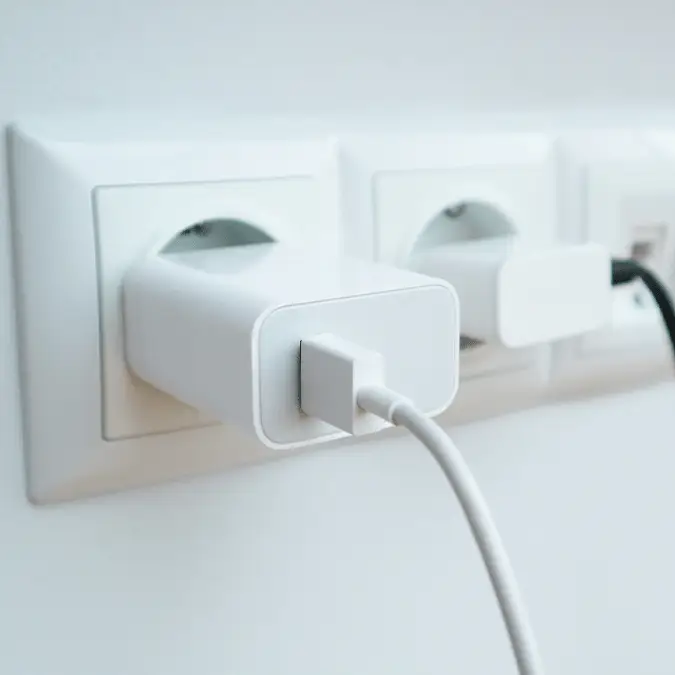
Experts reveal whether you should leave chargers plugged in constantly as they issue warning over 'vampire power'


Our dependence on technology these days means we're constantly charging something, whether it's our laptops, Apple Watches, smartphones, or electric cars.
You might have a iPhone charger permanently plugged in by your bedside, or a laptop charger that's always plugged in under your desk.
But is there a risk attached to leaving a charger on all the time?
Well, first off, not all chargers are the same, depending on what they're powering.
Advert

At their core, though, they're doing the same job, which is taking the alternating current (AC) that comes from your wall socket and transforming it into the direct current (DC) your device's battery needs.
AC power involves electrons moving back and forth rapidly, while DC sends them flowing steadily in one direction.
Electricity is traditionally generated as AC, but modern devices and batteries require DC. That's why nearly every electrical appliance includes an AC-DC converter.
But it turns out that even when your device isn't connected, chargers still draw a small amount of electricity, which experts call 'vampire power.'
For a single small charger, this vampire power, also termed standby power, seems trivial. But if you add up all the chargers in your home for various devices, the wasted energy accumulates considerably over time.
Standby power isn't unique to chargers, either. Other electronics, like TVs and video game consoles, also draw minimal standby power.
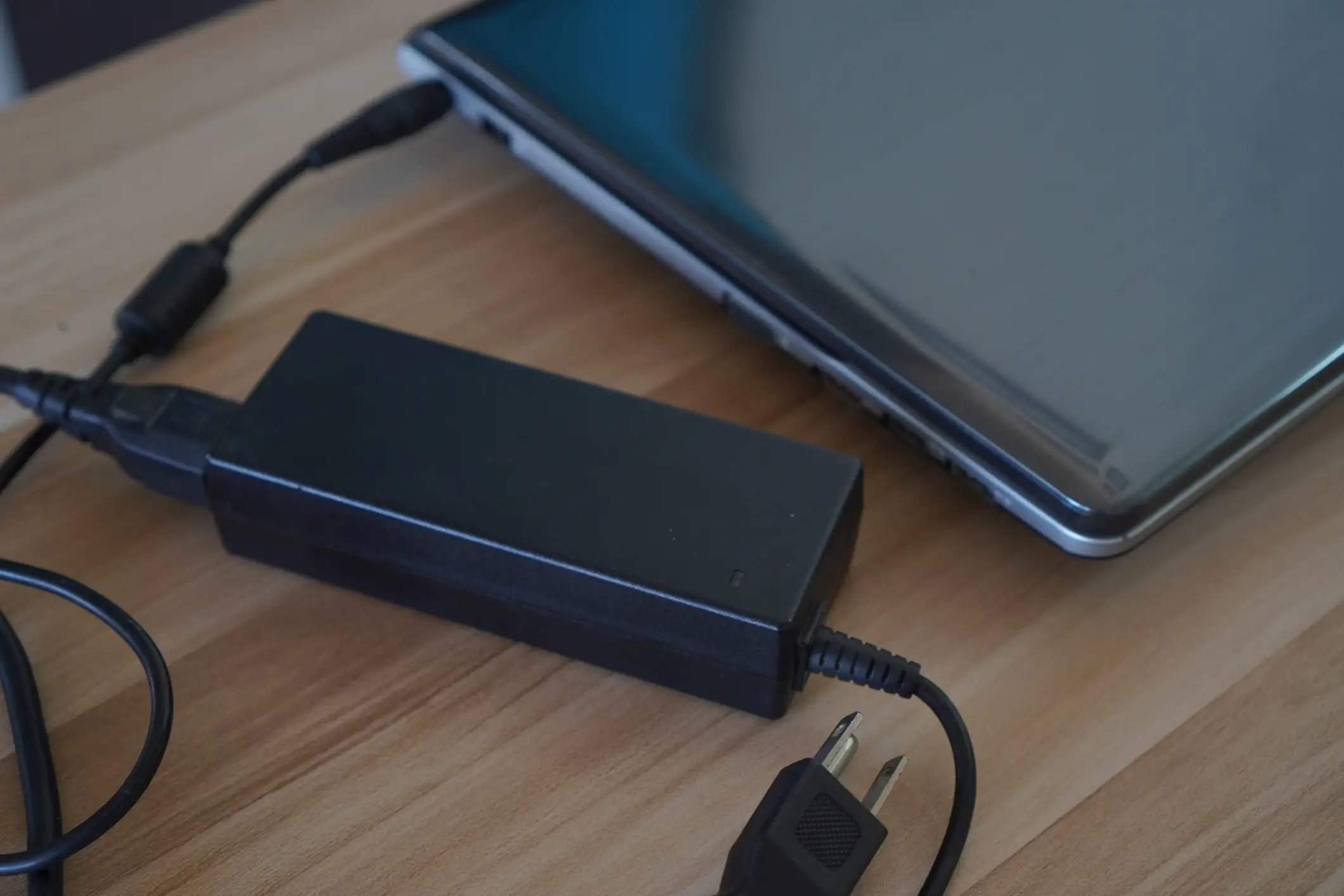
Add it all up over a year, and you're looking at a surprising amount of wasted energy - potentially several kilowatt hours that you're paying for without realising.
Modern chargers have gotten smarter, though. Many now include power management features that put them into deep sleep until something actually needs charging, dramatically cutting standby consumption.
That said, chargers don't last forever. They wear out over time with use, especially during voltage spikes that occasionally ripple through the grid, which can cause the components to degrade slightly. Over months and years, this adds up.
Exposing your chargers to these events shortens their lifespan. Thankfully, this premature ageing shouldn't worry users of modern devices due to improved design and controls.
However, the problem is more common in cheap, uncertified chargers that lack adequate protection and can pose a fire risk.
The best thing to do is to unplug your chargers when you're finished with them anyway, experts say. And if a charger feels unusually warm, emits noise, or shows any damage, replace it immediately.