
Erin Brockovich is back, and she’s launching a war against the physical footprint of AI


Erin Brockovich rose to fame in the 1990s after she helped to expose a major water pollution scandal in California. Now, she's back on the scene and her new target? AI data centers.
At the time, she was working at a small law firm when, while looking through paperwork, she noticed a lot of people in one town were sick.
Looking into it further, Brockovich discovered that Pacific Gas and Electric Company (PG&E), had contaminated groundwater with a toxic chemical called chromium-6.
After helping to gather up medical records and speaking with impacted families, she helped to build a case against the company which resulted in a huge settlement of around $333 million for the residents.
Advert
Now, the environmental activist and consumer advocate is back fighting another cause and this time she has launched a war against the physical footprint of AI.
Erin Brockovich is tracking new AI data centers
Brockovich has now launched a website which is used to report and track the construction of AI data centers.
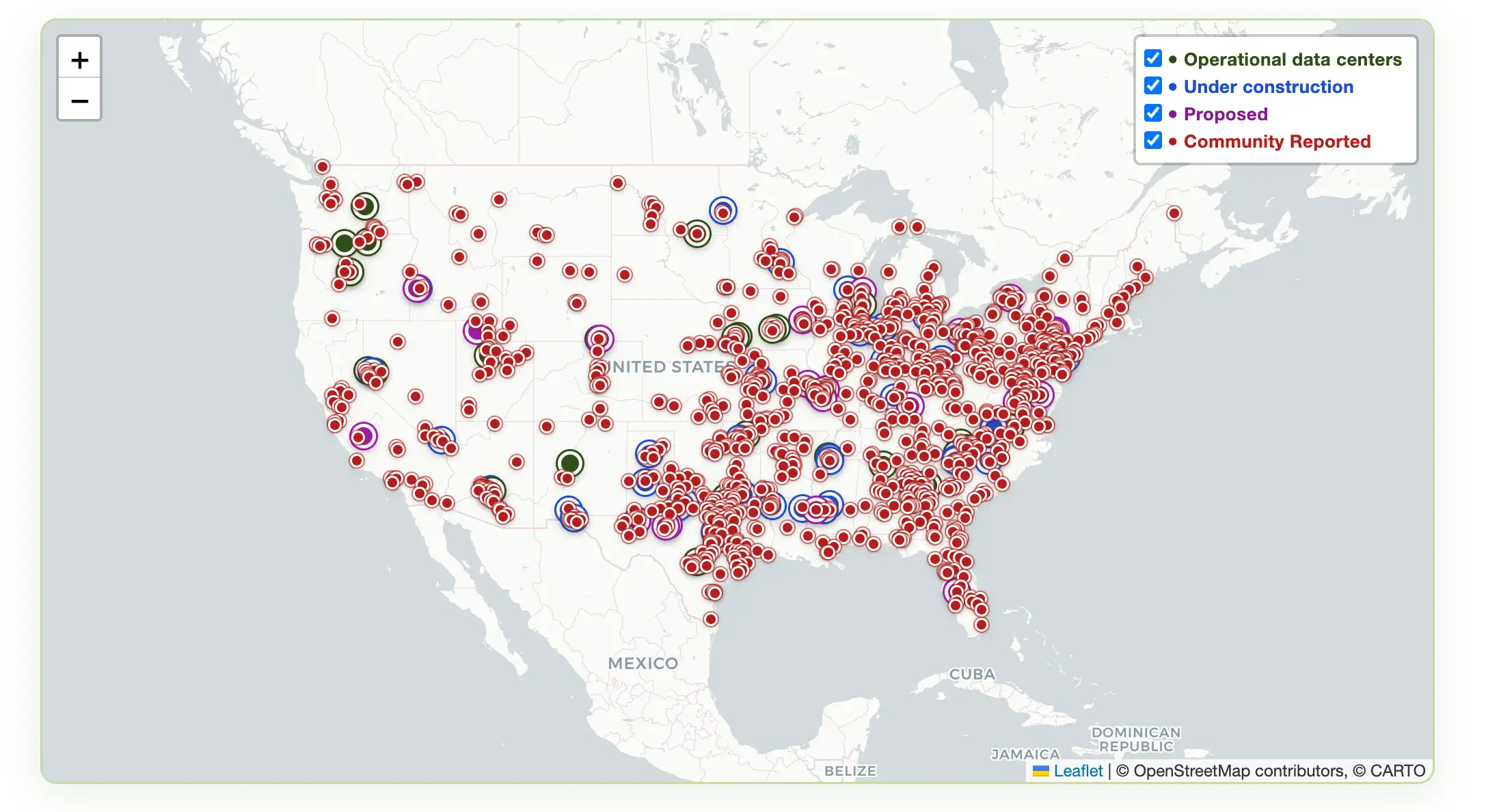
On the website, she stated: “The RACE to build AI infrastructures is unfolding town by town across America. In some places, data centers are welcomed. In others, they are delayed, contested or abandoned altogether. This MAP captures the real-world footprint of that race - revealing patterns of growth, conflict and uncertainty.
“I am watching as YOU, the communities show up and speak out. In the famous words of Mark Twain … ‘The secret of getting ahead is getting started’, so let’s go!”
An interactive map on the site enables visitors to see where the data centers have been publicly announced.
People are also able to report if they know of one that is missing from the list.
Erin Brockovich’s key concerns with AI data centers
The activist has also cited what her concerns are with new data centers being built, explaining that key issues include energy consumption and water usage.

The website went on to state: “High energy usage contributes to significant environmental impact and escalating costs for surrounding communities.
“Cooling systems often require substantial water resources, straining local water supplies and ecosystems.”
Other factors include things such as location risks including ‘natural disasters, flooding, or geopolitical instability can disrupt operations and impact local infrastructure’, and scalability and efficiency as ‘growing demand strains local resources and infrastructure, often outpacing community planning capacity’.
Another environmental impact is the sheer amount of e-waste generated as ‘frequent hardware upgrades and replacements generate significant volumes of electronic waste’.