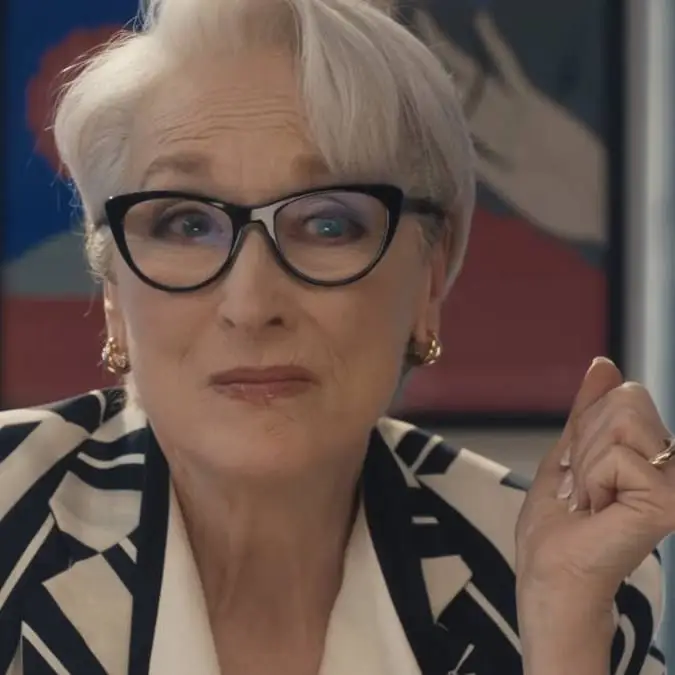
The Developers Wear Prada: The Devil Wears Prada 2’s depressing message about AI and journalism


A cold chill ran down my spine toward the start of The Devil Wears Prada 2, realizing that the supposedly fairytale ending of Anne Hathaway's Andy Sachs was about to be yanked away, and she'd be forced to reenter the cutthroat world of fashion magazines and stick-thin models.
The trailers for David Frankel's long-awaited sequel had pretty much told us as much, and although Andy managed to escape the clutches of the tiresome Nate (poor Adrian Grenier) at the end of 2006's first movie, her dream job in journalism wasn't to last.
Whereas Nate was the real villain of The Devil Wears Prada, the sequel paints a pair of devil horns on AI.
Fears that AI could wipe out the human race or launch World War III are nothing new, but more immediate worries involve the idea that it could blackmail its human overlords while snooping through our emails, or the more obvious one that AI will replace us in the workplace. Sadly, The Devil Wears Prada 2 does nothing to alleviate those fears.
The Developers Wear Prada
Advert
The Devil Wears Prada 2 opens with Andy and her colleagues at The Vanguard being let go, and while AI isn’t specifically named as the cause, the film paints a somewhat grim picture about the state of the industry.
Even as Andy takes on a promotion to become features editor at Runway (a not-so-subtle pastiche of Vogue), she soon learns that the magazine has been slowly hollowed out over the years, with reader numbers falling and things moving into a digital world of subscriptions, algorithms, and tumbling budgets.
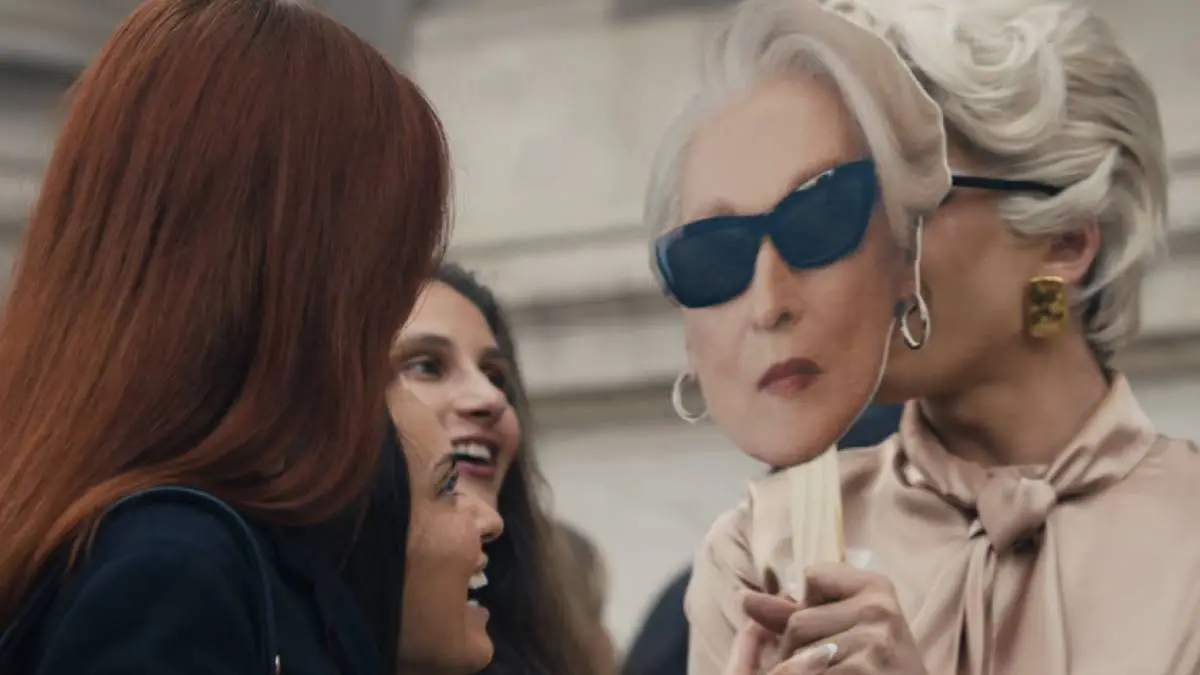
One moment includes Meryl Streep's incorrigible Miranda Priestly calling out a photoshoot that looks like it's been churned out by AI slop on a green screen, while another includes a slew of AI-art memes mocking Ms. Priestly. The irony is that a seeming AI image of Miranda accompanied by the caption "Would you like some lies with that?” was created specifically for the movie by real-life artist Alexis Franklin.
We can praise Frankel for requesting that Franklin poke fun at the AI meme culture, but elsewhere, the shadow of AI replacing humans looms over everything.
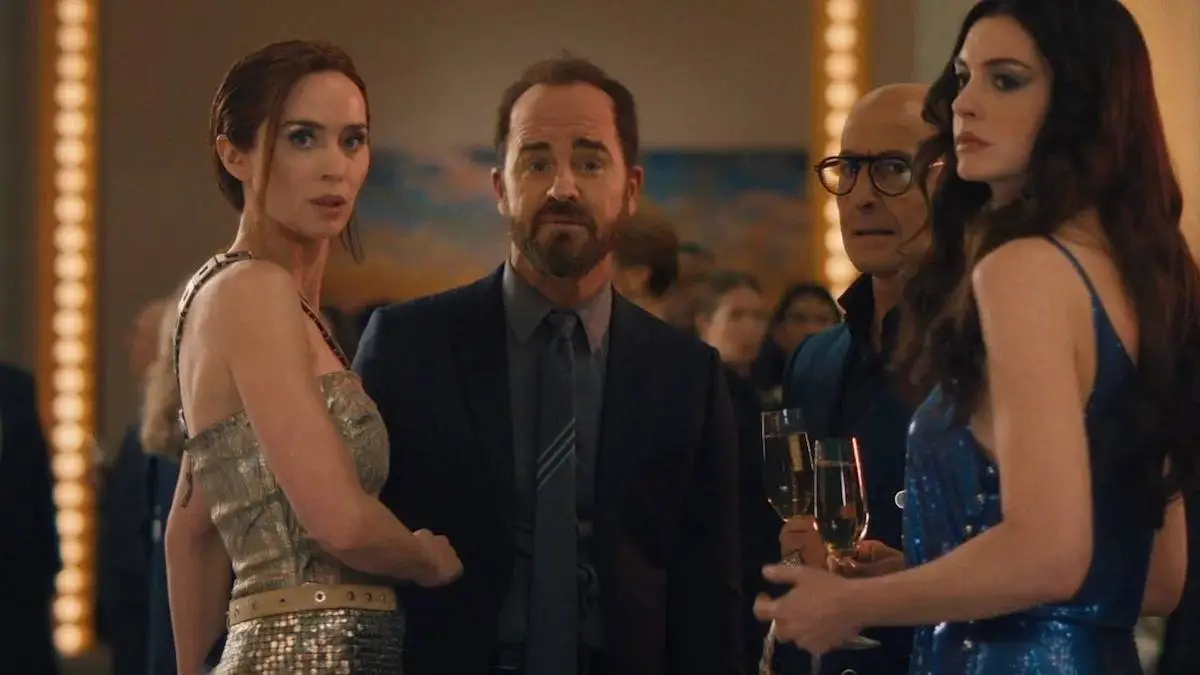
After the real-life Met Gala was unfavorably renamed the Tech Gala when Jeff Bezos and Lauren Sánchez stumped up the reported $10 million to sponsor the fashion event of the year, there's a sense of merriment that The Devil Wears Prada 2 has its own tech bro trying to run things. Justin Theroux plays the slimy and dim-witted billionaire Benji Barnes, who is a patchwork of Bezos, Mark Zuckerberg, Sam Altman, and the rest.
There's more than a bit of a wink to a certain Elon Musk and his endeavours to colonize Mars, as Barnes jokes about his own grand plans to take mankind to the Sun.
As the boyfriend of Emily Blunt's Emily, Barnes hopes to swoop in and save Runway from financial ruin by simply writing a check. It's a story we've seen a million times before, and let's not forget the billionaire Ellison family is currently trying to take the reins of Warner Bros. Discovery.
Vogue's real-life AI ascension
We won't ruin how The Devil Wears Prada 2 ends, and despite there being a very obvious 'villain' thanks to a third-act twist, it still feels like a well-timed critique of Vogue's own struggles with AI.
We'd be amiss not to mention the drama surrounding a July 2025 ad for Guess that appeared in Vogue. Coming just after Anna Wintour announced she was stepping down as editor-in-chief after 37-years, there was reader fury and subscription cancellations after Paris‑based creative house Seraphinne Vallora cut out casting directors, retouchers, and more through the use of generative AI and AI models.
UNILADTech spoke to Nick Price, founder and CEO of nmatic.ai, about layoffs, how publishers are being forced to adapt, and the moral responsibility of those in charge. According to Price, The Devil Wears Prada 2’s message represents wider economic conditions where "AI is being cast as both the cause and the cure."
He warns that companies that decide to go fully down the AI route will face a bumpy ride, with generative AI being fundamentally seen as a work tool that will soon be classed in the same bracket as VFX.
As for the idea that there will be no need for us flesh and blood humans, Price mused: "Generative AI is by its nature derivative driven, so it needs talented people who really know their craft to push it into interesting creative territory."
Just when the dust had settled on the Guess fracas, Vogue published a series of articles on the future of AI and predicted that human interaction would become a ‘luxury’ of its own in the luxury fashion business.
Other articles discussed whether AI can crack personal style, its impact and sustainability, and asked industry professionals their thoughts on what ultimately feels like a collection of pieces that are suspiciously timed to usher in a new era of the renowned fashion magazine.
Vogue's survey of 300 current and aspiring fashion professionals stated that 43% of those asked feel positive or very positive about AI’s potential impact on their careers, whereas just 32% feel it will be negative or very negative. We'd be interested to see the results from other publications also on the precipice of AI automation.
Vogue overseer Condé Nast hasn't publicly disclosed how many jobs have been 'lost' to AI, but it notably shuttered Self magazine after 47 years and axed the international versions of Glamour in Germany, Spain, and Mexico. In an April 16 memo, CEO Roger Lynch admitted that Condé Nast was 'reorganizing' its tech division due to the "rapid advancement of AI" and hopes of building products faster. Naysayers claim we're all safe from AI, but it's not hard to join the dots here.
Don't let Runway run away with your fears
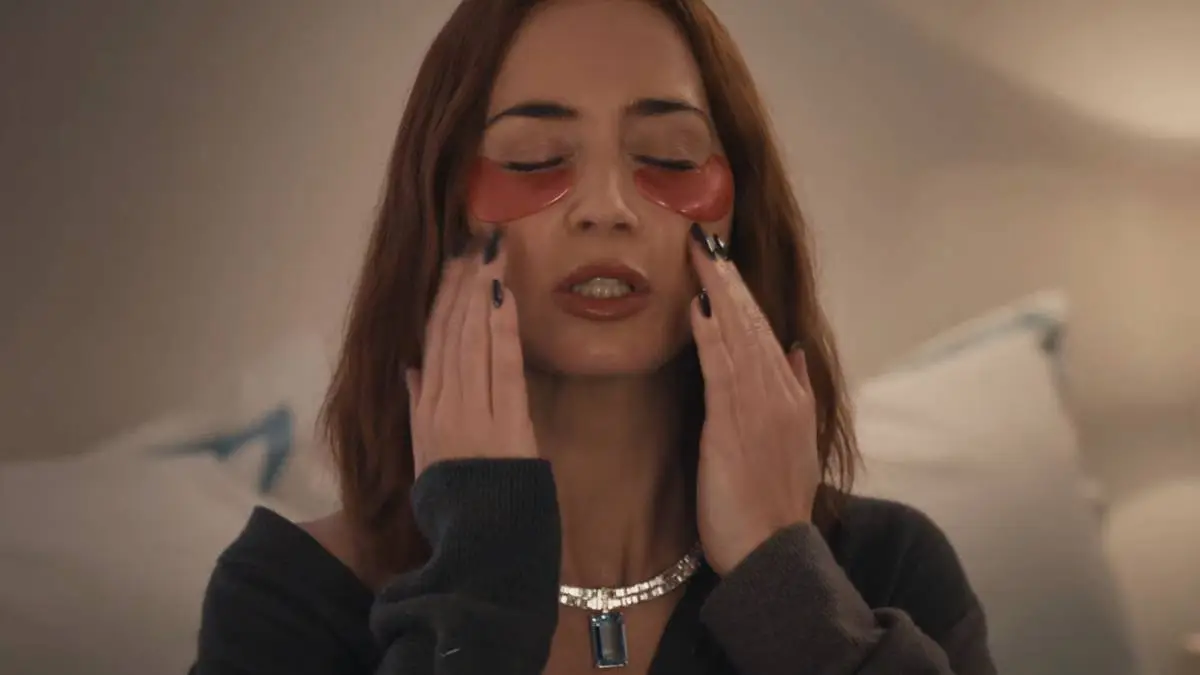
It's not just viewers noting The Devil Wears Prada 2's AI adoption, as Emily Blunt herself told USA Today that it's like "having a drug dealer in your house that doesn’t pay rent or actually give you any of the good stuff."
For those who claim I’m over-egging the pudding by calling out the movie's message about AI, Blunt reiterated that the script is "able to capture what's going on, and the siege that journalism is coming under," describing it as 'really poignant'.
This isn't a case of AI knocking at the door, but already finding itself in front of the fire with its feet up, but what comes next?
Price suggests that humans having digital twins is 'inevitable', which isn't a big deal as long as we've been paid and given our content. Don't call me a pessimist, but I imagine the chances of that are pretty slim. Still, he sees it as an opportunity to extend owned IP and create new remuneration models: "It doesn’t kill the shoot, but extends it well beyond the on-set date, creating net new work that amplifies the moment that originated it in the first place."
Away from Vogue's own musings on AI's use in publications and the fashion industry, Price notes that lookbooks, campaign assets, e-commerce shots, and market adaptations can already be made for a fraction of the cost they used to be. Whereas the era of one piece of content for everyone is changing, he thinks readers will still want to see the iconic, meaning the more traditional shoot is safe for now. Individual publications and fashion houses will all have their own approaches, suggesting: “They certainly won’t let AI do it all, but they may well use it to impart, express and push out their own unique points of view."
For those at the vanguard, Price concludes there's a moral responsibility "to help creatives become the masters of AI rather than the other way round."
Andy might get a second shot at a happy ending by the time the credits roll on The Devil Wears Prada 2, but while we lament the idea of these characters being dragged out for a third run, who's to say there would even be a Runway magazine left by the time we get to a mythical threequel? In all honesty, Miranda Priestly is more than likely to be replaced by Mir-AI-nda before too long.