
DNA project helps solve 27-year mystery as man's leg washes up on a beach


A mystery stretching back 27 years has just been solved by a DNA project, as scientists have identified the individual behind a leg bone that washed up on a California beach two years ago.
There are countless John and Jane Does that police investigators have to deal with every single year, as not everyone who is found is able to be identified — even with the sophisticated modern technology operated by law enforcement.
Many of these so-called 'cold cases' can lie dormant forever, with no new evidence or information coming forward that brings investigators to a conclusion, yet one fascinating discovery led to answers in a missing persons case dating all the way back to 1999.
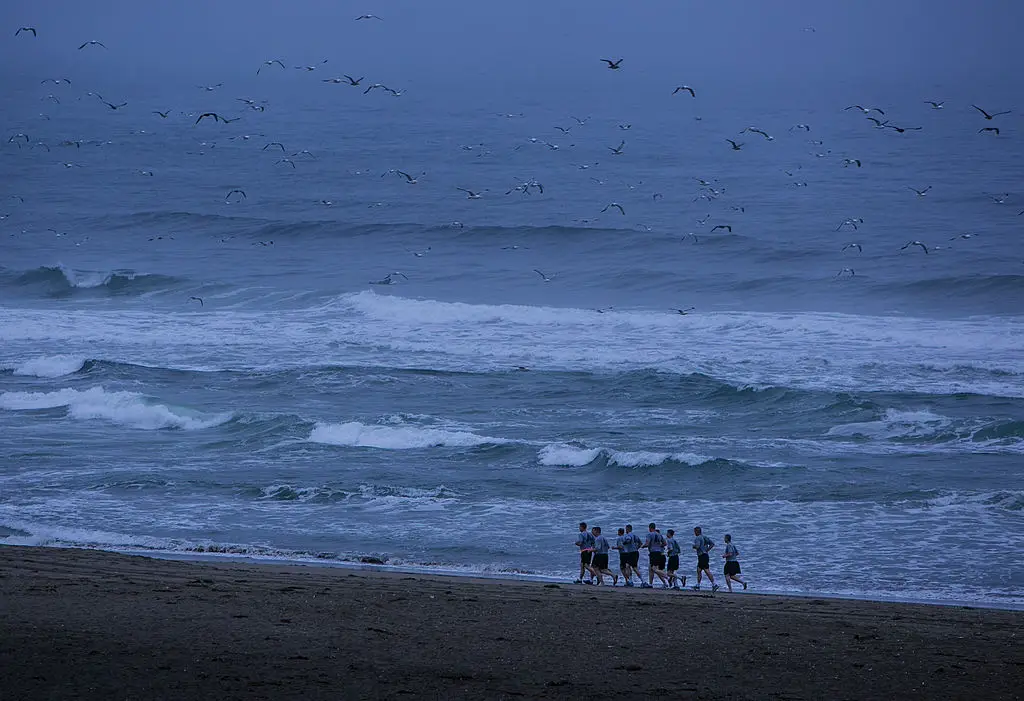
One family looking for sea shells on Salmon Creek Beach in Sonoma County, California nearly four years ago found something rather unexpected buried within the sand, as they pulled out a long human bone that appeared to contain surgical hardware.
Advert
Stunned by their discovery they immediately reported it to the police, who then conducted a pathological examination to reveal that the bone was a tibia containing potentially illuminating DNA.
The local Sheriff's Office then enlisted the help of the DNA Doe Project, a group of expert investigative genealogists working pro-bono on cases like this, who have detailed their miraculous discovery in a jaw-dropping news release.
These experts managed to craft a DNA profile from the tibia, which was then uploaded to the GEDmatch database earlier this year. Following this, a family settled within the San Diego area was identified, and an unexpected mystery was unearthed within their history.
They found that the family contained Walter Karl Kinney, a banker born in 1940 who went missing in Santa Rosa – just a short distance from Salmon Creek – back in 1999.

What's perhaps even more remarkable is that Kinney had already been a one-time John Doe, as partial human remains washed ashore in the year he went missing were later discovered to be from the banker in 2003, and the same has happened again this year.
Traci Onders, a team leader at the DNA Doe Project, explained that "the case was unusual — it's not often we see someone end up as a John Doe twice, but thanks to the investigative genetic genealogy, we were able to resolve this mystery and provide some answers to everyone involved in this case."
It goes to show quite how impressive and through the science behind this type of investigative work can be, but it also takes research outside of the lab and a bit of luck as always to find the answers that you're looking for.